This blog is a continuation of #56: The Heart of the Alps in which we visited Innsbruck, Austria.
To begin, a relevant and humorous scene from the popular series Yellowstone: https://www.youtube.com/shorts/tprs0QrUthg
In the early 1890s, Daniel Swarovski registered a patent for a state-of-the-art machine designed to cut crystal with unprecedented precision. Born into a glass cutting family in what is now known as the Czech Republic, Swarovski took his invention and moved 20 kilometers east of Innsbruck, Austria to the town of Wattens. What transpired was his namesake company and a factory that is known all over the world for producing exquisite crystal products. Later in 1949, Daniel’s son Wilhelm founded Swarovski Optik which is known among hunters and outdoor enthusiasts for their high-quality binoculars and scopes. For the 100-year anniversary of Swarovski, artist Andre Heller was commissioned to design a museum like no other. Located on the same property as the Swarovski factory, the museum is known as Kristallwelten (“Crystal Worlds”).
Source: Dark Passport Photography
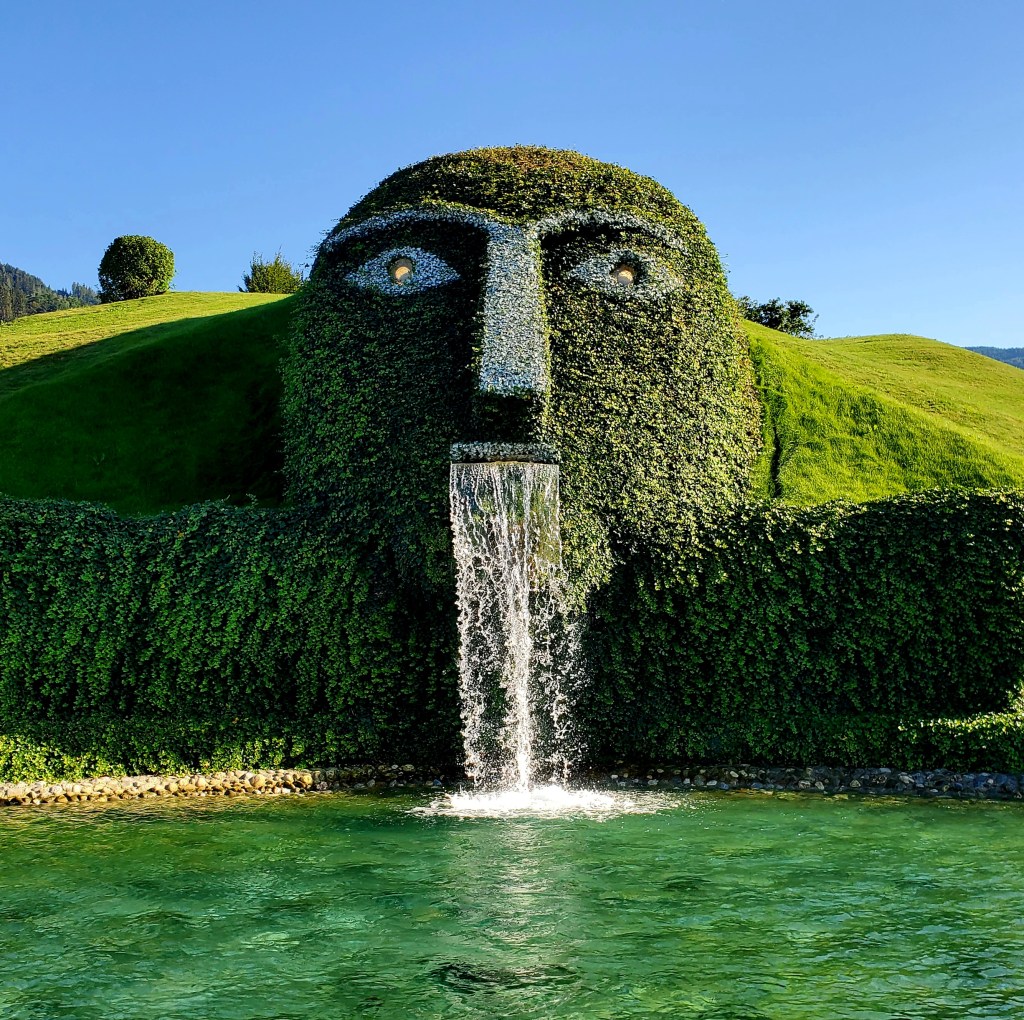
The Swarovski Kristallwelten experience is open daily and served by a low-cost electric shuttle to and from Innsbruck. Tickets to the shuttle can conveniently be purchased online when booking museum tickets directly from the Swarovski website which is available in English and German. Traditional public transportation options are always an option as well. And for those enjoying the Tyrolean countryside by vehicle, there is free parking available at Kristallwelten with electric vehicle charging stations. Regardless of travel method, visitors will immediately see the allure of the property before entering. The gardens are magnificent, and the front entrance is guarded by a figure with sparkling eyes and a waterfall mouth known affectionately as “The Giant”.

Source: Dark Passport Photography
Past “The Giant” and inside Swarovski Kristallwelten are the Chambers of Wonder. The name comes from the concept of kunstkammer (“art chamber”) or wunderkammer (often artistically translated as “cabinet of curiosities”), an early form of museum exhibition meant for showcasing exquisite pieces belonging to a collector. In the “Silent Light” chamber pictured above, a 14-foot tree made of 150,000 crystals collects real snow that falls from the ceiling in a room that stays around 20 degrees Fahrenheit. An interesting fact about the tree is that one of its co-creators was the late fashion designer Alexander McQueen. The Chambers of Wonder at Swarovski are intended to invoke the use of crystal to captivate visitors with ethereal displays. Many are too complex for still photography or can only be captured with a camera lens in pieces rather than entirety.
Source: Dark Passport Photography
Source: Dark Passport Photography

Source: Dark Passport Photography
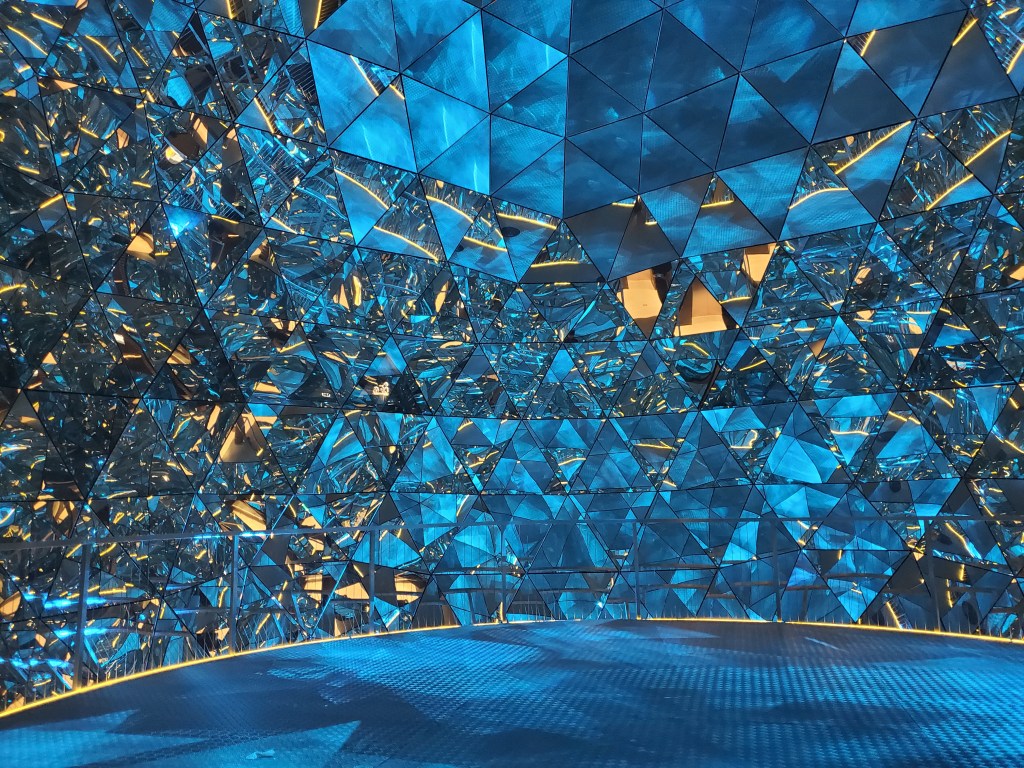
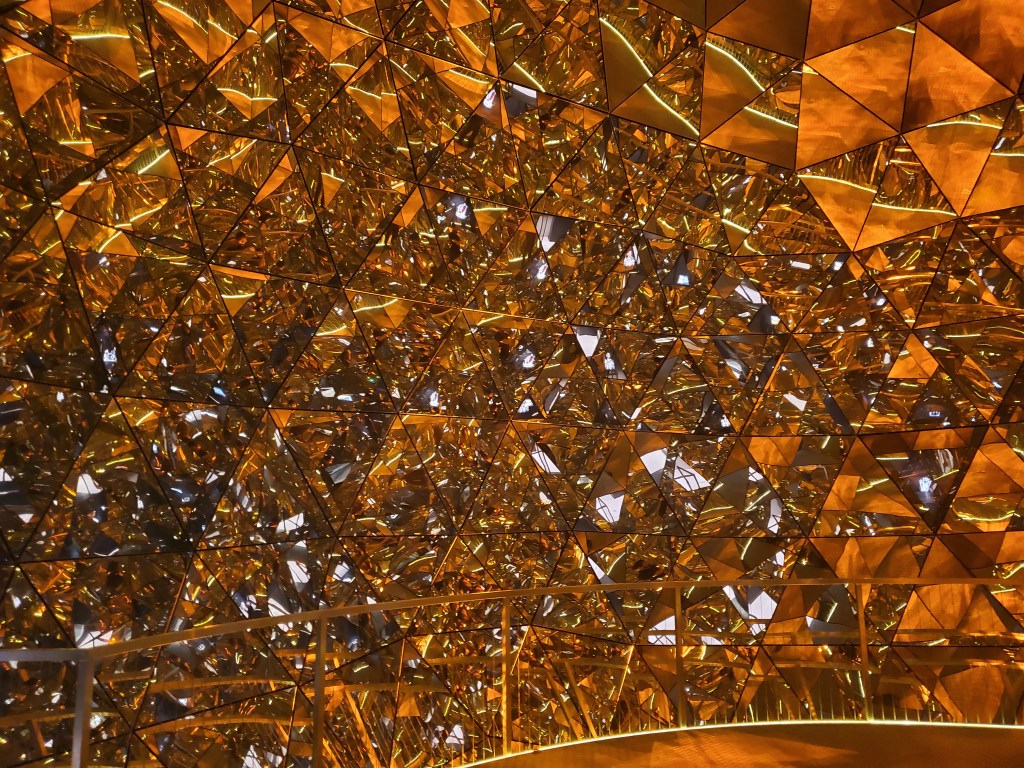
The Crystal Dome chamber is a prime example of pictures not doing justice. The exhibit, a geodesic dome capable of reflecting an array of colors from its 595 mirrored panels, was designed to make the visitor feel as if they were inside of a giant formation of crystal. To me, it felt more like being inside a kaleidoscope. Additional pictures (better illustrating its size) and a shared sentiment about the difficulty in describing the dome are located at this design blog I found online: https://www.yellowtrace.com.au/the-crystal-dome-at-swarovski-kristallwelten-wattens-austria/ Topping off the mesmerizing Crystal Dome experience is a subtle background of meditative music in the form of “alpha waves”. By sight and sound, those lucky enough to stand alone inside the dome will feel as if they are transcending through space into another universe.

Source: Dark Passport Photography
The theme of music is presented in more than one Chamber of Wonder. In the aptly named Art of Performance, the enduring presence of Swarovski crystals in the entertainment industry is celebrated with original wardrobe pieces from the likes of Lady Gaga, Michael Jackson, Beyonce, and Madonna. Sports even made it into the exhibit, with a crystal-emblazoned leotard previously worn by Simone Biles during a gold medal gymnastics performance exhibited among the rock star ensembles.

Source: Dark Passport Photography
The FAMOS Chamber of Wonder contained four crystal interpretations of notable architectural landmarks: the Empire State Building, the Taj Mahal, the Great Pyramid of Giza, and Lenin’s Mausoleum. The choice to replicate three tombs and an office building is a reflection of the eccentric reputations belonging to the Russian artist duo responsible for FAMOS. I was less focused on the postmodern artistic backstory of the exhibit and more interested in simply admiring a crystal scale model of an iconic building I used to see on a daily basis.
Source: Dark Passport Photography
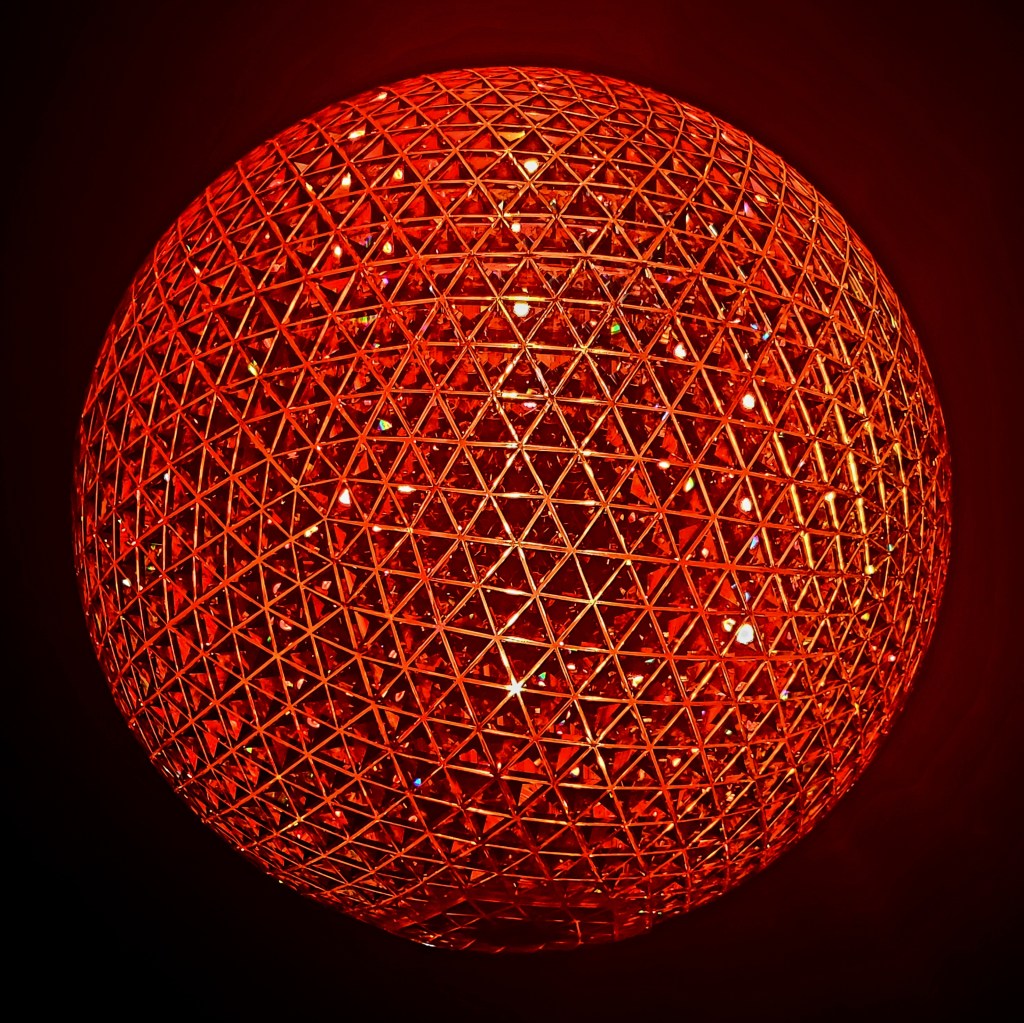
Contrasting with the freezing cold Silent Light Chamber of Wonder was El Sol, an exhibit dedicated to the relationship between mankind and the sun. Mexican architect Fernando Romero used 2,880 Swarovski crystals to create a structure one-billionth the size of the burning star – about four and a half feet in diameter.
Source: Dark Passport Photography
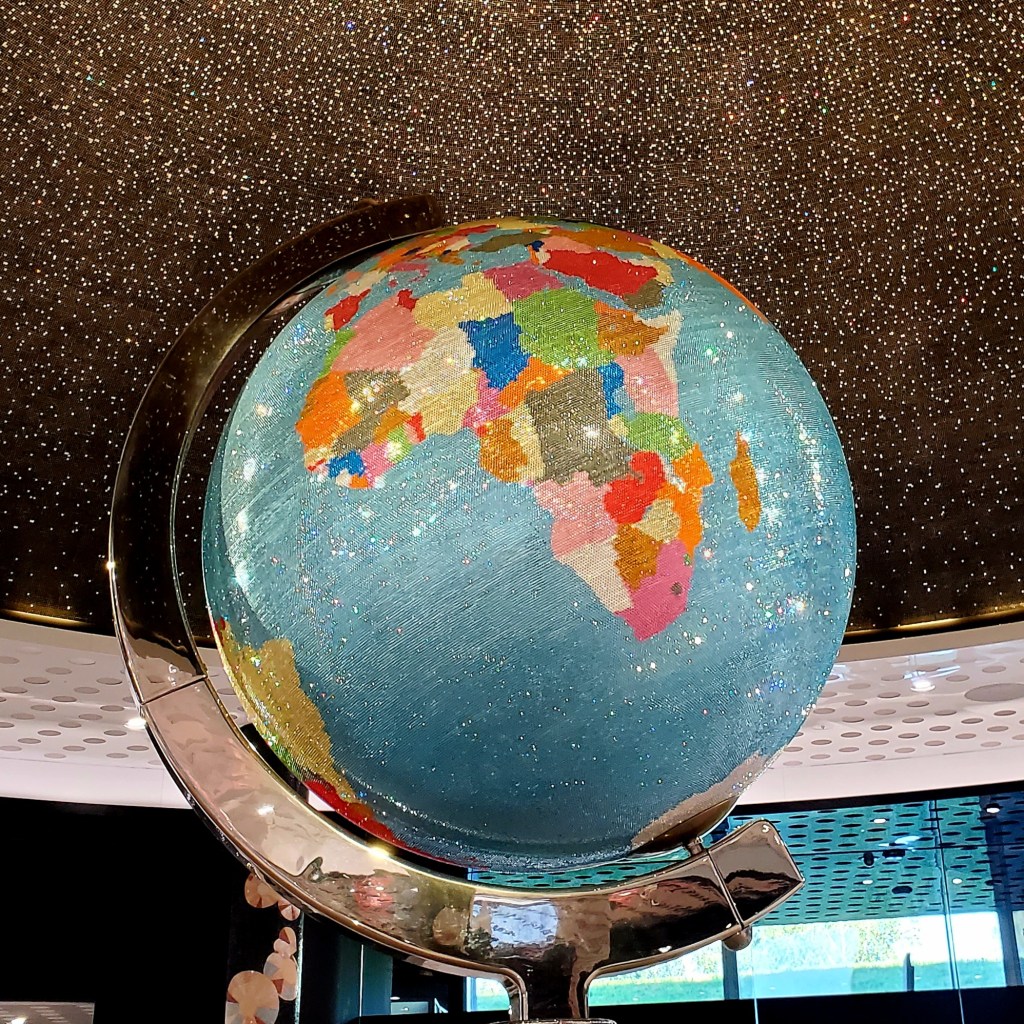
Another celestial model made from crystal was on display at Swarovski Kristallwelten: the Earth. It is difficult to tell in the picture above, but “The Globe” is almost six feet in diameter and weighs more than 2,200 pounds. It is also cartographically accurate, meaning the features were drawn accurately with respect to shape and size. Even the glittery black ceiling above “The Globe” contains Swarovski crystals and is a commissioned piece of art known as “The Starry Mosaic Sky”. It seems there was no expense spared in building the museum.

Source: Dark Passport Photography
The Swarovski Kristallwelten adventure predictably ends in a retail area where visitors have the chance to purchase jewelry, decorations, and other take-home crystal effects. The figurines are a crowd favorite and have remained so since the 1970s when a Swarovski factory worker glued spare chandelier pieces together to make a crystal mouse. Beware of sticker shock though: The limited edition, multi-piece figurine sets often run between $20,000 and $40,000. However, most single figurines can be bought for less than $1,000. There are also full lines of ordinary Swarovski products priced in the $50-150 range. With over half a million visitors passing through Kristallwelten per year, the sales staff are respectful of space and will not pressure guests into purchasing anything.
Should anyone find themselves in the lovely Innsbruck area of Austria on a European sightseeing expedition, a side trip to Swarovski Kristallwelten is worth the time and money. Visitors need not have an interest in jewelry or modern art to enjoy the offerings of a museum set so beautifully alongside the Alps. Go on, discover the magic.

 The Dark Passport