Success was found in Zurich, Switzerland in Blog #45, but unfortunately there was a bust in Hallstatt, Austria in Blog #48. What do you say we return to Europe and give Austria a second chance? After all, large foreign countries are no different from the United States in the sense that there are multiple regions with differing cultures.
Source: Dark Passport Photography
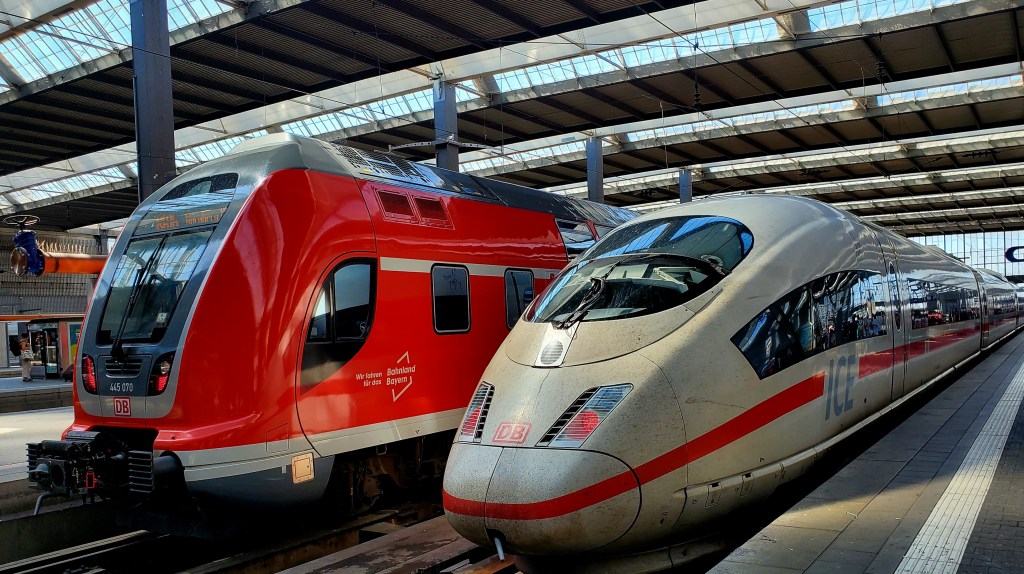
As discussed in Blog #45: Zurich, regional European rail travel is an easy and convenient way to move about various cities and countries without the headaches of the airline industry. Tickets and interactive route schedules are found on smartphone applications in multiple languages (namely Eurail and Rail Europe). If unsure, the railroad employees – most speak English – have expert knowledge of the routes and will gladly provide advice. Public transportation in a foreign country is a rare instance in which I do not mind looking like a tourist. Traveling is expensive and stressful enough; there is no need to make it worse by missing your stop because you couldn’t swallow your pride and ask the train conductor for assistance. In fact, if you convey to a bus driver or rail attendant where you wish to disembark, they will usually give you a reminder one or two stops ahead of time. In this case, it was the hauptbahnhof (“main train yard”) in Innsbruck, Austria.

Source: “Innsbruck, Austria” by JohnGGM is licensed under CC BY-SA 2.0.
Chartered as a city in the year 1239, the roots of Innsbruck actually go back centuries prior. A quick look at a map would provide insight as to why. The trade routes between Italy and Germany, including those used by the Romans, must traverse the Alps by means of the lowest and most accessible route known as the Brenner Pass. Though not as critical of a passage for trade, we can also see that overlanding between Switzerland and much of Eastern Europe would follow a line drawn through Innsbruck as well. The roads were not the only method of transportation in ancient times, however.

Source: Dark Passport Photography
A tributary of the Danube, the River Inn was originally utilized by the Romans and others to assist with the movement of goods through the Alps. The characteristics of the river precluded its practical use for modern day shipping, but not before various cities and towns were established upon its banks. Knowing that brücke means “bridge” and the river is named the Inn, it should not be a stretch to imagine how the city of Innsbruck got its name. It is amusing, however, to delve into the etymology of the name Inn and realize it comes from a word meaning “water”; thus ingeniously resulting in the stream being named the “River of Water”. As it would turn out, the town named after a river and a bridge would become most famous instead for its architecture.
Source: Dark Passport Photography
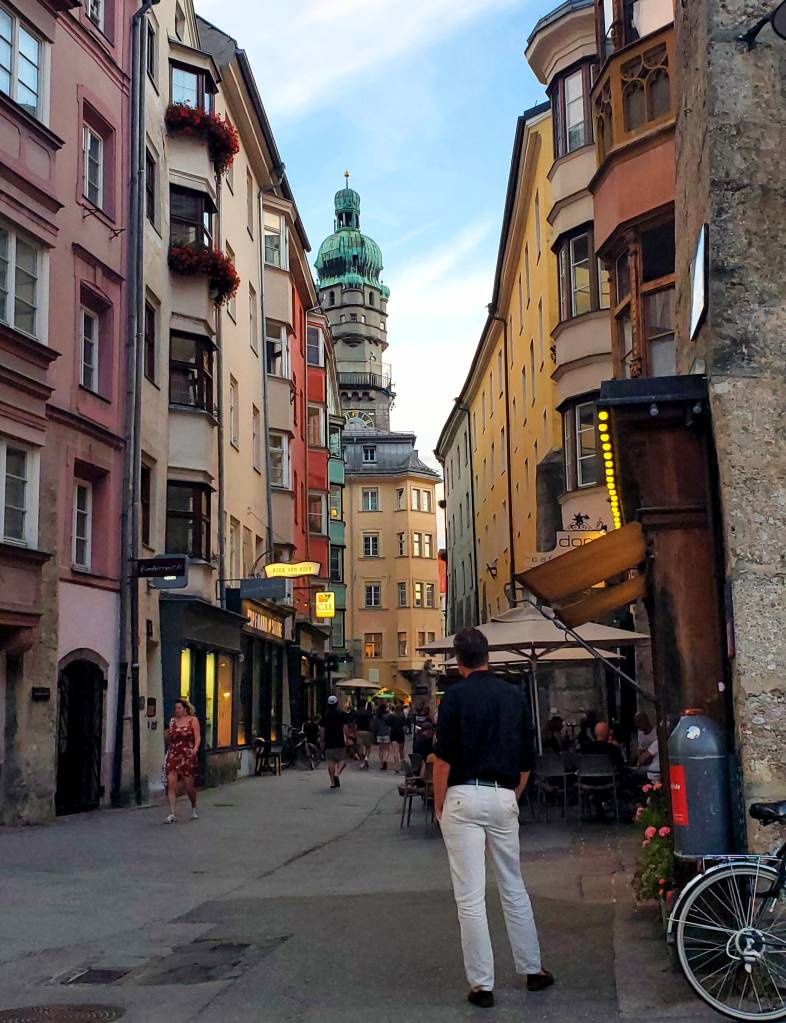
A brief stroll from the Innsbruck Hauptbahnhof (“Main Train Station”) through Altstadt (“Old Town”) would be enough to justify any trip to the historic city. The ornate pastel facades of the buildings in their Baroque and Rococo style seem surreal, like a village in a classic animated Disney film.
Source: Dark Passport Photography
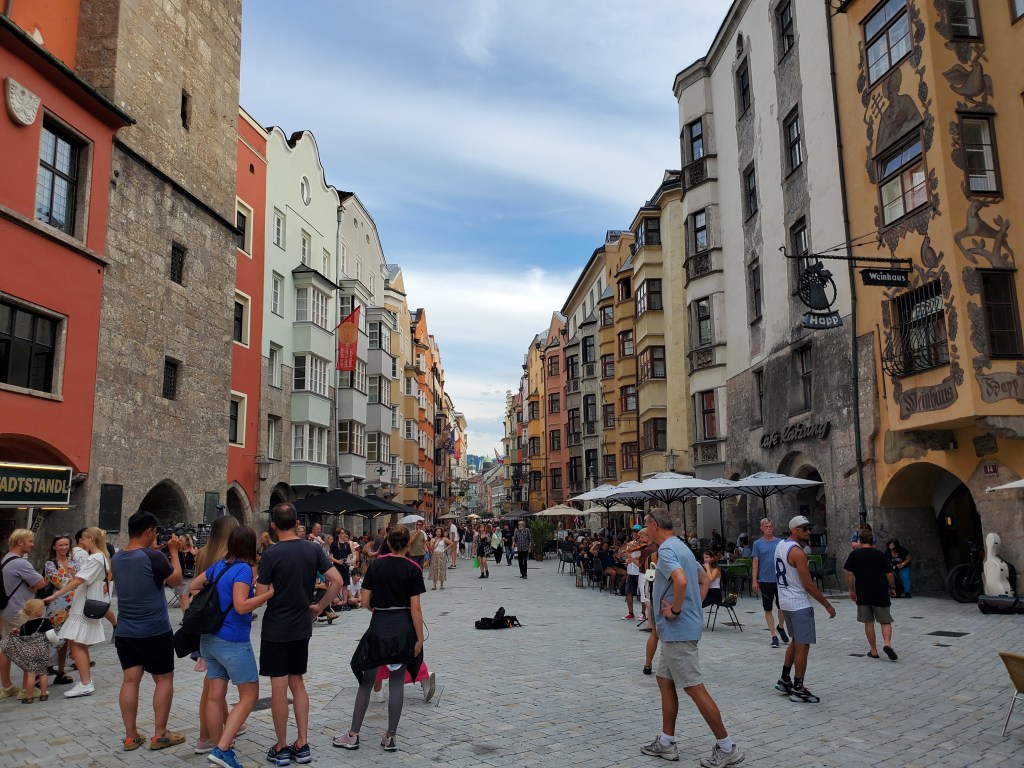
The exterior of some historic structures, such as the eighteenth-century Weinhaus Happ (“Happ Wine House”) pictured above, are decorated in traditional frescoes known as Lüftlmalerei (“air painting”). Like most forms of art, Lüftlmalerei are intended to tell a story. In the case of the wine bar, St. Urban of Langres (the patron saint of winemakers) is seen on the front of the building among bunches of grapes. But, most of us were more interested in food as opposed to wine.

Source: Dark Passport Photography
Source: Dark Passport Photography
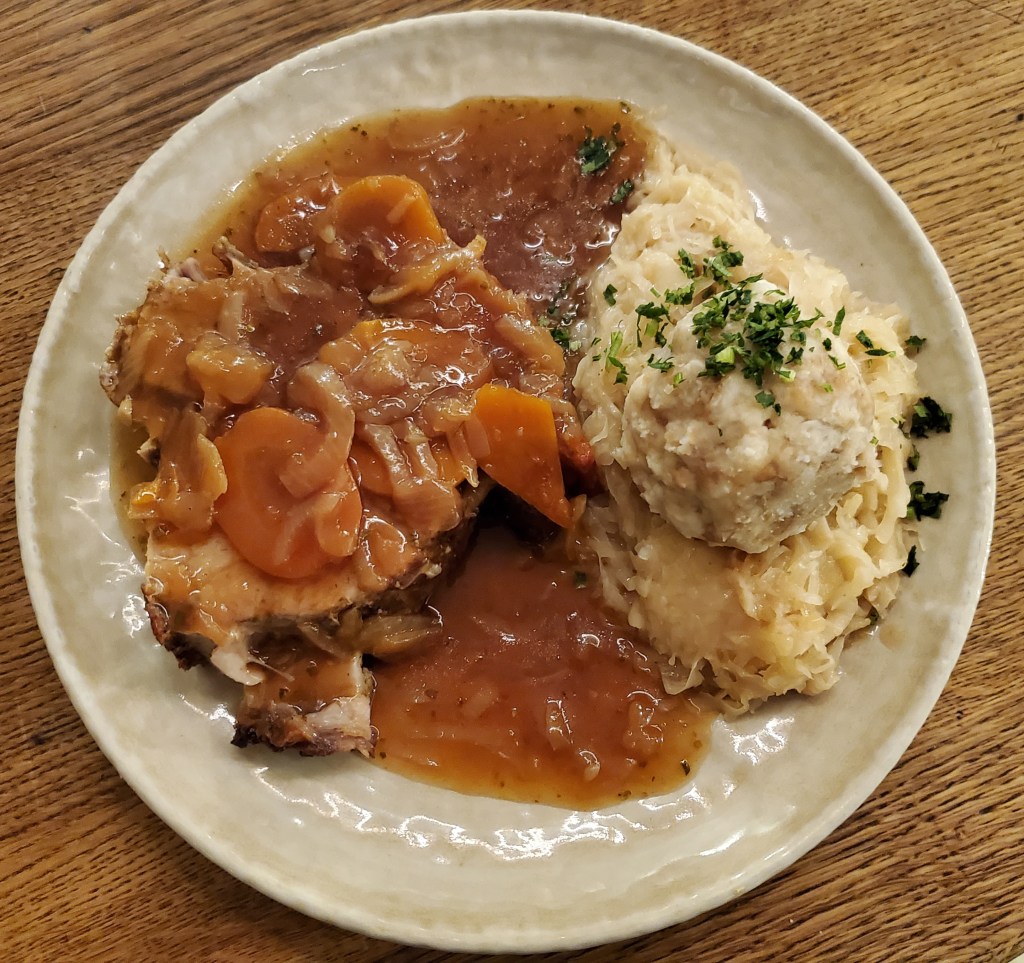
The schweinebraten (“pork roast”) dish at Stiftskeller restaurant in Old Town had a traditional sauce made with onions, beer, and carrots while the sides were homemade sauerkraut topped with a pretzel dumpling. The restaurant is hardly two decades old, but the building it is housed in has been around since the mid-eighteenth century. As the largest ale house in Innsbruck, it can hold over 800 people in nearly a dozen separate dining areas accessed from seven different entrances. That many tourists in so many rooms and passageways speaking various languages diluted with Augustiner beer makes for a fantastic people-watching experience. If you get up to use the restroom, there is no guarantee you will find your table again.
Source: Dark Passport Photography
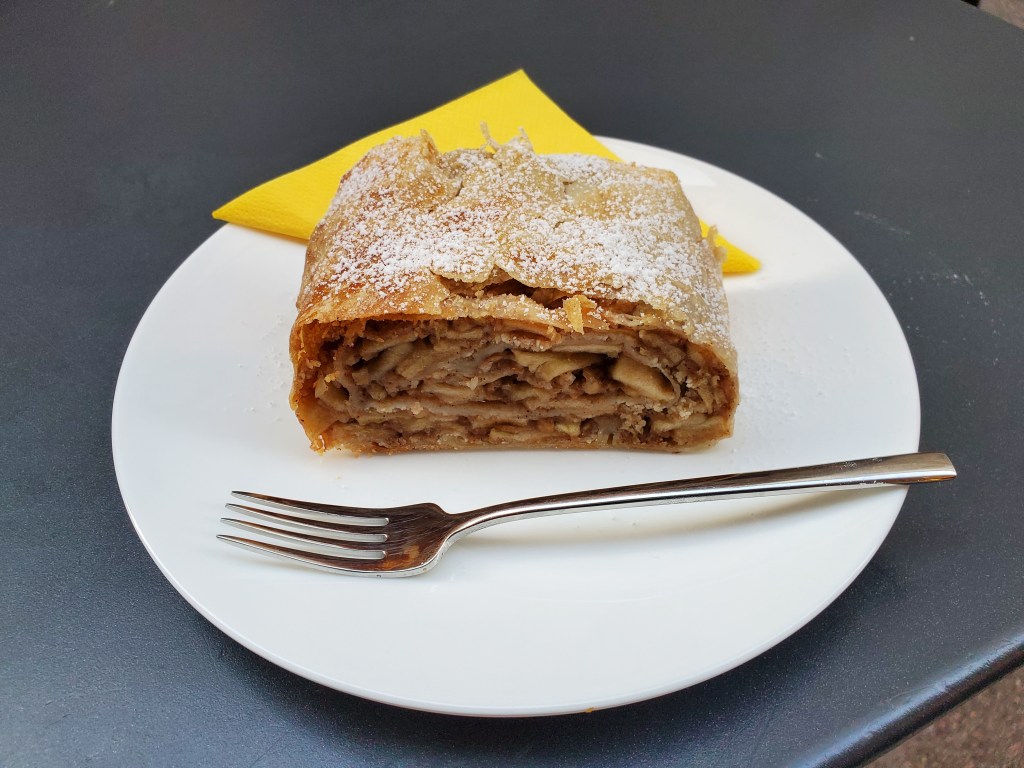
Around the corner from Stiftskeller, it is hard to resist a quick apple strudel break at Strudel-Café Kröll. I am certain there is better strudel to be had further away from the touristy part of Innsbruck, but for most visitors this is an impromptu “When in Rome” moment. Additional flavors are available in both sweet and savory. They also have a large variety of coffee.
Source: Dark Passport Photography
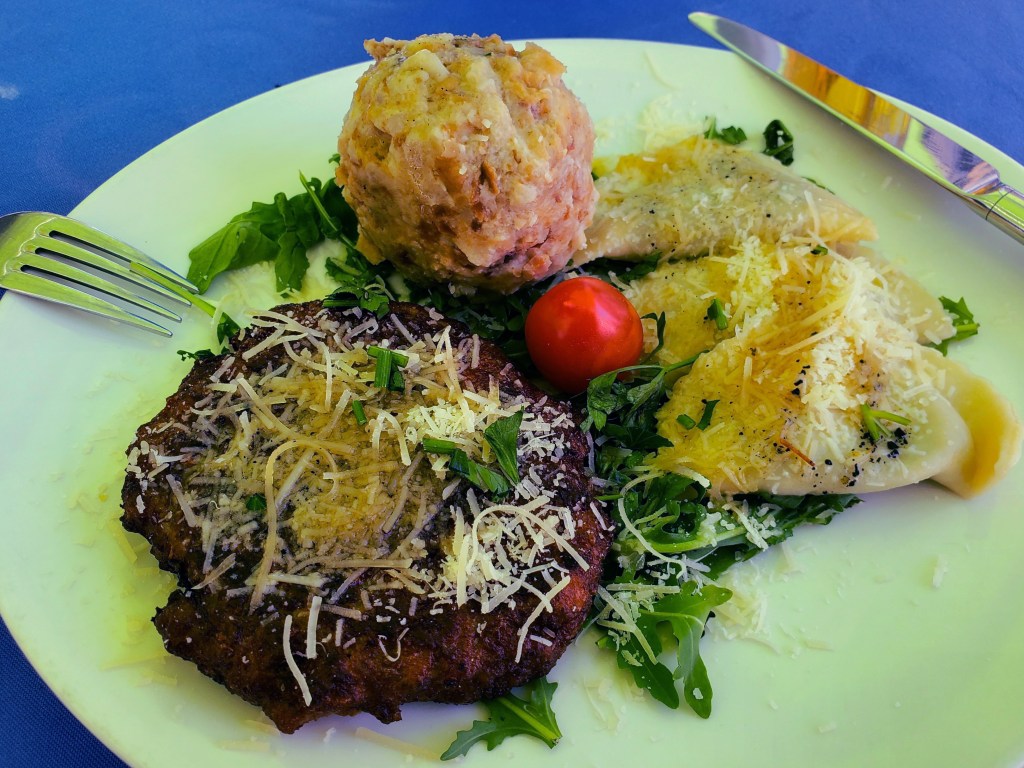
Facing the main street of Old Town Innsbruck is the Altstadtbeisl (“Old Town Pub”) restaurant. Once again, true Bavarians and Austrians would thumb their nose at a tavern located so close to the tourism hub of Innsbruck. But the food wasn’t that bad and the view on the patio could hardly be better. The schmankerl teller (“delicacy plate”) dish was comprised of three categories of what the Germans and Austrians refer to as “dumplings”: 1. Kaspressknodel (“cheese dumpling”), flattened and fried. 2. Tirol knodel, a bread dumpling shaped into a ball and named after the region of Austria that Innsbruck is located in. 3. Schlutzkrapfen, three dumplings that look like pierogi or ravioli stuffed with cheese.

Source: Dark Passport Photography
Dessert this time was an ice cream cone from Eisgrotte (“ice grotto”; the word “ice” in German is used to represent “ice cream”). The small walk-up ice cream shop was founded in 1938 in Innsbruck and its long-standing reputation gives way to a queue at all hours of business. The cones are inexpensive, especially for a tourist destination, but that is because their signature sundaes are the moneymaker. I took my frozen treat on a stroll to admire more of Innsbruck’s architecture and history.

Source: Dark Passport Photography
Beginning just after sunrise and continuing well into the evening, there is bound to be a crowd of varying size standing at the northern terminus of Herzog-Friedrich-Straße taking photographs of a golden balcony known as Goldenes Dachl (“Golden Roof”). At the tail-end of the 15th century, Holy Roman Emperor Maximilian I commissioned the roof of the balcony overlooking the town square to be decorated in gilded shingles – 2,657 to be exact. The Golden Roof has long since become the most iconic landmark in the city. People come to Innsbruck for more than just the architecture though. It’s the Heart of the Alps, remember?

Source: Dark Passport Photography
The website of the 360° Café in Innsbruck says it best: “This is a place with special secrets.” Indeed, even if you are looking for it, the best rooftop bar in the city is difficult to find despite being in the middle of the Rathaus Galerien (“City Hall Galleries”) shopping mall. Finding the café also means finding a view of the Nordkette mountain range that you cannot turn away from. The mountains are so close that they beckon you to them. My trance was broken by the soft accent of a curious Austrian asking, “Have you been?” It was one of the bartenders, speaking perfect English as someone working the service industry in a European tourist destination often does. “There is a funicular and cable car to the top.”
Reaching the Top of Innsbruck is somehow simple and complicated at the same time, which is about right for Western European engineering. The adventure begins on the Hungerburgbahn, which is the funicular so named for the mountainous region it connects the city center to. The four stations along the railway were designed by renowned Iraqi-British architect Zaha Hadid, who apparently didn’t take Alpine weather into account because one of the stops has to be partially closed each winter due to its roof not protecting it from snow. Passengers enroute to the Top of Innsbruck disembark the funicular partway up the mountain and switch to the first of two cable cars.

Source: Dark Passport Photography
The Seegrubenbahn gondola travels between Hungerburg and Seegrube, the latter of which being the name of a particular location on the mountain that has a restaurant with incredible views and is open year-round. Lovely as the view at Seegrube may be, it is just a preview of what is to come after one more cable car ride.

Source: Dark Passport Photography
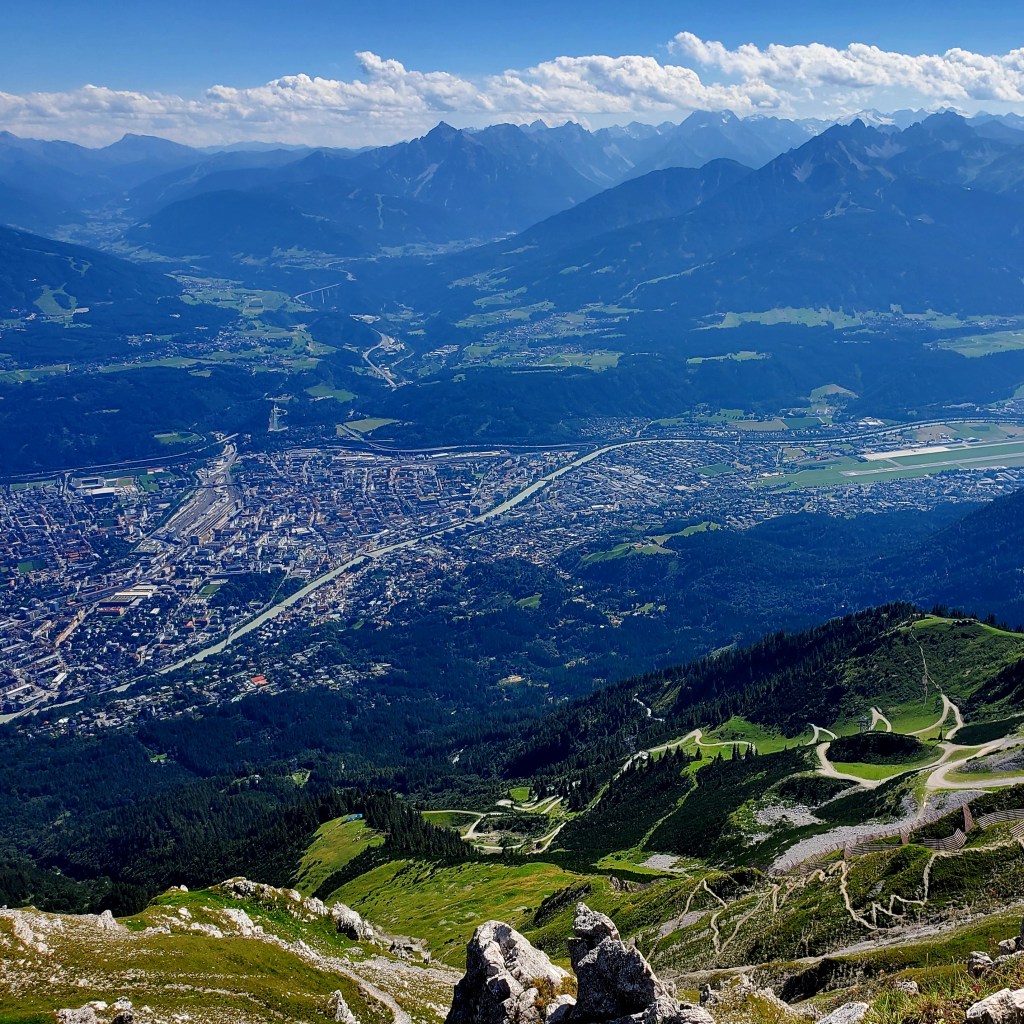
The Hafelekarbahn is the cable car between Seegrube and Hafelekar, the peak representing the Top of Innsbruck. Walking distance from the gondola station is the true peak, referred to as Hafelekarspitze (spitze meaning “tip”, “peak”, or “great”). At an altitude of 7,657 feet above sea level, the top of the mountain won’t induce altitude sickness or shortness of breath. But the prominence above the city offers truly wonderful views that are easily attainable.
Source: Dark Passport Photography
Atop the Nordkette mountains on a clear day looking down into Innsbruck, it becomes obvious why the area is known as the Heart of the Alps. I was thankful to have given the country of Austria a fighting chance after a disheartening visit to Hallstatt. The trip isn’t over yet, but the next stop will be covered in the next blog: #57: Swarovski.
 The Dark Passport