This is the final in a three-part series that began with Blog #51: You Better Belize It (Part I: Mainland) and continued with Blog #52: You Better Belize It (Part II: Hopkins).
Madonna’s famed hit La Isla Bonita (Spanish for “The Beautiful Island”) makes multiple references to the whimsical island of San Pedro, a place with a tropical breeze and Latin elegance whose exact location remains debated among music and travel enthusiasts to this day. The most widely accepted setting for the real La Isla Bonita is the town of San Pedro on the southern stretch of the island of Ambergris Caye in Belize.
In Blogs #51 and #52 I found it easiest to describe the Central American country of Belize as being made up of distinct areas: the inland zones throughout the jungle that are peppered with Maya historical sites, the eastern coastline with quiet yet picturesque beach villages, and the adventurous islands comprising Ambergris Caye. The latter destination is the most popular among the three for tourists visiting from abroad. Ambergris Caye is surrounded by the warm blue water of the Caribbean Sea but lacks the high-rise hotels and cruise ship crowds that can put a damper on a vacation to the other, more well-known tropical islands nearby. It’s like going to an amusement park on a slow day or finding a great restaurant off the beaten path. All the fun but none of the riffraff. It turns out, part of the aforementioned “fun” is the process of getting to the little island.

Source: Dark Passport Photography

Source: Dark Passport Photography
Puddle jumpers and ferries are the only two readily available commercial carriers going to and from Ambergris Caye. The boats are cheaper at $30 USD one-way but take 90 minutes to get from Belize City to San Pedro. Flights, on the other hand, will cost $80-90 USD (again, one way) yet only take 15 minutes. Many people opt to take their chances in the air in the interests of the valuable travel commodity known as ‘time’. Aside from shaving over an hour off the clock compared to a ferry, the view from the little plane flying over the islands was equally worth the extra money.

Source: Dark Passport Photography
The ride from the airport to the hotel was described ahead of time as being a “black cart”. Having never been to the island, I assumed this was a typographical error and didn’t think much of it until leaving the terminal and seeing a mess of golf carts. The island is so small that traditional passenger cars aren’t practical or necessary. Everyone, and I mean everyone, travels in gasoline-powered carts with off-road tires. Golf cart rental companies are as ubiquitous in San Pedro Town as coffee shops in Seattle, and the prices are therefore fairly stable. The average price for a typical four-seater cart is around $45 per day or $185 per week. Larger, six-seater options are available as well.
It is difficult to describe until you experience it, but golf cart culture fits the laid-back beach town perfectly. First of all, everyone on the island is drunk from about 10am until 2am, so full-sized automobiles would be quite dangerous. Plus, the ability to constantly feel the sea breeze and hear the yacht rock emanating from every downtown shop as you wave to people you don’t even know is such a Caribbean vibe that it makes the cart rental cost seem negligible. Then again, the cost of really anything on Ambergris Caye is an afterthought once you see the accommodations.
Source: Dark Passport Photography
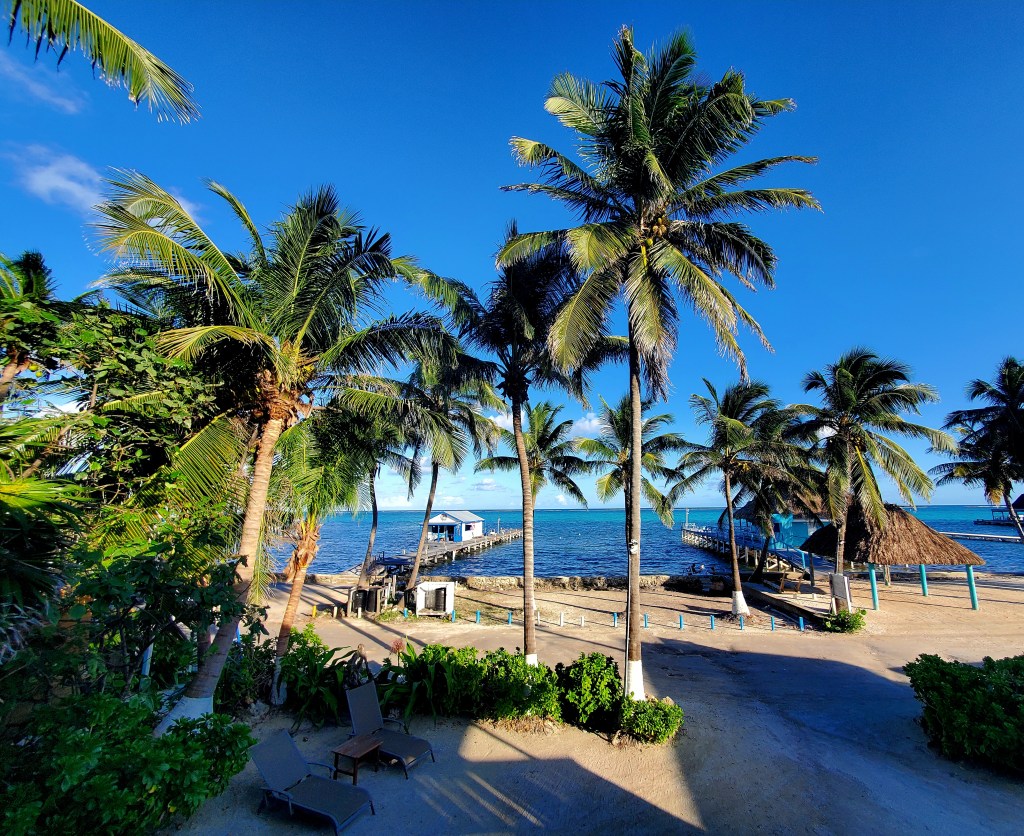
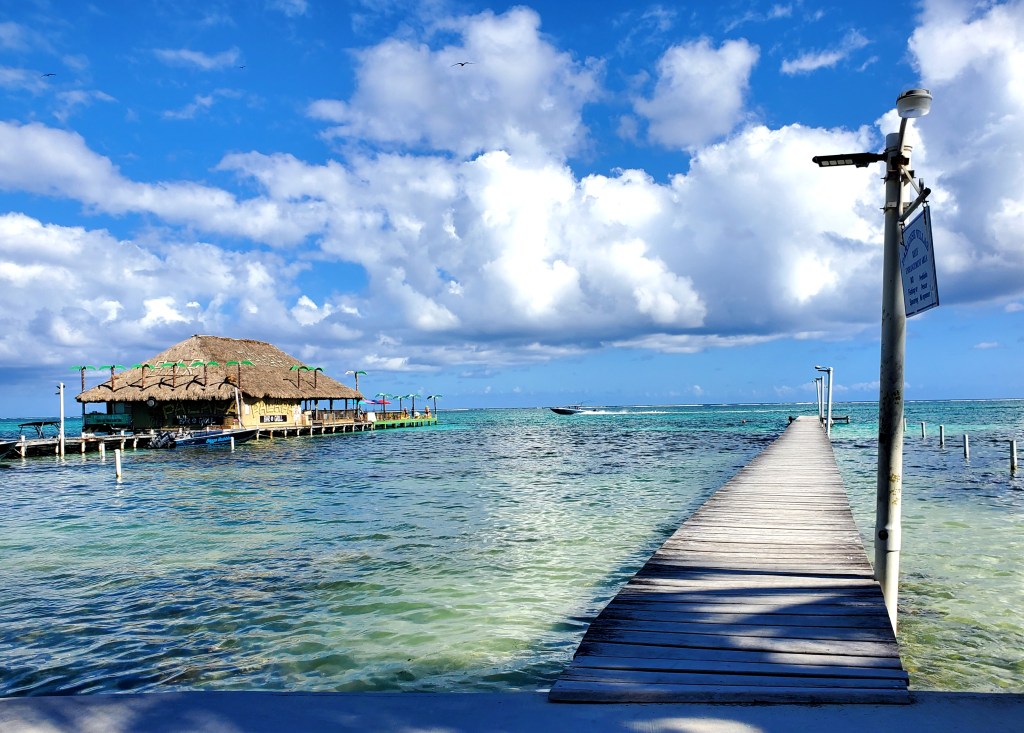
Three perfect hotel views in a row in Belize. It will be a while before I get this lucky during international travel again. It was maybe a grand total of 50 yards from the front of the boutique hotel past the palm trees to the vibrant blue water of the Caribbean Sea. In contrast with Hopkins, much of San Pedro Town is separated from the water by sea walls rather than beaches with white sand. Those wishing to spend the day in lounge chairs under umbrellas need to plan their lodging and transportation carefully as there are only a few traditional beaches in the area. Another option is to use inflatable pool floats to relax in the slips between piers, taking caution not to venture past the end of the docks into the wake zone. As an adventure travel destination, Ambergris Caye is bustling with powerboats near its shores.

Source: Dark Passport Photography.
Full-size photograph located at Dark Passport Photography
Even with limited free time, I am never one to miss out on the fun. A snorkeling excursion was in order, being that Ambergris Caye is immediately adjacent to the second largest barrier reef in the world. The sea life and water clarity were, simply put, amazing.


Photo Courtesy of Anwar Tours
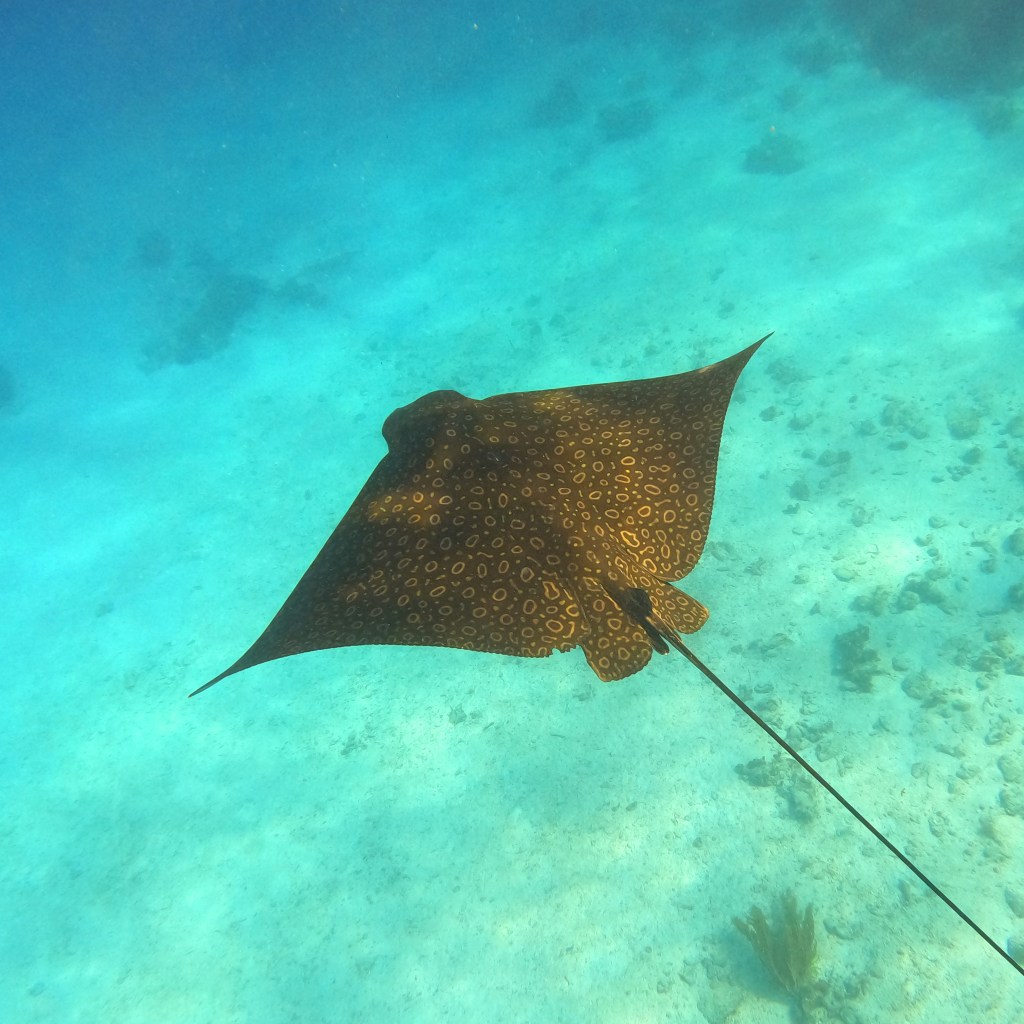
Photo Courtesy of Anwar Tours
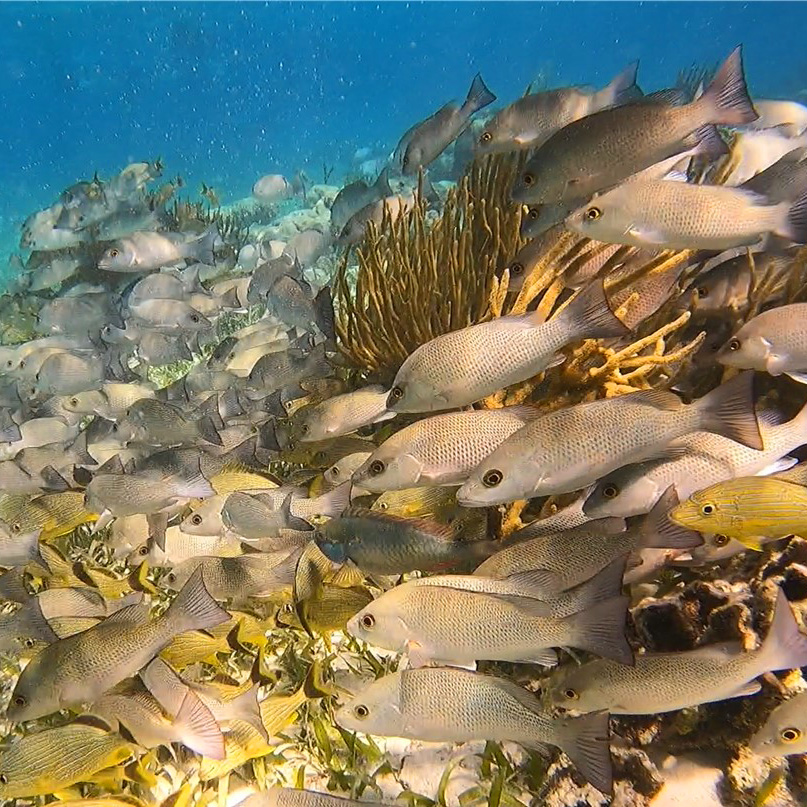
Photo Courtesy of Anwar Tours

Photo Courtesy of Anwar Tours

Photo Courtesy of Anwar Tours
The snorkeling expedition departed from Caye Caulker, a small island south of Ambergris Caye where the motto is “Go Slow”. Before leaving, our group stopped at the docks and fed the local tarpon fish that jump out of the water to grab whatever is in your hand. Tarpon don’t have teeth in the traditional sense, but as I unfortunately found out, the structures in their mouth are still rough enough to cause bleeding if they accidentally chomp down on your hand. Here is a video I found online which shows the experience: https://www.youtube.com/shorts/XK0-OjSPUY8
After hopping on the boat, we raced off to Hol Chan Marine Reserve and the dubiously named Shark Ray Alley for snorkeling. The pictures above speak for themselves. Swimming in a synchronized school of fish through the vibrant coral reef is absolutely mesmerizing. Being within a few meters of rays, barracuda, sharks, and a sea cow was intimidating at first but it soon became apparent that many marine animals tend to go with the flow as long as people aren’t making sudden movements or trying to touch them. The nurse sharks will even rub against humans while they search for food, although I found their coarse skin to be too rough for snuggling. The fish weren’t the only hungry ones though, and all that swimming made me work up an appetite.
Source: Dark Passport Photography

Source: Dark Passport Photography

Source: Dark Passport Photography
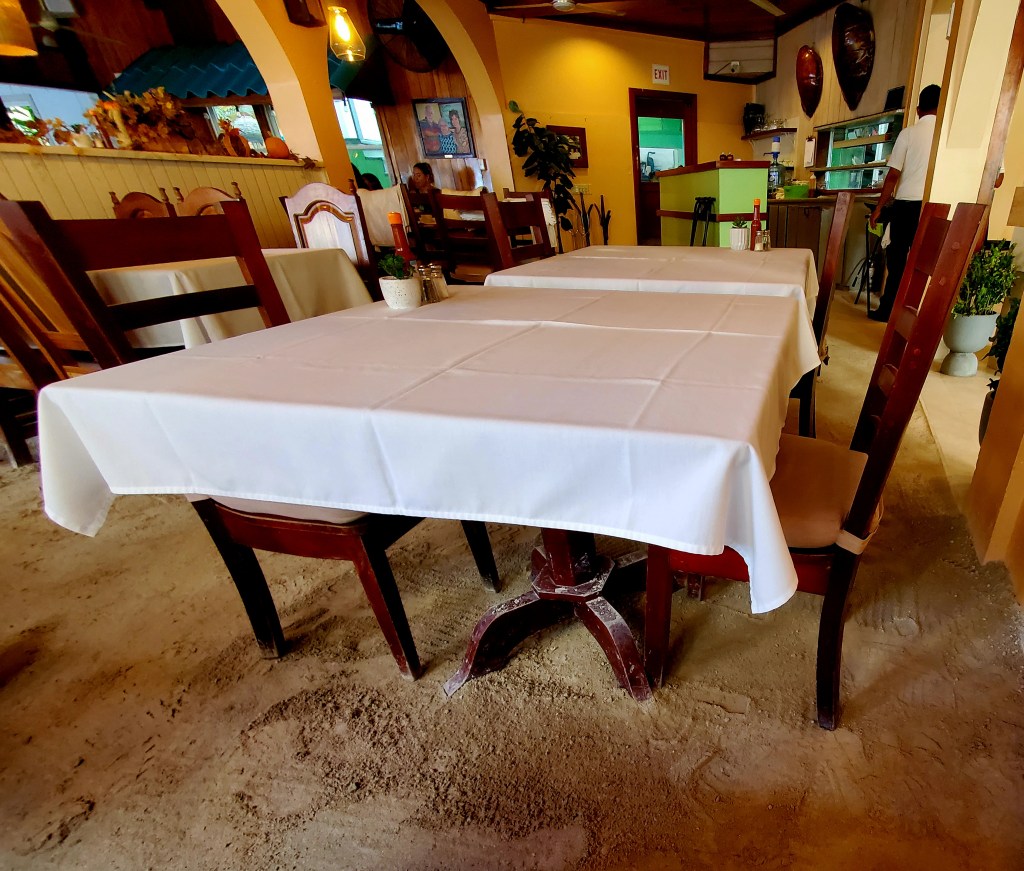
Elvi’s Kitchen is the self-proclaimed “most famous restaurant on San Pedro”. Located downtown and open since 1974, Elvi’s remains the oldest restaurant on the island. As of this writing, their Google rating was 4.6 with 2,400 reviews while their Tripadvisor rating was 4.5 with over 4,500 reviews. The interior calls to mind a Mexican cantina, save for their signature sandy floors which serve as a grainy reminder that you’re surrounded by the Caribbean Sea. The restaurant has a reputation for getting very busy, which combined with the concept of “island time” results in excruciatingly long waits. The old standby when traveling to notoriously busy or slow restaurants is to arrive during off-peak hours and in as small of a party as possible. Food tastes better without screaming children and awkward personal conversations from the nearby tables anyway. In my case, it was the Belizean tacos scoring points at Elvi’s Kitchen. The uniqueness of the tacos came from their shells being fry jacks rather than tortillas. It’s a good thing I couldn’t stay on the island long, those tacos were too good to resist.

Source: Dark Passport Photography

Source: Dark Passport Photography
Closing out this trio of blogs after an action-packed trip to Central America, I will happily say I cannot wait to get back to the tropics. There is something about the way the blue water, green foliage, and white sand contrast with each other while the coastal breeze moves everything in perfect harmony.
 The Dark Passport