A hop, skip, and a jump from the continental United States is the Central American nation of Belize. Snuggled between the Yucatan Peninsula and the Caribbean Sea, the country of Belize offers visitors equally easy access to ancient ruins, lush rainforests, and stunning beaches. Its growing popularity with North American tourists is evident at Philip Goldson International Airport where full-sized jets from Air Canada, Alaskan, American, Delta, jetBlue, Southwest, and United are found.
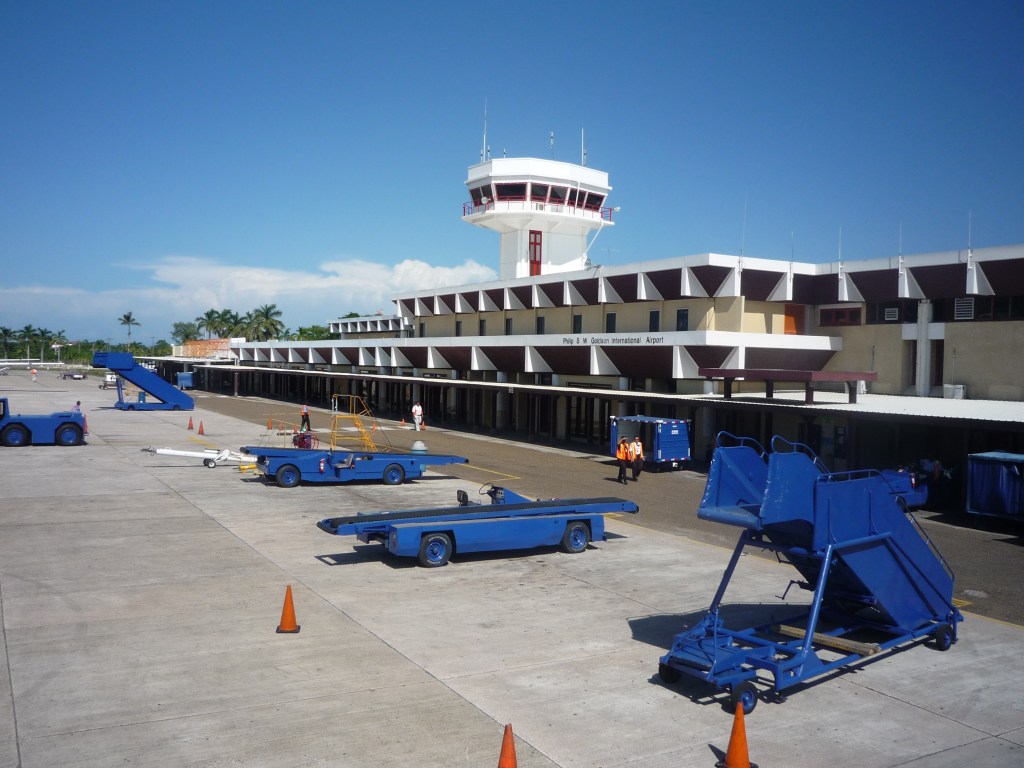
Belize is a chosen destination among American and Canadian tourists for more reasons than its proximity. Once known as “British Honduras”, Belize did not gain its independence from the United Kingdom until 1981. Still in its youth, the former British colony retains English as its official language for government and business. The speed limit signs are even in miles per hour. In fact, despite being surrounded by Latin American nations, the common language spoken among native Belizeans is actually Kriol. And while Kriol might best be described as “broken English”, you and I aren’t going to understand any of it. The whole idea behind many Creole dialects was to make it harder for the white people to decipher what their African slaves were saying to each other. To put it in perspective, check out this clip of a native Belizean switching back and forth between English and Kriol: https://www.youtube.com/shorts/PZHCV3IZ7zo To most outsiders, it sounds like Jamaican Patois, which makes sense because both languages are English Creole.

Source: Dark Passport Photography
Another reason Belize is an ideal tourist destination is safety. Don’t be fooled by the first couple statistics found online; yes, Belize has a high rate of homicides per capita, but that figure is misrepresented. The homicide rate in Jamaica is nearly three times higher than Belize. Even The Bahamas has a higher murder rate. Ironically, some of the most high-profile crimes in Belize’s history are suspected of being committed by rich North American expatriates and not the local gang members. Anyone familiar with crime in Belize will tell you that is limited almost entirely to local gangs in just one city that tourists don’t visit. The vacation hot spots are separated from the lone high crime area by over 100 kilometers of jungle in one direction and 50 kilometers of Caribbean Sea in the other. The remainder of Belizean people are extremely friendly. Politeness is part of their culture and is instilled in their youth. Relative to some of its neighboring countries, Belize has virtually no narcoterrorism or human trafficking issues. Even petty crime is minimal. Seeing as how some of the worst criminals from Central and South America are actually in the United States, this all makes sense.

Tourists who visit Belize are most likely to be found in three general areas: the inland jungle portions of the mainland, the beaches of the mainland, and the islands off the Caribbean coast. My trip encompassed all three in that same order, which is how I will write about the experience.

Source: Dark Passport Photography
Source: Dark Passport Photography
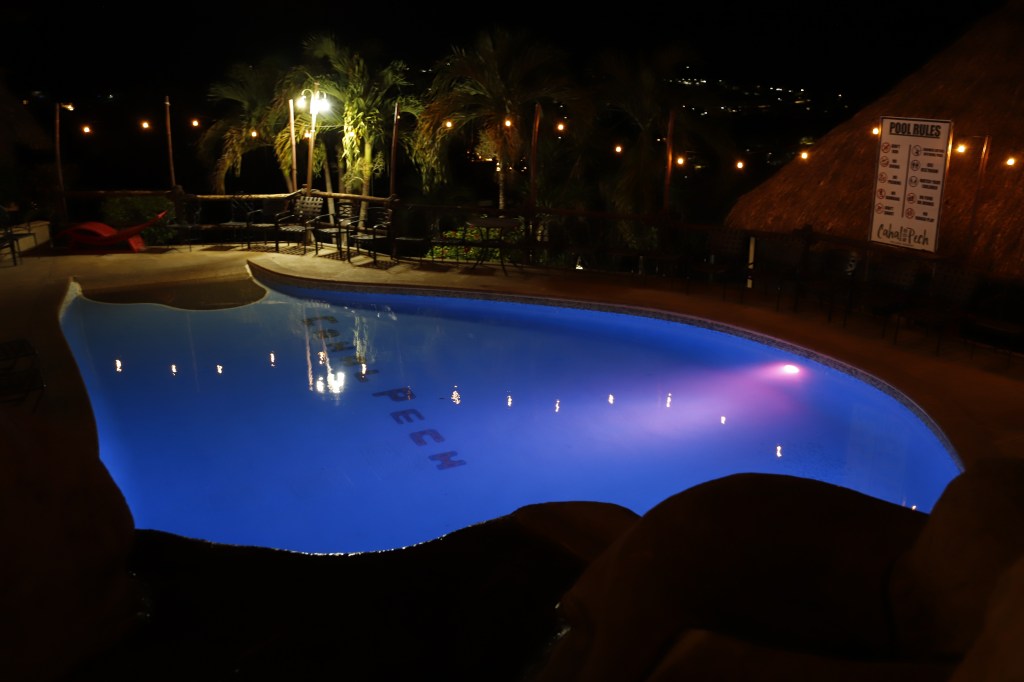
The town of San Ignacio in the western half of Belize is a jumping-off point for mainland tourism destinations involving ancient relics of the Maya civilization. The town itself is home to the Cahal Pech ruins and is close enough for a day trip to the much more elaborate Zunantunich ruins near the Guatemalan border. My hotel, the Cahal Pech Village Resort, was perched atop a hill overlooking the town and the surrounding rainforest. The city view from the two large patios of the hotel was indescribably peaceful at night; enhanced by the soft glow of the garden lights warming the brown and green palm fronds, the songs of countless chirping crickets echoing off the thatched roof huts, and a blanket of tropical air that never seemed to be hot or cold.

Source: Dark Passport Photography
Conflicting schedules and local construction precluded me from visiting any of the popular Maya pyramids. At more than 2,000 years old, I am certain at least some of them will still be around when I return. I did, however, take part in an excursion to the Actun Tunichil Muknal (ATM) Cave.
Note: Personal cameras (including phones) are not allowed on the ATM Cave tour. In respect of this rule, all photographs featured here were provided by licensed guides from MayaWalk Tours and reused with their permission (and my gratitude). None of the ATM Cave pictures shown below were taken during my expedition.
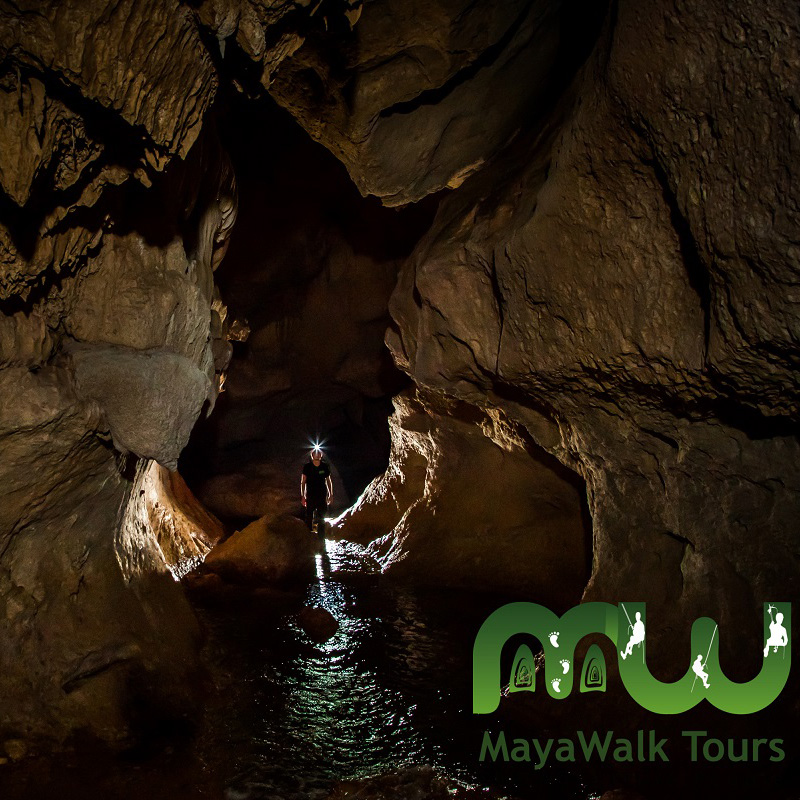
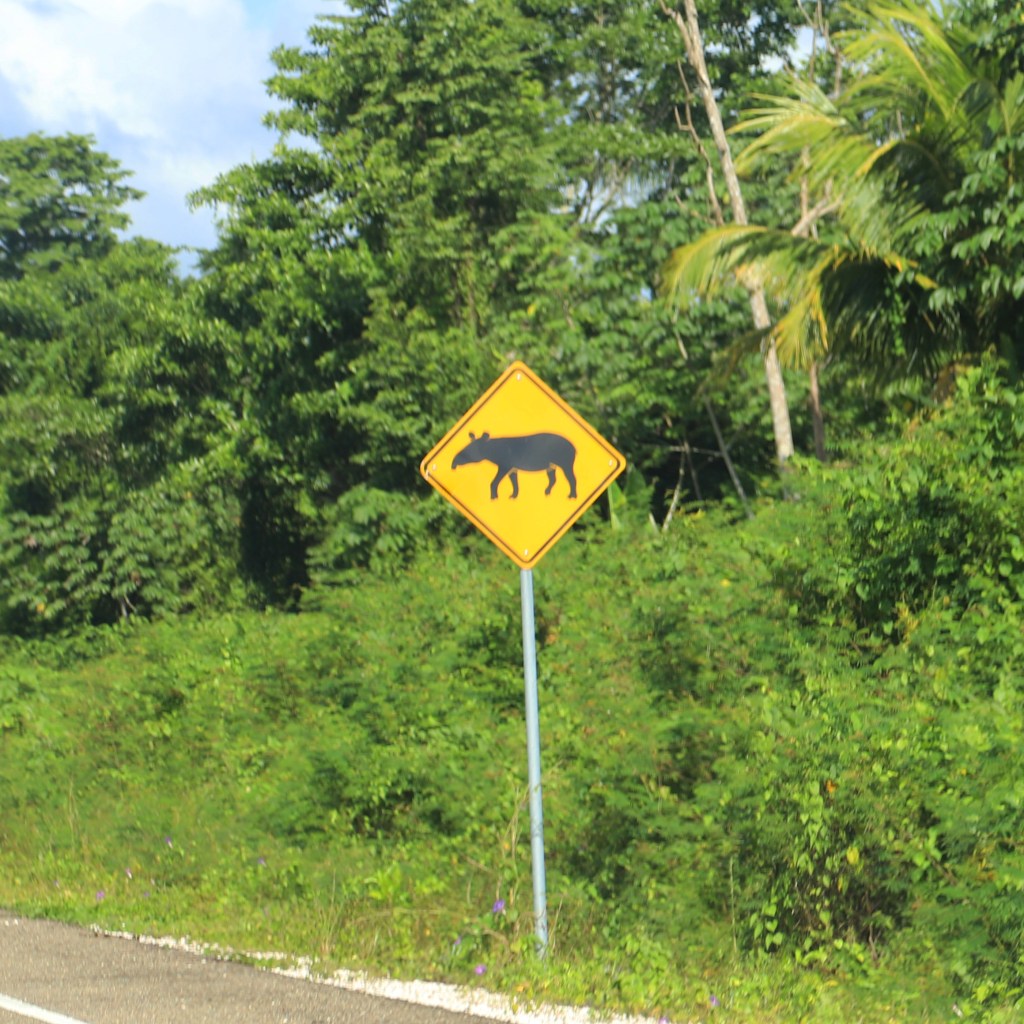
Reaching the top spot on National Geographic’s list of Sacred Places of a Lifetime surely is no easy feat. Coincidentally, neither is getting to the ATM Cave. Our journey began with a 90-minute shuttle ride from San Ignacio to the Tapir Mountain Nature Reserve. The reality started to set in as we were outfitted with personal floatation devices and climbing helmets as soon as we disembarked from the bus. Next came a 45-minute hike from the trailhead through the tropical jungle to the cave entrance.
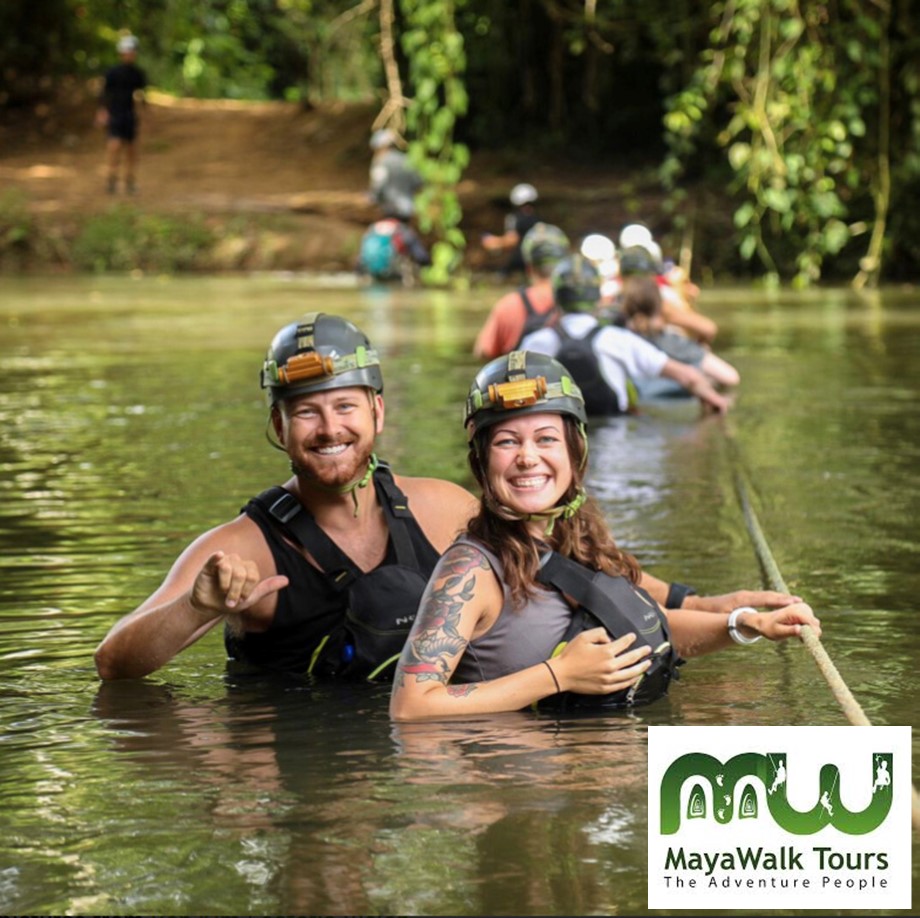

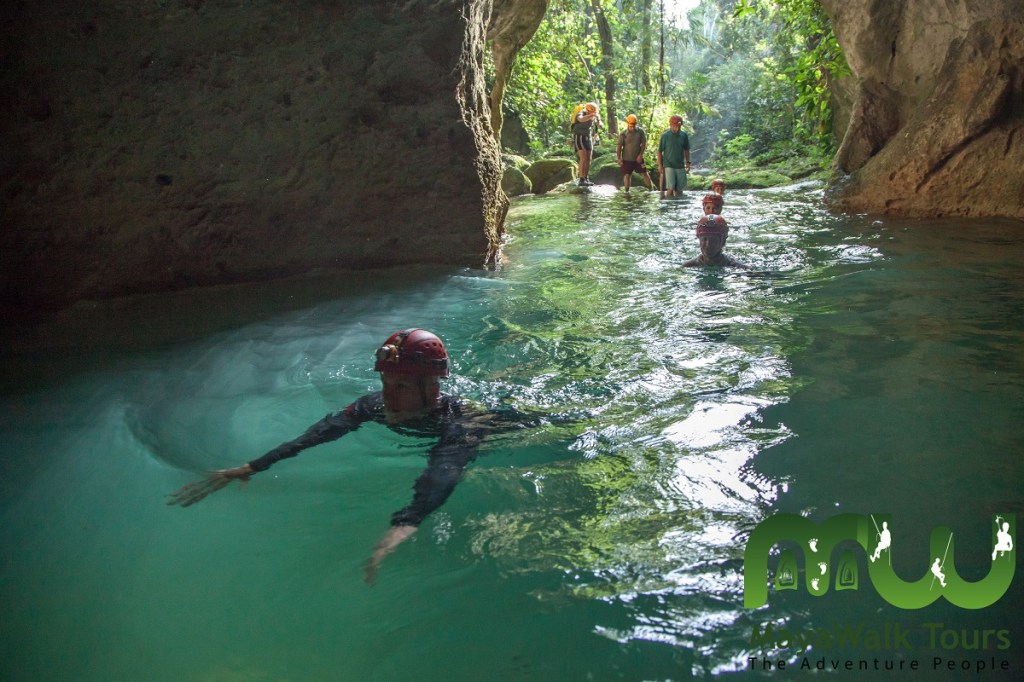
Along the way were three river crossings, one of which was neck height. Even if it were possible to hike to the cave entrance without wading through a river, the tour only gets wetter. Upon crossing the threshold at the mouth of the cave, visitors must begin swimming through a pool of clean, refreshingly cool water.
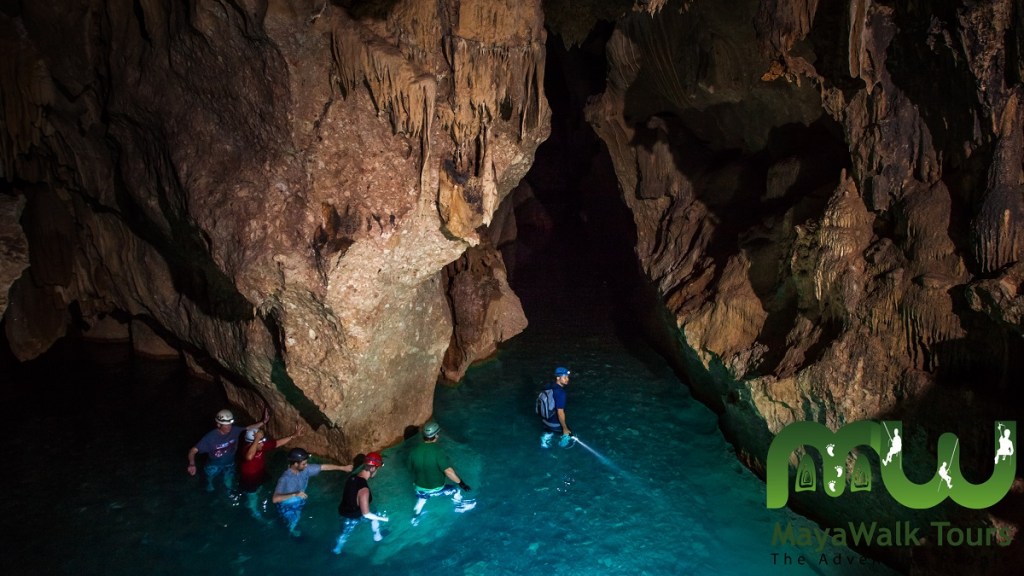
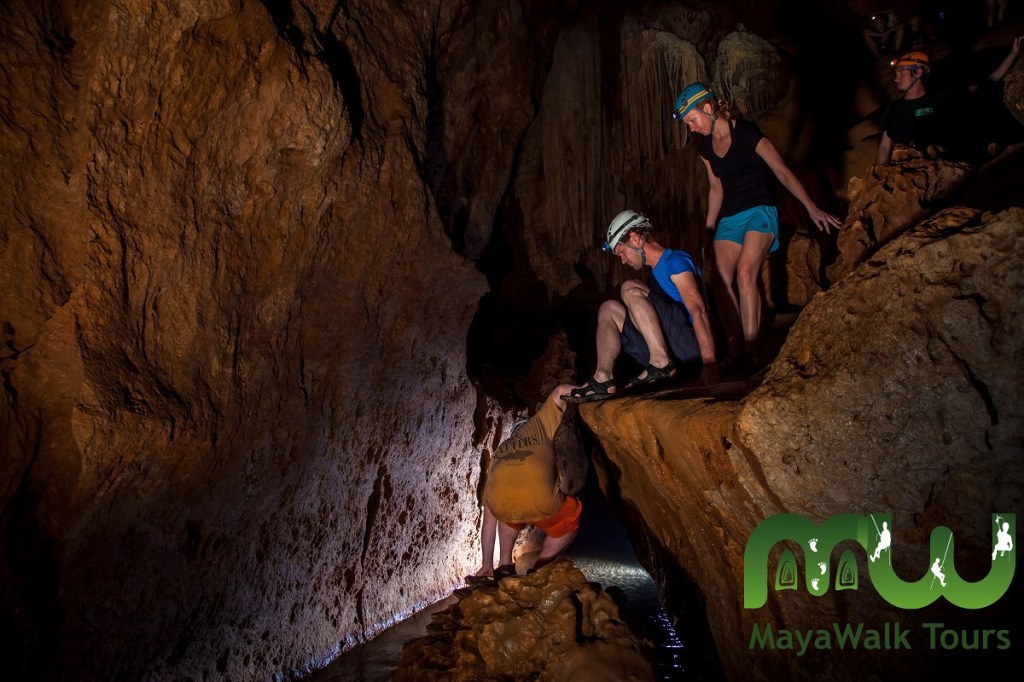
As if it weren’t clear already, the ATM Cave is a prime example of the differences between first-world tourism and that of a developing country. The same trip in America would have had paved roads, bridges, stairs with handrails, and permanent lighting. Belize is not made up of hypersensitive, litigious bureaucrats nor are its economic trends dictated by insurance companies. Therefore, we were swimming and climbing in a pitch-black cave containing zero safety infrastructure. The freedom to assess risk using my own cognizance while retaining full responsibility for my actions was as exhilarating as the chilly water I was floating in.
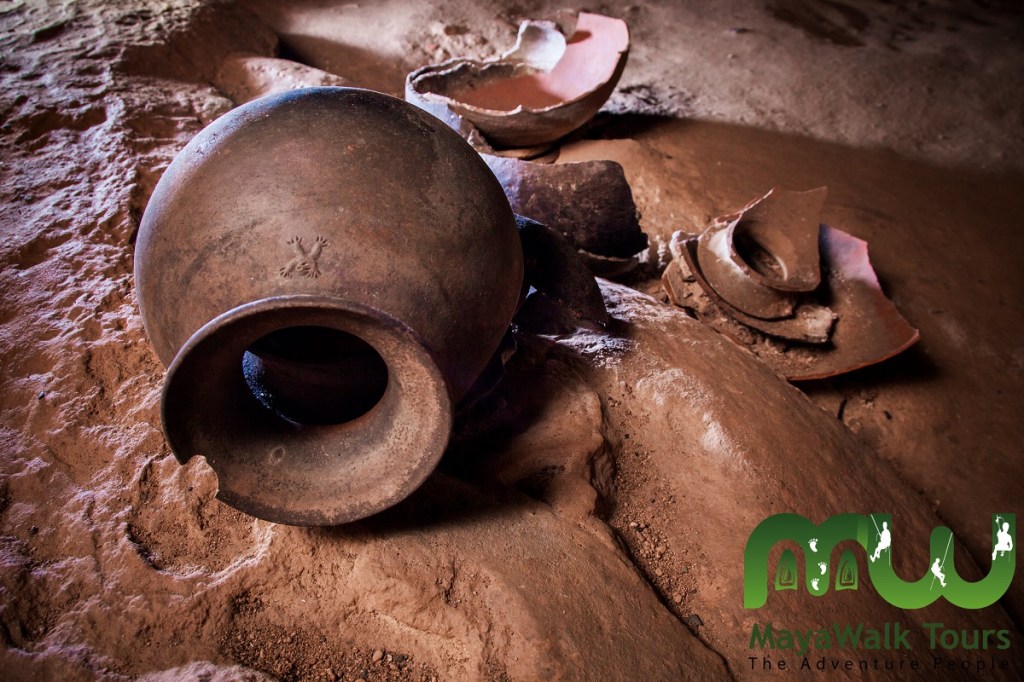
The Maya believed in Xibalba, their version of the underworld. It was known to be a dark, frightening place below the surface of the earth. Historians assume the Maya understood caves as portals to Xibalba. To please the gods, Maya people would enter caves to perform ritualistic sacrifices. Bloodletting was common, and some of the pottery used for collecting blood has been found by archeologists inside ATM Cave. Other forms of sacrifice, however, were more severe.


Skeletons of nearly 20 Maya bodies have been uncovered by archeologists deep inside the ATM Cave. At roughly 1,500 years old, the skeletons have become heavily calcified and are practically one with the stone floors they lie on. The crystallized bones make identification difficult, but it is clear that several of those sacrificed were children. Nearly all show signs of having been bludgeoned to death. Sacrificing a young, healthy Maya youth was more pleasing to the Lords of Xibalba than offering someone elderly or sick. The most well-known human sacrifice within the ATM Cave is the skeleton named “Crystal Maiden”. The calcification of the Crystal Maiden has made for difficult postmortem analysis, but the body is believed to be that of a teenager. Thankfully, it’s not all doom and gloom inside Actun Tunichil Muknal Cave.
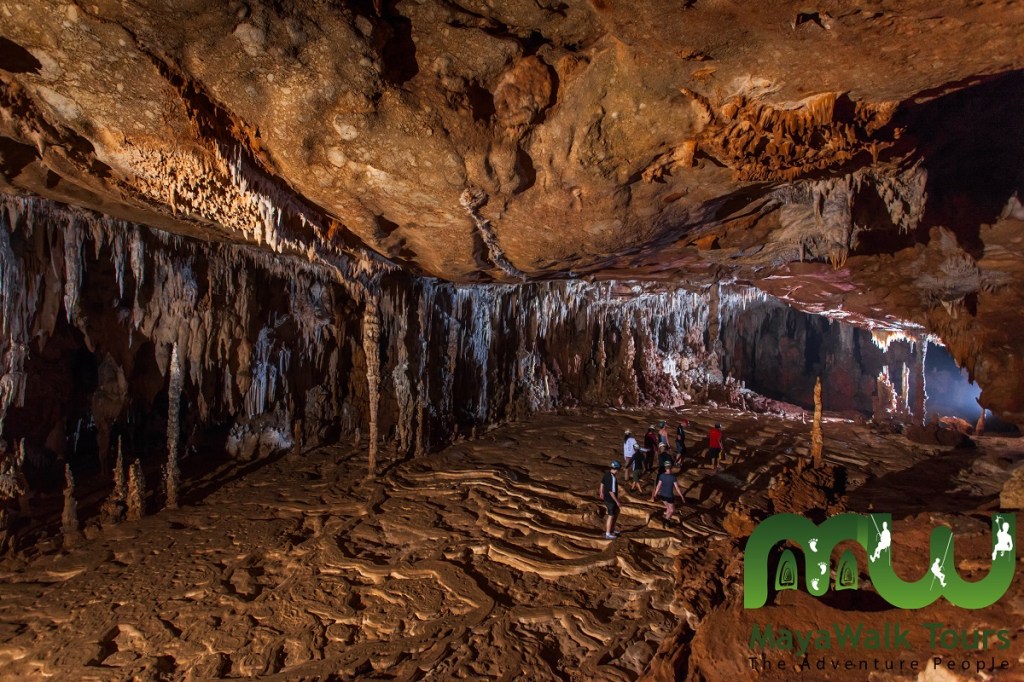
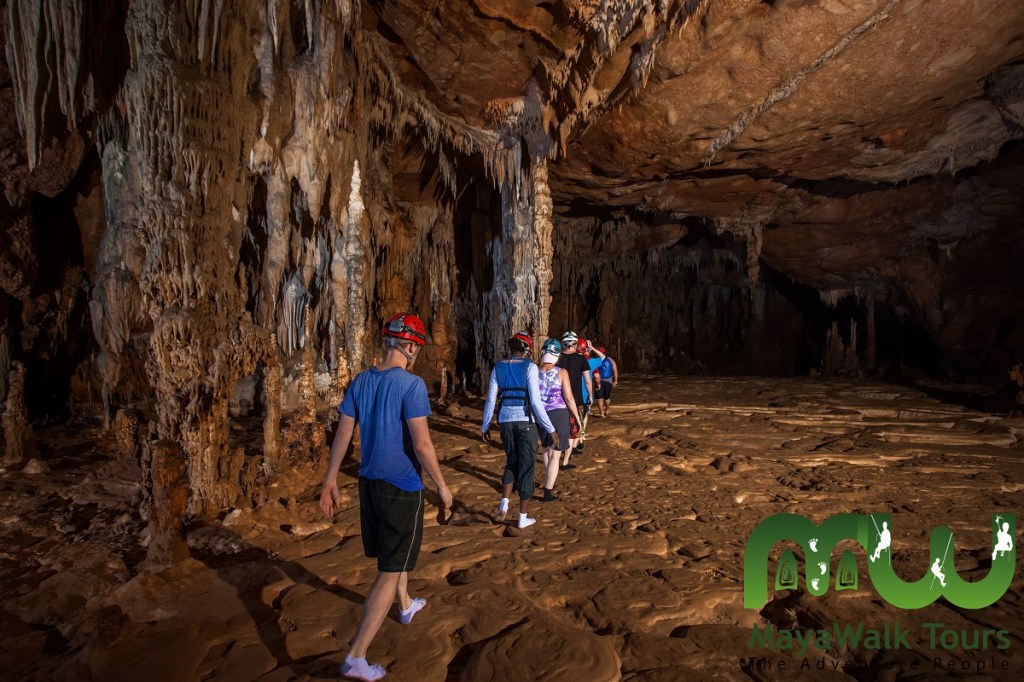
The time spent inside of ATM Cave during a standard tour is approximately three hours, with the spooky skeletons only being near the very end. The Maya used to venture deep into the cave, about two miles, before they began their human sacrifice rituals. Prior to that point, visitors to the cave enjoy viewing magnificent collections of stalagmites and stalactites while the tour guides narrate the experience. By the time adventurers see daylight again, strangers have become friends. The long walk back to the trailhead is artificially shortened by tourists regaling each other with their favorite moment of the day. Famished from all the exploration, we were relieved to find our guides had prepared a standard Belizean lunch of stewed chicken with rice, beans, and plantains for us. The running joke was that we should be thankful none of us were sacrificed to the Lords of Xibalba. “Now we just have to survive the drive back,” I joked.

Source: Dark Passport Photography
Touring the Actun Tunichil Muknal Cave and learning about the history of the Maya civilization was fascinating. But I was ready to reap the benefits of being adjacent to the Caribbean Sea. With the compass pointed east towards the water, I was only a couple hours away from a complete change of scenery. Grab your swimwear and sunscreen to meet us in Hopkins for the next leg of this trip in Blog #52.
 The Dark Passport