“But it is a sort of April-weather life that we lead in this world. A little sunshine is generally the prelude to a storm.” -William Cowper
The sun is shining, the flowers are blooming, and the temperature is rising. Spring is in the air. The annual excitement surrounding the end of winter goes back thousands of years to the month of April taking its name from the Latin word aperire, meaning “to open”. It might not seem like a stretch to name a month after the blooming of flowers, but take a moment to consider than only two of the twelve months on our current Gregorian calendar are not named for people (Janus, Juno, Augustus, etc.) or their numerical association (octo for “eight” since October was the eighth month of the Roman calendar). The modern month of April begins with the silly holiday of April Fools’ Day and includes such religious celebrations as Passover and Easter. It is a time where bright, pastel colors outshine the gloomy hues of the cold months. Barbecue grill covers are taken off and meals are enjoyed on patios. The sounds of bicycles and tennis shoes can be heard all over. Unfortunately, however, those of us scorned by the knowledge of history see April as an awful month.
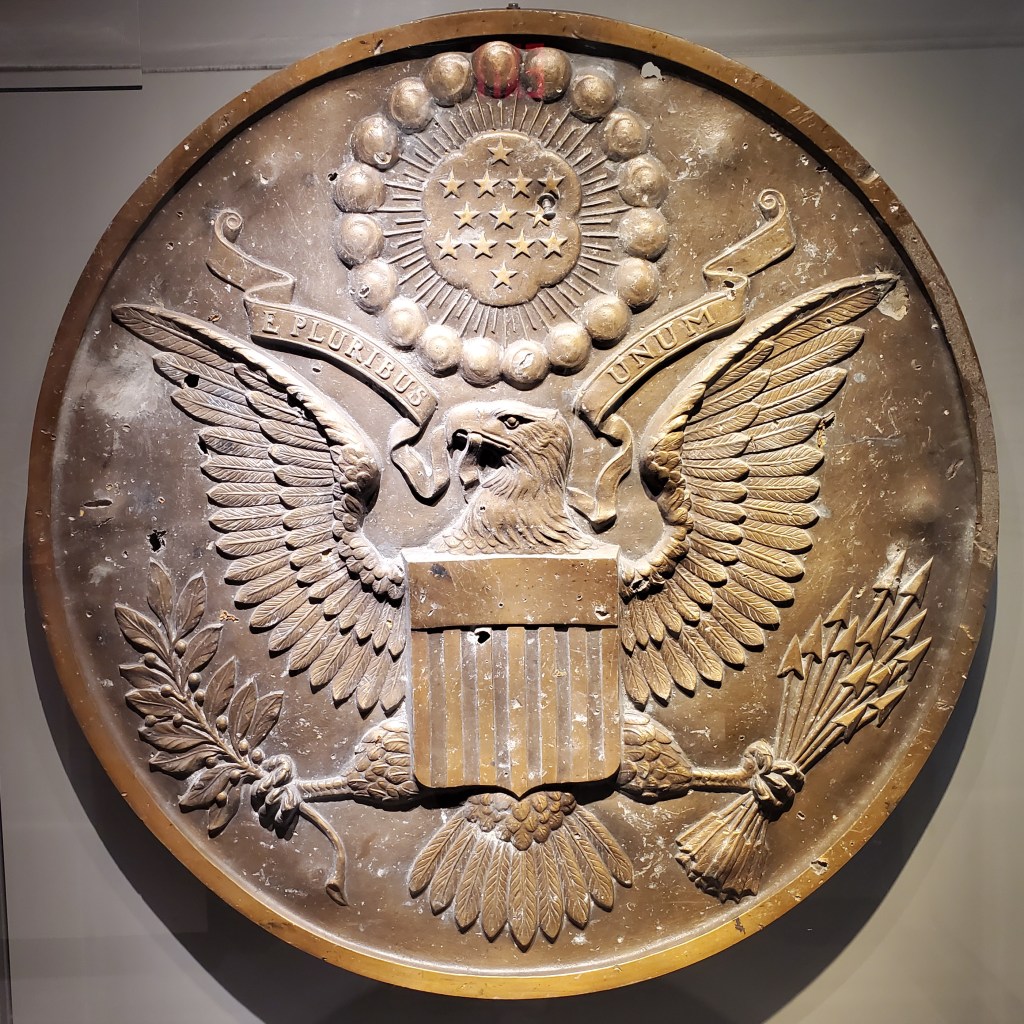
Source: Dark Passport Photography
As far back as 1775, a black cloud was over the month of April when the “shot heard ‘round the world” kicked off the Revolutionary War with the Battles of Lexington and Concord. Ninety years later at the end of the Civil War (which also started in April), another gunshot would forever reverberate through time with the assassination of President Abraham Lincoln. Fast forward one century and we see the famous activist Martin Luther King, Jr. struck dead by a single bullet while standing on his hotel balcony in Memphis. In April 1999, the massacre at Columbine High School was such a widely broadcasted event that many people still incorrectly believe it to be the first mass school shooting in the United States. Shootings in educational institutions would reach the headlines again in April 2007 when a prohibited possessor with mental health issues at Virgina Tech committed what was, at the time, considered the worst mass shooting in America’s history. Some of the tragedies in April have been accidental or natural, such as the sinking of the HMS Titanic, the Great San Francisco Earthquake, the Chernobyl disaster (worst nuclear disaster in history), and the Deepwater Horizon oil spill (largest marine oil spill in history). The deadliest coal mining disaster in history and the worst industrial accident in U.S. history both occurred in April. As if shootings and accidental disasters weren’t enough, April seems to be a magnet for terrorism as well. Bombings were perpetrated during the month of April in 1983 at the U.S. embassy in Beirut, in 2013 at the Boston Marathon, on Easter 2019 in Sri Lanka, and 1995 in Oklahoma City.
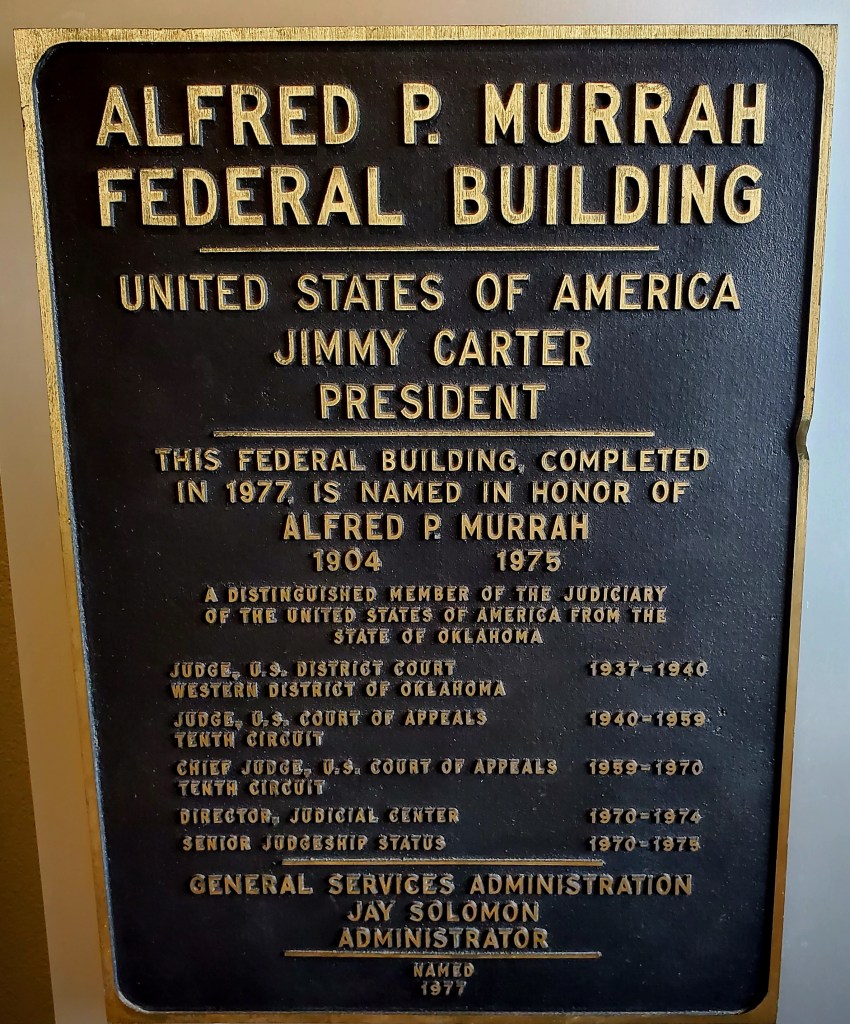
Source: Dark Passport Photography
Source: Dark Passport Photography
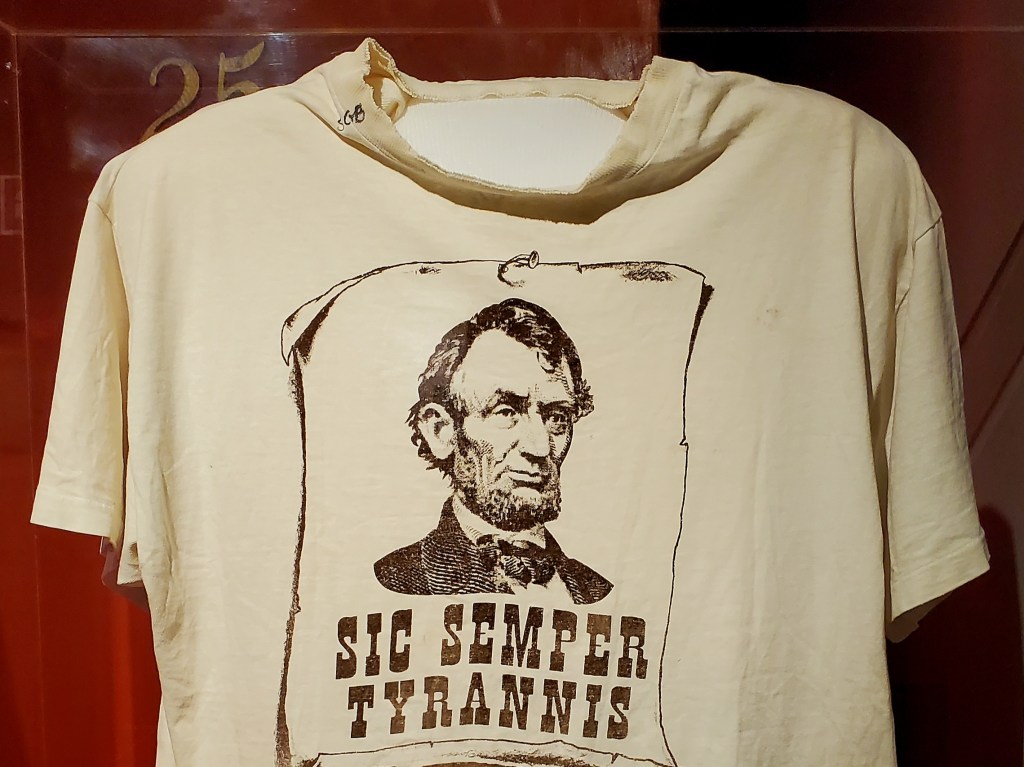
At 9:02 a.m. on Wednesday, April 19, 1995, a vehicle-borne improvised explosive device was detonated in downtown Oklahoma City with enough force to damage more than 300 buildings across 48 square blocks. Only one person in the whole city didn’t inquisitively turn towards the direction of the blast: a disgruntled U.S. Army veteran, born and raised in small town America, with a grudge against the federal government for a litany of perceived injustices, most notably of which was the Waco stand-off that had occurred exactly two years (to the day) earlier. The man was walking towards his getaway car wearing ear plugs and a shirt bearing a Thomas Jefferson quote on the back: “The tree of liberty must be refreshed from time to time with the blood of patriots and tyrants.” He saw himself to be the ‘patriot’, liberating the slighted American populace from the ‘tyrant’ government employees inside the Alfred P. Murrah Federal Building. The front of his shirt read “SIC SEMPER TYRANNIS”, the same phrase yelled by Abraham Lincoln’s assassin in the Ford Theater. The Oklahoma City bomber still had the same shirt on when he was pulled over and arrested on completely unrelated charges less than two hours after he detonated the device.
Source: Dark Passport Photography
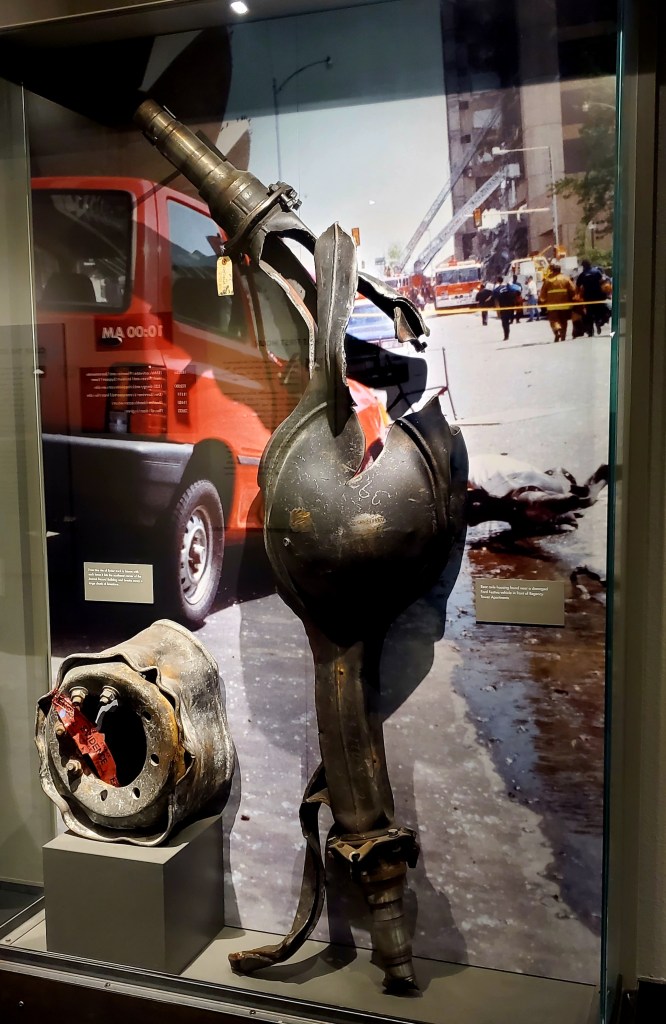
The man had been walking away from a yellow Ryder truck which was later determined to have contained several thousand pounds of explosives. The ensuing blast immediately killed 167 people with the final toll rising to 168 after a nurse was fatally struck by falling debris during the rescue efforts. Among the dead were 19 children, mostly from the on-site day care center which happened to be immediately adjacent to the bomb. The bomber only managed to kill eight federal agents despite law enforcement being his primary target; and none of them were from agencies involved in Waco. The two federal organizations incurring the most casualties were the Social Security Administration and the Department of Housing and Urban Development, neither of which being a threat to the bomber’s way of life. Many artifacts from that horrible day, including actual pieces of evidence from the crime scene, are now on display in the museum. Perhaps the most crucial link to the terrorist was the rear axle assembly from the rented vehicle that carried the bomb. Found lodged in a car nearly 600 feet from the blast site, the axle contained the confidential vehicle identification number which was used to trace the vehicle to its renter.
Thirty years after that terrible day, a large crowd gathered near the Oklahoma City Memorial to hear remarks from former President Bill Clinton and several other speakers. On the afternoon of the bombing, President Clinton had formally declared the incident to be a federal emergency. He was on the ground in Oklahoma four days later and has tried to return every five years for the memorial ceremonies.
Source: Dark Passport Photography
Source: Dark Passport Photography
“We come here to remember those who were killed, those who survived and those changed forever. May all who leave here know the impact of violence. May this memorial offer comfort, strength, peace, hope and serenity.” -Mission Statement of the Oklahoma City Memorial Foundation
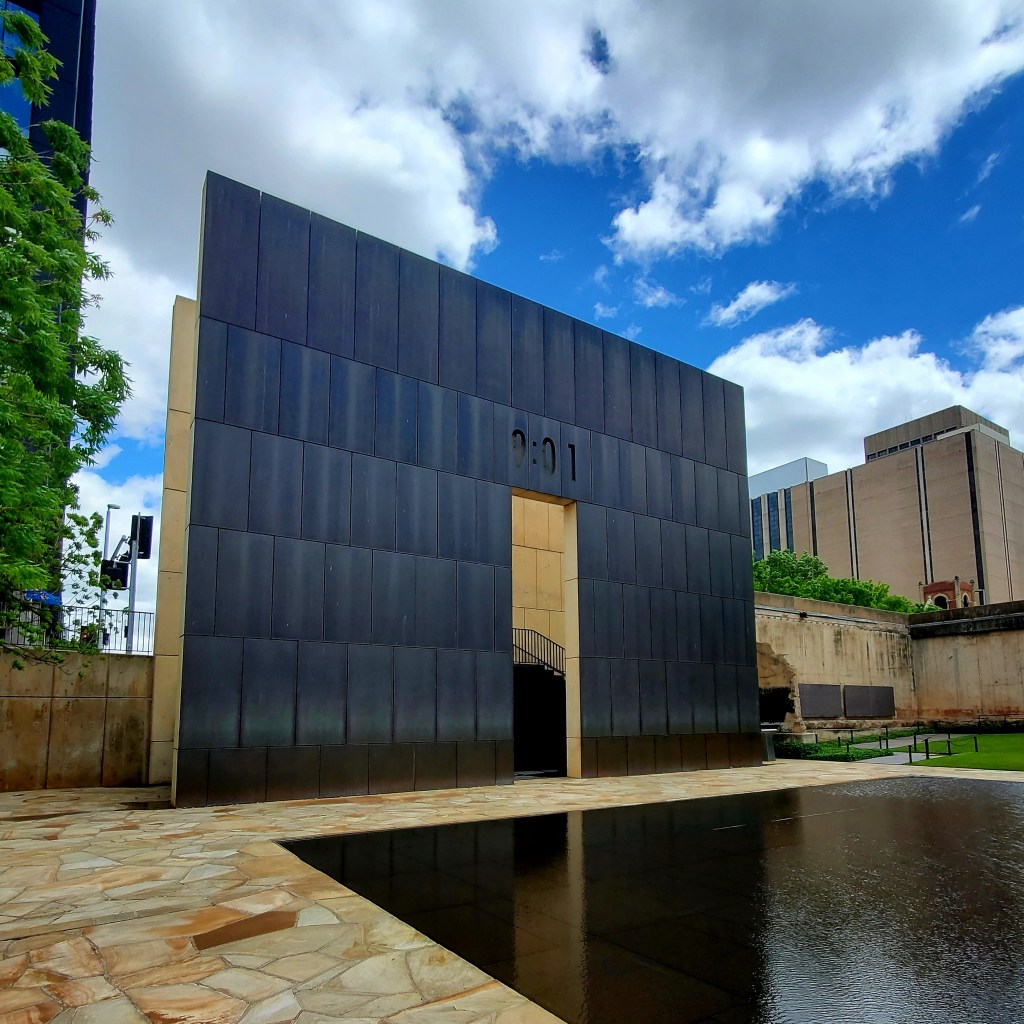
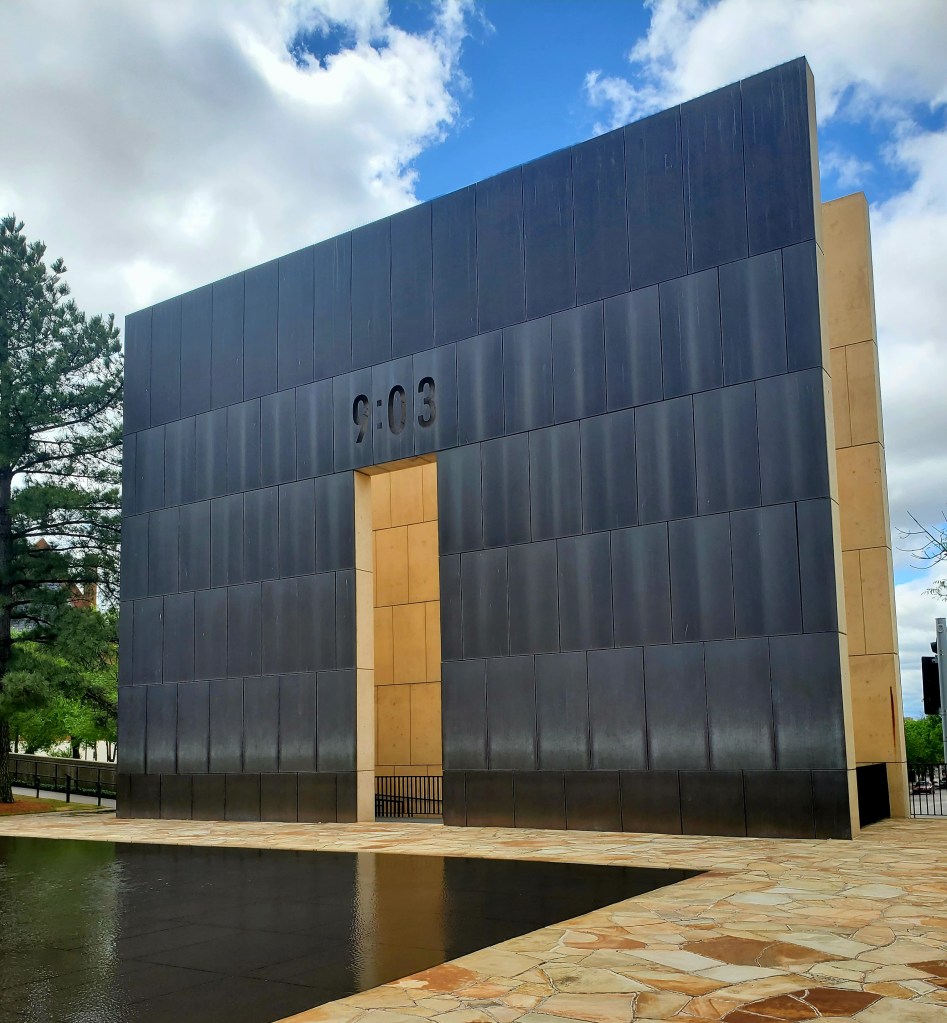
Today, the Oklahoma City Memorial is located at the site where the Alfred P. Murrah Federal Building once stood. A shallow reflecting pool spans the block, flanked at either end by monuments in the form of large gateways known as the Gates of Time. Imprinted on the east gate is the time of 9:01, representing the final minute of peace before the explosion which leveled the building at 9:02am on April 19, 1995. The west gate shows a time of 9:03, the first minute after the detonation that forever changed the city, the state, and our country.
Source: Dark Passport Photography
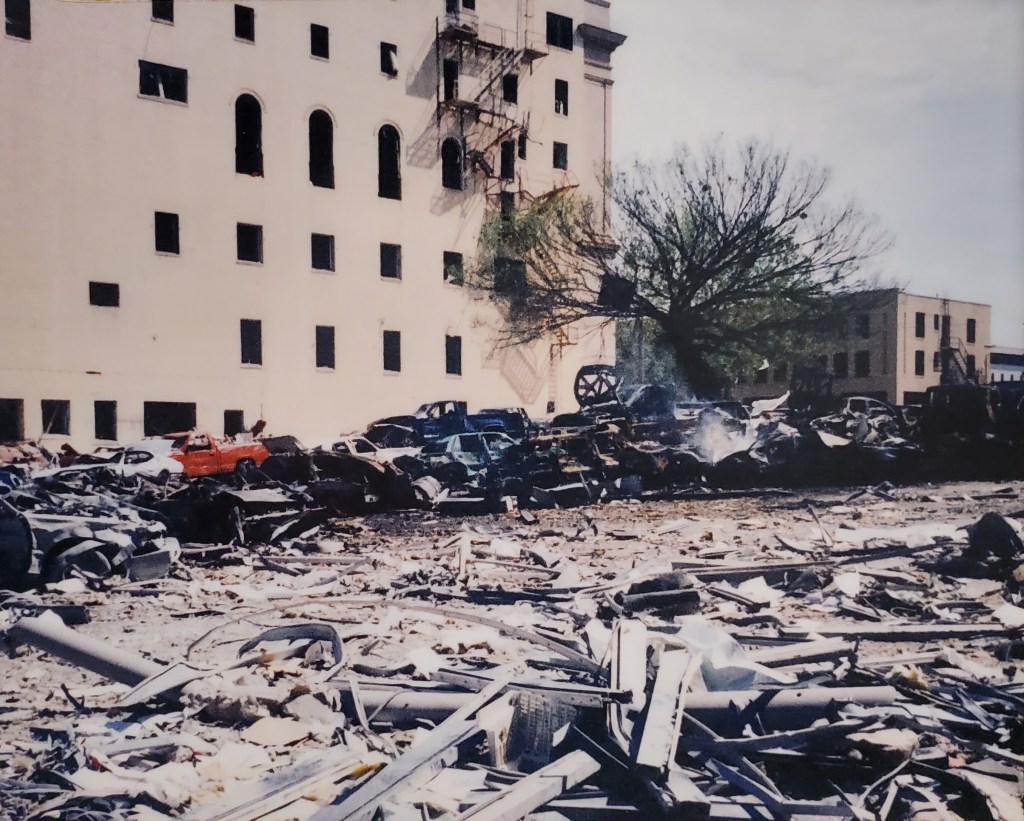
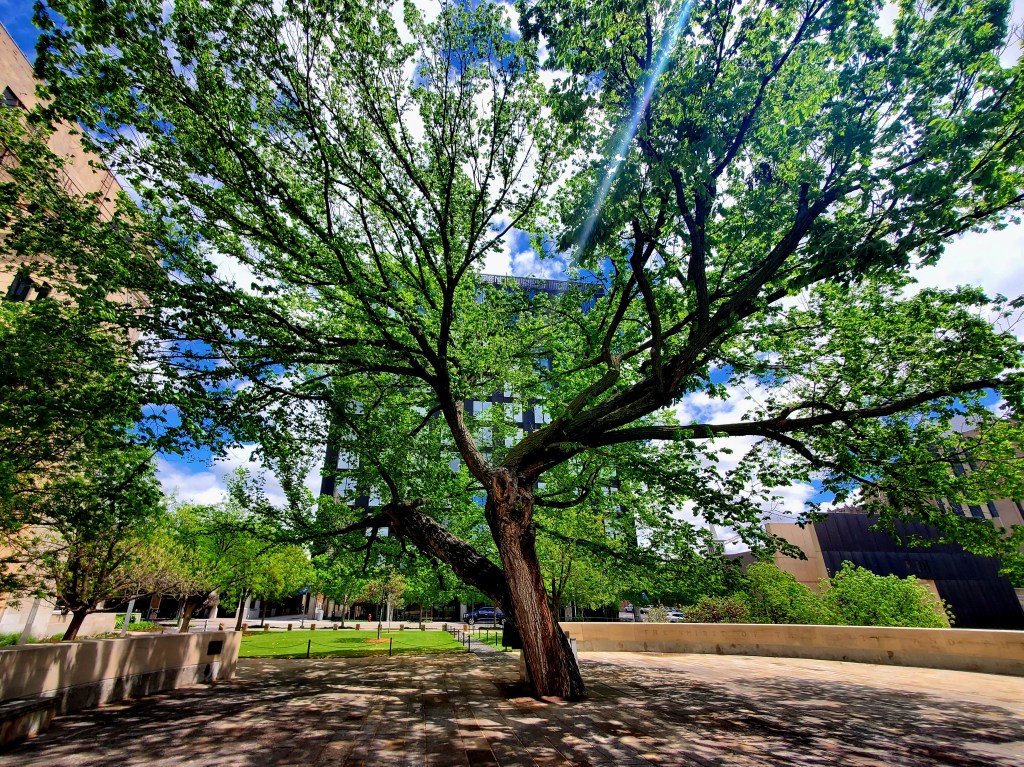
The powerful explosion left a crater seven feet deep in the solid ground. Multiple vehicles and buildings were completely destroyed, either by the shockwave or ensuing fires. Yet as rescue efforts began shifting to the recovery phase, people noticed a peculiarity at the blast site. Amid the carnage of flattened cars and rubble was a large tree that was inexplicably still standing in spite of having most of its spring leaves burned or blown off. The tree quickly became a symbol of hope and resilience to all those impacted by the tragedy. The seeds were harvested and provided to survivors, responders, and later the general public so that its legacy could live on outside of ground zero. To this day the original tree remains in place as part of the memorial, with its bright green leaves on full display each spring. It is now known as the Survivor Tree.
Source: Dark Passport Photography
Source: Dark Passport Photography
“To the residents of Oklahoma City, especially the survivors of the bombing and the families of the victims, the memorial was a place where a hellish nightmare had been replaced with symbols of peace and human dignity.” –Lou Michel and Dan Herbeck, authors of American Terrorist
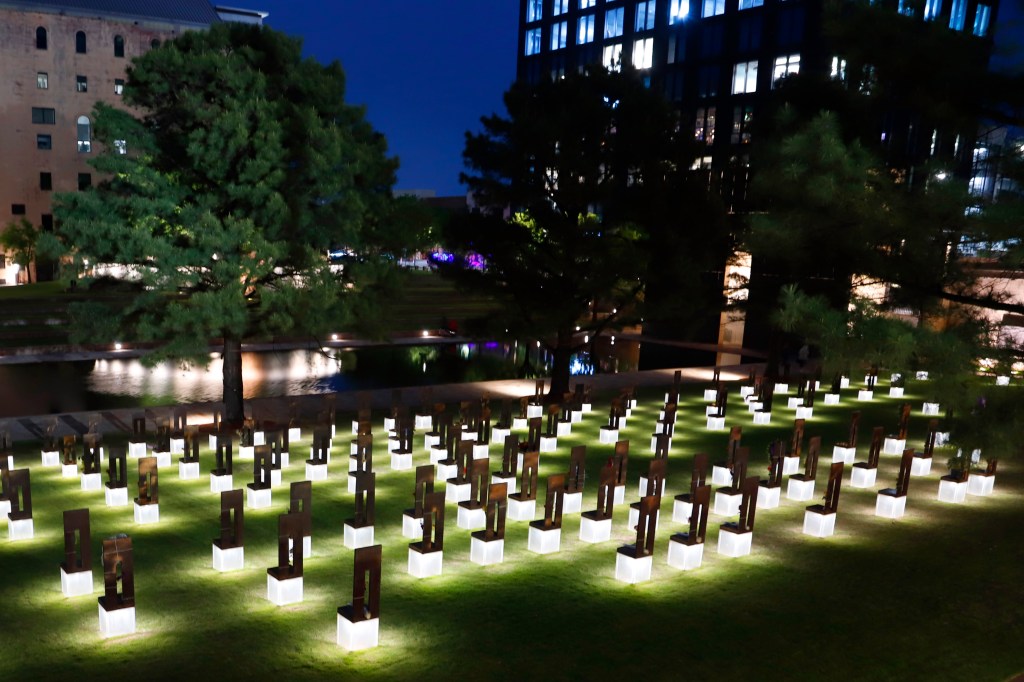
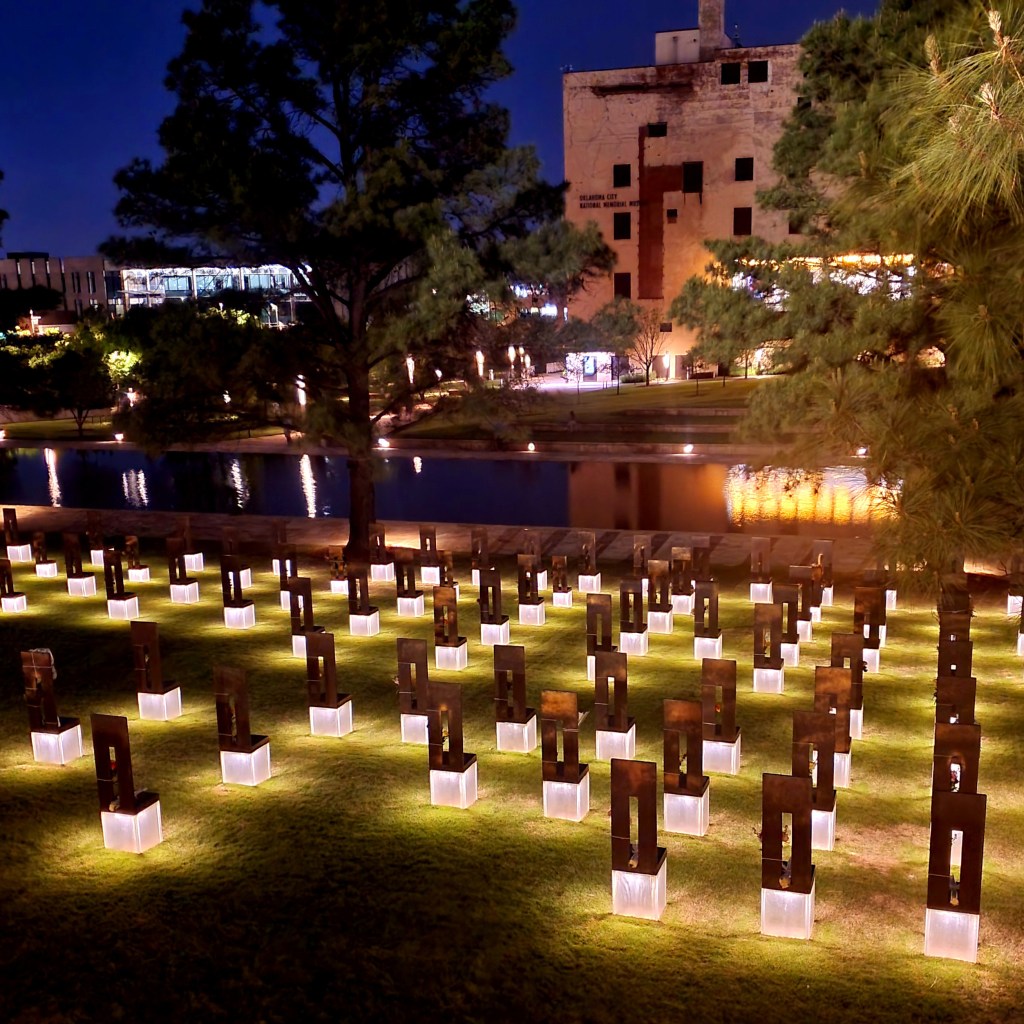
The Oklahoma City Outdoor Symbolic Memorial also includes a grass lawn with 168 chairs representing all those who perished as a result of the bombing. The Field of Empty Chairs, as it is known, is arranged in nine rows to signify the nine floors of the building. Smaller chairs were built for the 19 children who were killed. The base of each chair is a semi-transparent box which is illuminated at night to give the illusion of floating. The lighting of the Gates of Time and Field of Empty Chairs allow visitors to solemnly reflect on the tragic event at all hours of the day.
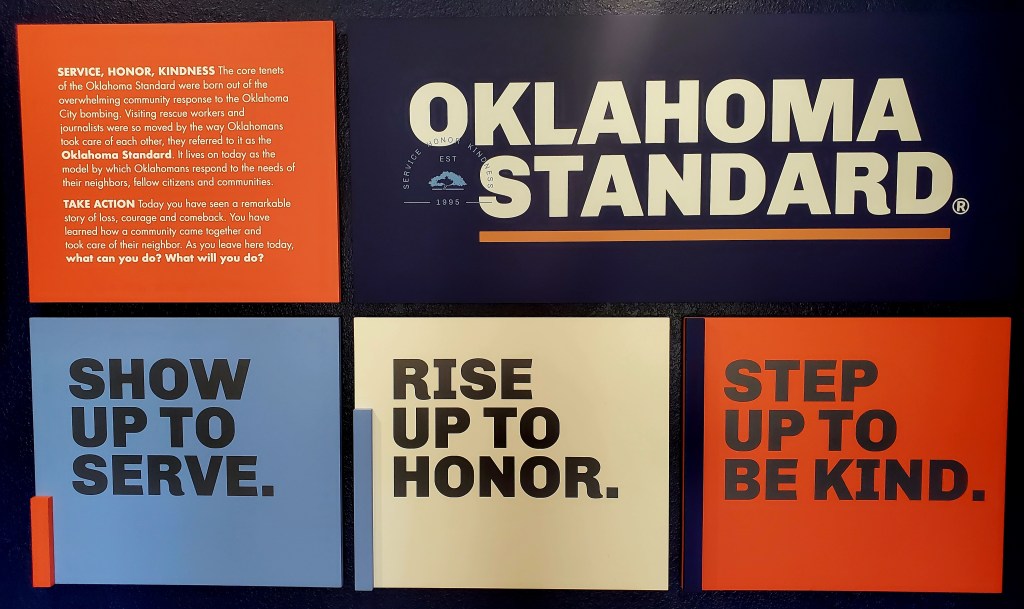
In the immediate aftermath of the bombing, citizens of Oklahoma rallied together to support the victims and first responders. People were looking to give back in any way they could, and the response was positively overwhelming. Donations came pouring in to the extent that they eventually had to be turned away. City officials and leaders of the rescue effort quickly learned to be careful asking for anything in the plural form because within an hour and a half there would be a line of people wrapped around the building ready to give an unmanageable amount of whatever was being requested. This generosity soon became known as the “Oklahoma Standard” and would live on as an enduring legacy in the face of tragedy.
Photo Source: Dark Passport Photography
It took less than one minute of a beautiful Oklahoma spring morning for nearly 170 innocent people to be murdered by a complete stranger. Yet for 30 years and counting, the community and country have held strong. The victims have not been forgotten. Those responsible have been brought to justice.
A day of darkness. Years of light.
 The Dark Passport