This is a continuation of Blog 46: Astoria Part I.
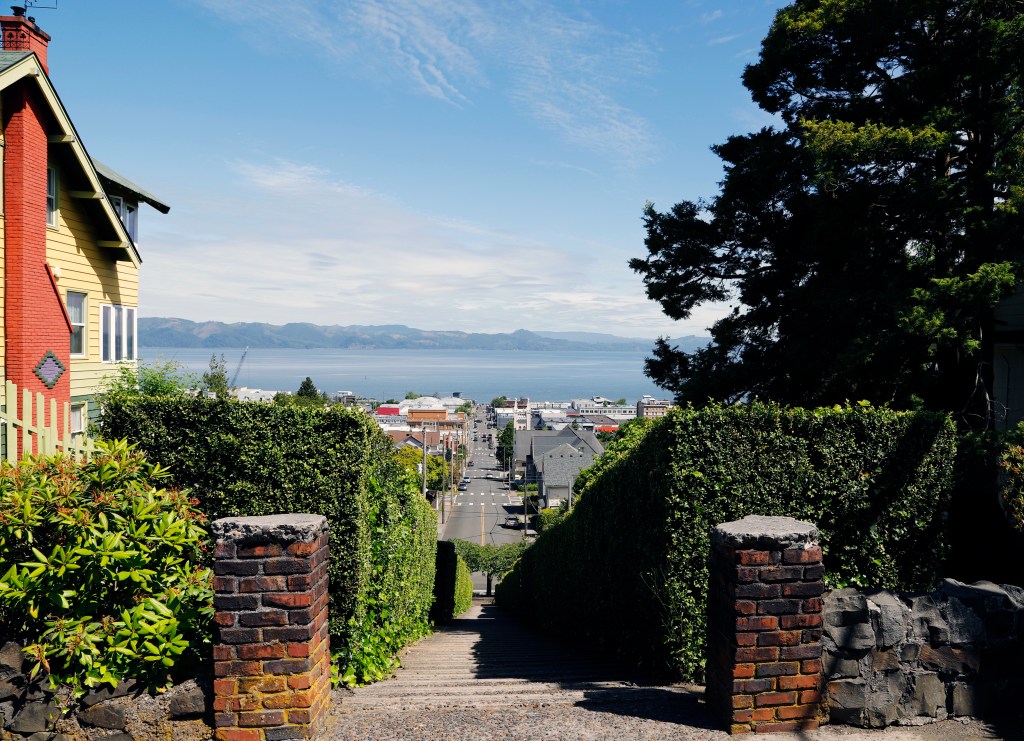
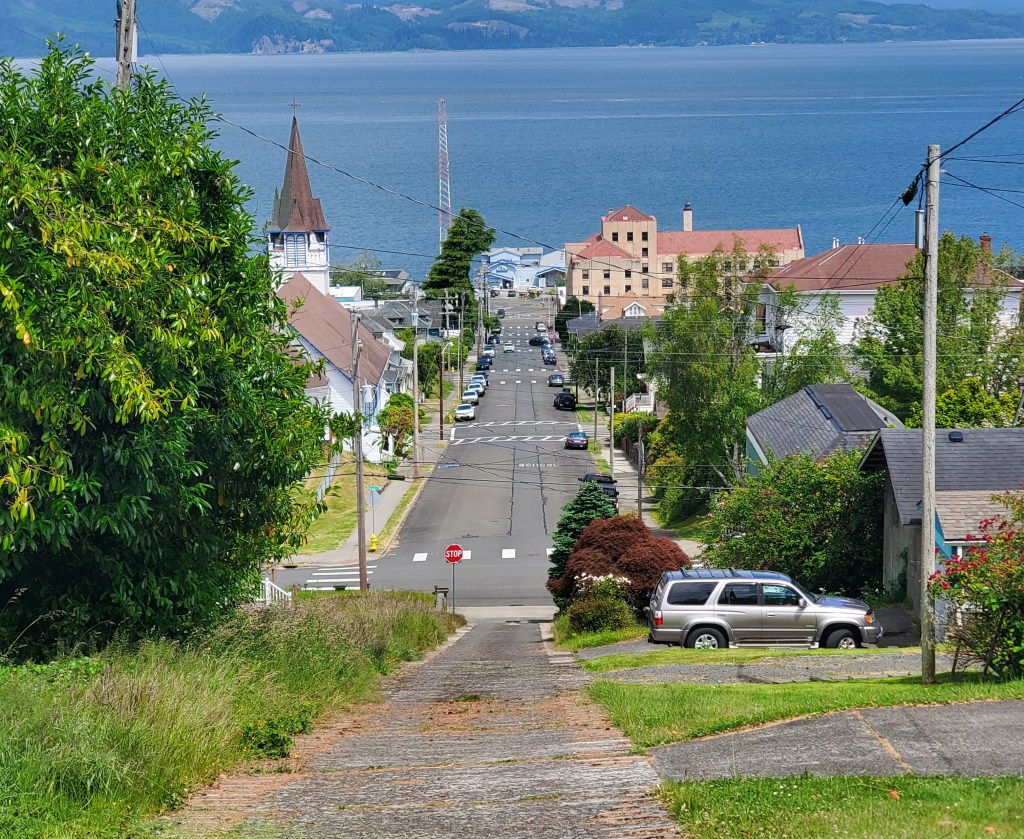
A walk through the city of Astoria, Oregon is a necessity when visiting during a period of bright blue skies that tend to be a rarity in the Pacific Northwest. Even without the blessing of great weather, a belly full of fried fish should be a catalyst for some exercise.

Source: Dark Passport Photography

Source: Dark Passport Photography
In July of 1926, over 8,000 people stood atop Coxcomb Hill in Astoria for the dedication of the city’s newest monument: the 125-foot Astoria Column. If nothing else, the exterior observation deck provides an unbeatable view of the city, the Columbia River, and the surrounding beauty. Those who do not wish to take the dizzying climb up the tight spiral staircase to the top can still get a great history lesson simply by observing the 525-foot mural that wraps around the outside of the column. The artwork offers a visual storyline of early life in the Pacific Northwest.
Source: Dark Passport Photography
Source: Dark Passport Photography
A walk through the neighborhoods of Astoria leads one to wonder about its history, demographics, and economy. The name of the city originates with America’s first multi-millionaire, John Jacob Astor. His monopoly of the 19th century fur trade in the post-Lewis-and-Clark Pacific Northwest led to the establishment of Fort Astoria in the territory known as Oregon; thus becoming the first U.S. settlement west of the Rocky Mountains. Complications from the War of 1812, however, triggered Astor to divest himself from the area. He instead became enveloped in New York real estate ventures during an opportune time. Many of Astor’s greatest accomplishments are still relevant today, including the creation of the New York Public Library. John Jacob Astor’s great grandson (of the same name) would later become one of the richest people in the world until his untimely death aboard the Titanic in 1912. The family name lives on in various forms, such as the renowned Waldorf Astoria luxury hotel line.

Source: Dark Passport Photography
Source: Dark Passport Photography

Source: Dark Passport Photography
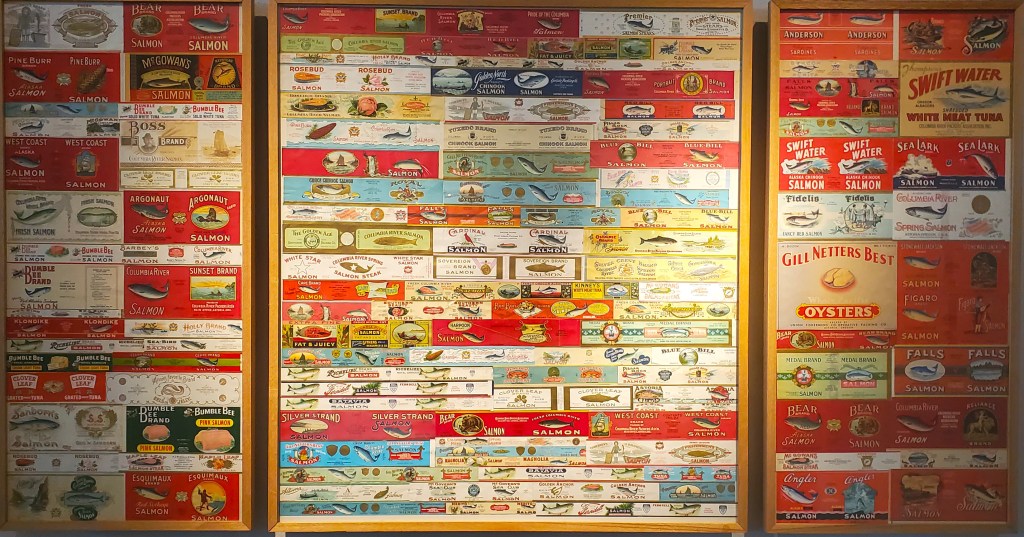
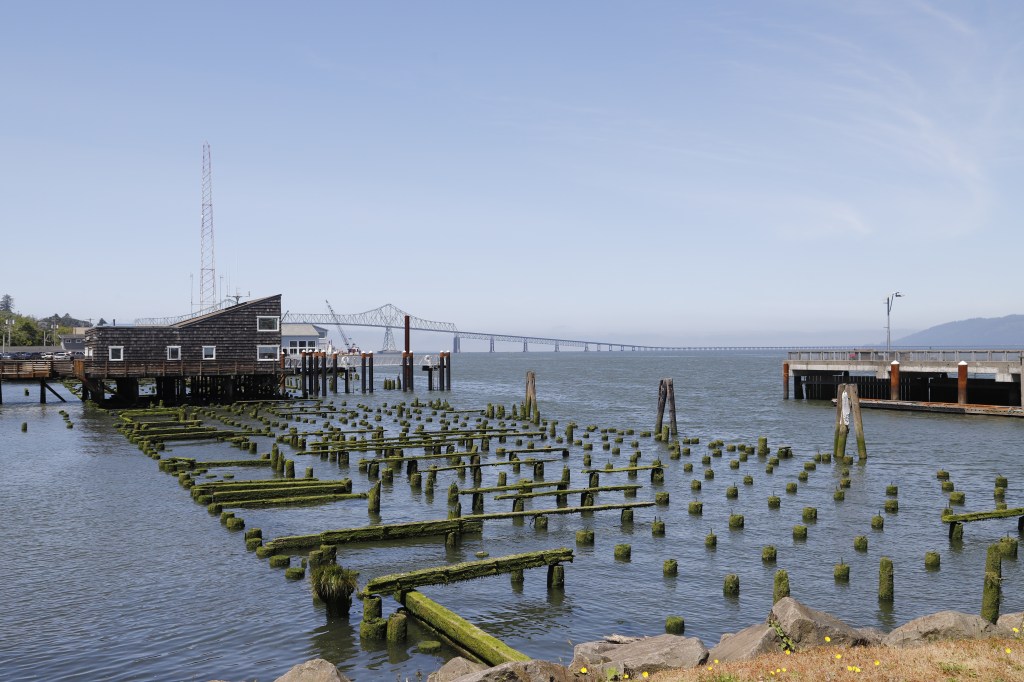
The demise of the North American fur trade caused the city of Astoria to seek relevance in the commerce of its locally procured natural resources. The general shipping of goods along the Columbia River was augmented by timber coming through the Port of Astoria. One market that prospered in Astoria for over a century was fish processing. The packaging of salmon from the late 1800s through the 1920s with labor provided by Chinese immigrants was the bedrock of Astoria’s economy until the market shifted to tuna with the help of Scandinavians for the following 50 years. In fact, the oldest waterfront building remaining in Astoria was once home to Bumble Bee Seafoods. Over time, the fish canneries went away one by one until none were left in the 1980s (uncoincidentally, the entire premise of The Goonies movie was for the boys to find enough money to keep their family homes from being foreclosed in 1980s Astoria).

Source: Dark Passport Photography
Source: Dark Passport Photography
Source: Dark Passport Photography
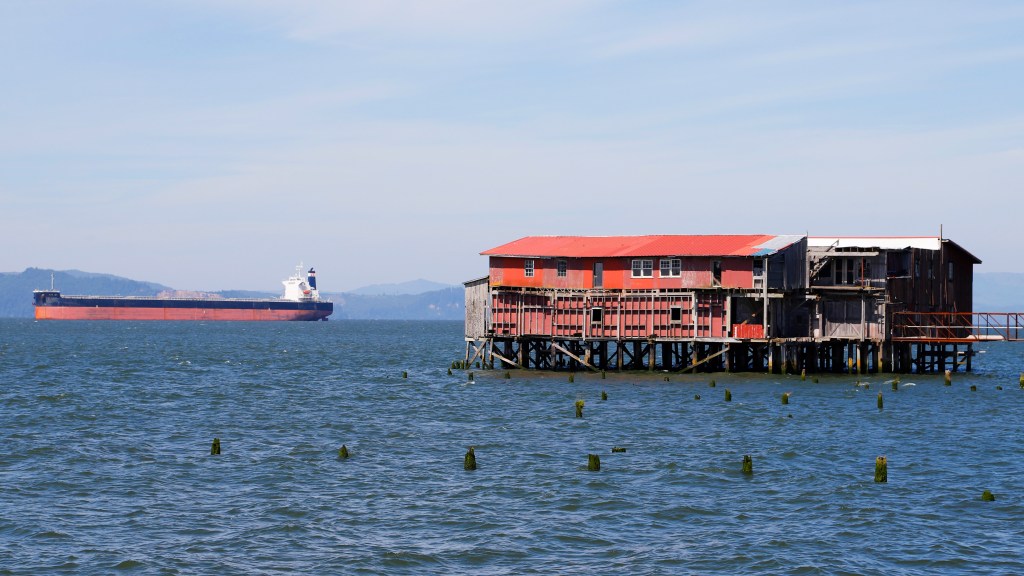
Astoria has a lovely pathway along the Columbia River that alternates between the hustle and bustle of downtown shops and quiet, beautiful vistas of the waterway. Any view of the river is likely to be filled with the ubiquitous cargo ships passing through the area or sitting at anchor. Their characteristic red and black hulls, viewed from a shore full of the remnants of torn-down fishing canneries, are a constant reminder of a changing of the times. The average cargo ship on the Columbia is a 750-foot bulk carrier contracted for U.S. exports of wheat (pictured above). Corn, soybean, soda ash, and potash are common exports as well. Most cargo ships traverse the Columbia River to export U.S. goods. However, the occasional petroleum tanker or container vessel (carrying consumer goods) can be seen bringing in imports. Vehicle or “roro” ships (roll-on, roll-off) will usually bring in Japanese autos and leave with Fords.
The derelict red building pictured above was the filming location for a short scene in the 1995 film Free Willy 2: The Adventure Home. Portions of both Free Willy and Free Willy 2 were filmed in Astoria. In addition to the school picnic scene mentioned in Part I of this blog, many exterior shots of the movie Kindergarten Cop were filmed in Astoria.
Source: Dark Passport Photography
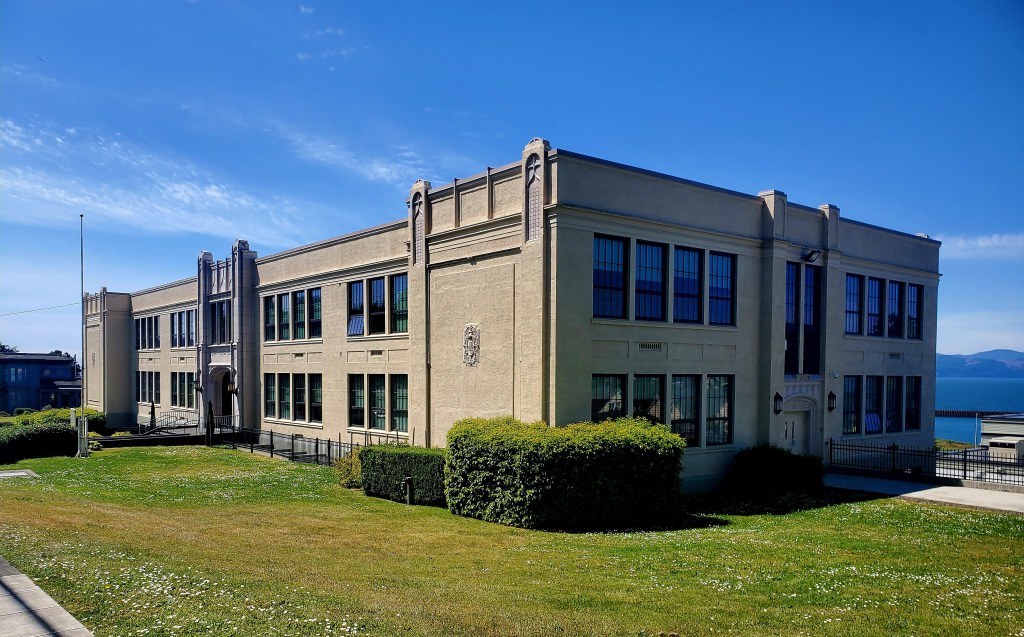
The real John Jacob Astor Elementary School was used for some of the filming during the Kindergarten Cop film. The original Astoria School District was established in 1854 and the current elementary school was built in 1925. It is always difficult to tell how much of a Hollywood movie is actually filmed inside of a public structure versus an illusory combination of real exterior shots and soundstage interior sets. But most outside scenes of the movie were clearly recorded in Astoria, and it wouldn’t be a stretch to think the producers used summer break as an opportunity to film inside of the real school. Either way, it was amusing to walk by the primary location of a popular film so close to the heart of the city.
Source: Dark Passport Photography
Source: Dark Passport Photography
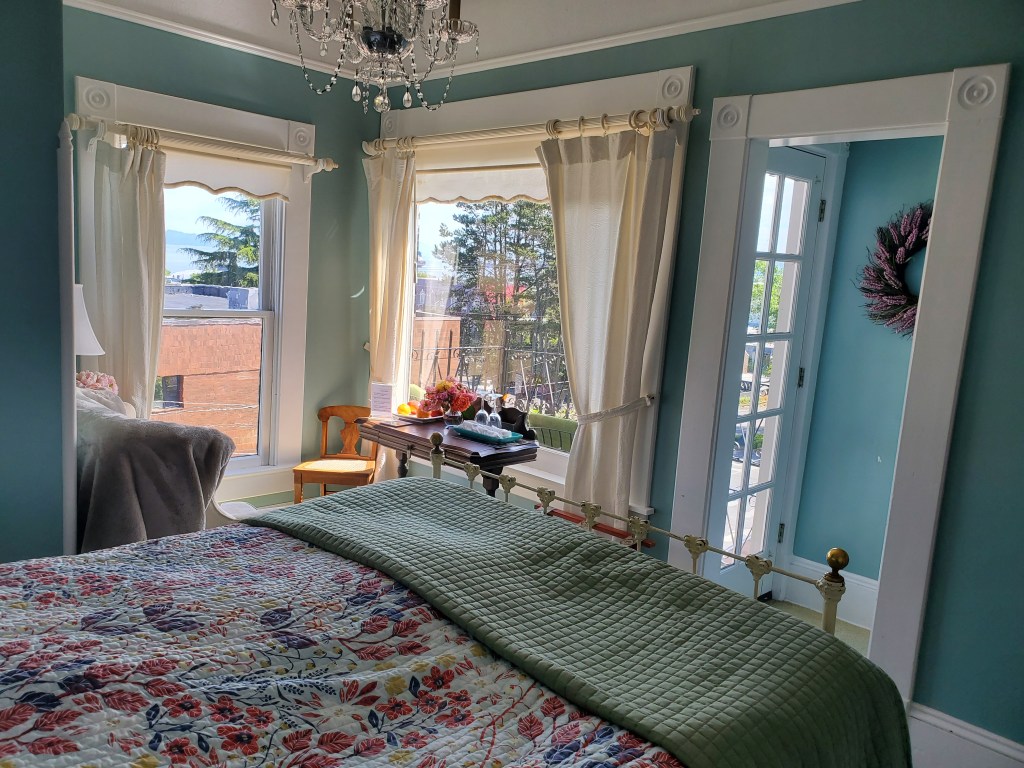
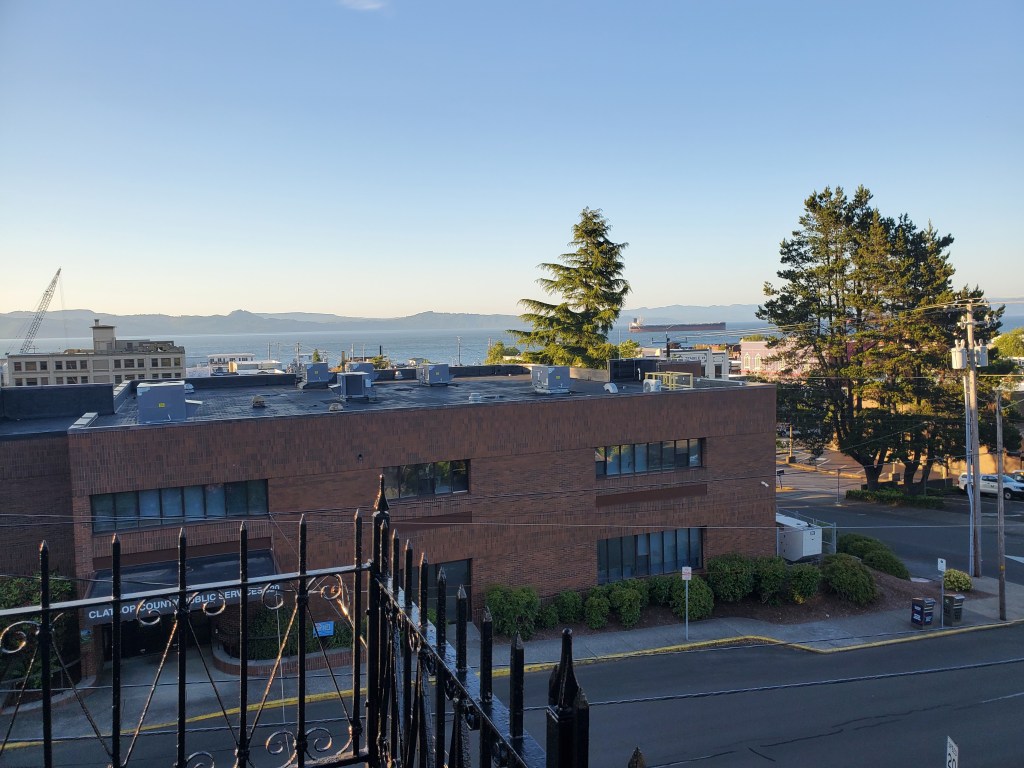
Lodging on these trips is dictated by any number of factors: Location, budget, amenities, availability, parking, discounted rates, security, existing agreements, and so forth. Sometimes the owner of the property is even considered. This is not so different from deciding the mode of travel, as I discussed in the second paragraph of my 2024 Niagara Falls blog. With so many variables comes a slew of results ranging from the 5-star hotels in Dubai and Amman to off-brand boarding in what feels like the guest bedroom of someone’s house. In Astoria, it was the latter. And with the constant travel involved with this career, it doesn’t hurt to occasionally stay in a homey environment as opposed to a cookie-cutter hotel. After all, it’s only temporary.

Source: Dark Passport Photography
Source: Dark Passport Photography
 The Dark Passport