“It is an odd thing, but every one who disappears is said to be seen at San Francisco.”
-Oscar Wilde in The Picture of Dorian Gray
This is a continuation of Blog #29: APEC Leaders’ Summit. Through a combination of work-related activity and downtime, my coworkers and I are fortunate enough to be able to explore the places we visit while on business trips. Join as I escape the mayhem of the Asia-Pacific Economic Cooperation and meander my way through the hills of San Francisco.
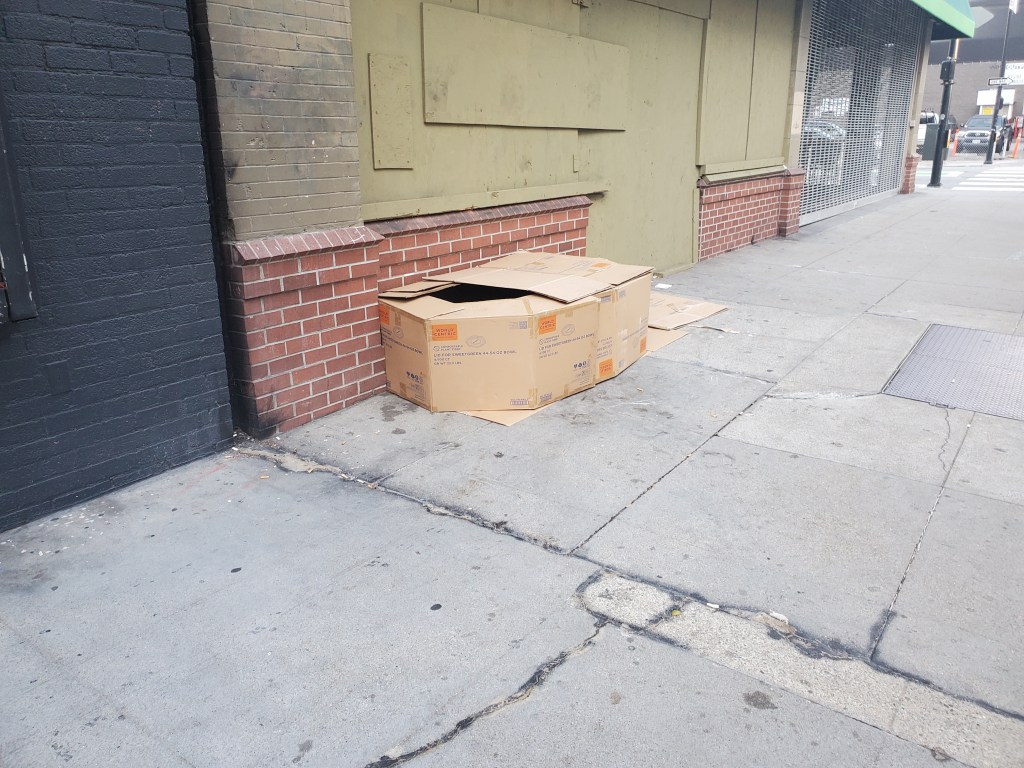
Taking the good with the bad was the theme of this visit. The sight of a needle being prepared for narcotic usage on a city sidewalk or someone performing a bodily function in public quickly became so commonplace that it wasn’t enough to interrupt a casual conversation among friends. The San Francisco locals we were teamed up with enrolled us in a scavenger hunt game of “Bay Area Bingo” that they love to play with visitors. It’s like a darker, sadder version of Subway Bingo that helps one take stock of SF’s urban decline.
Getting around wasn’t difficult at all, thanks to the lack of people. Each of SF’s famous cable cars had plenty of seating room. As the San Francisco Municipal Transportation Agency so adequately puts it, “No experience is more uniquely San Francisco than a ride on a cable car.” Feel the wind rush by, hear the conductor bell ring, and see the Bay while surrounded by Victorian style homes sticking up from the slanted ground.
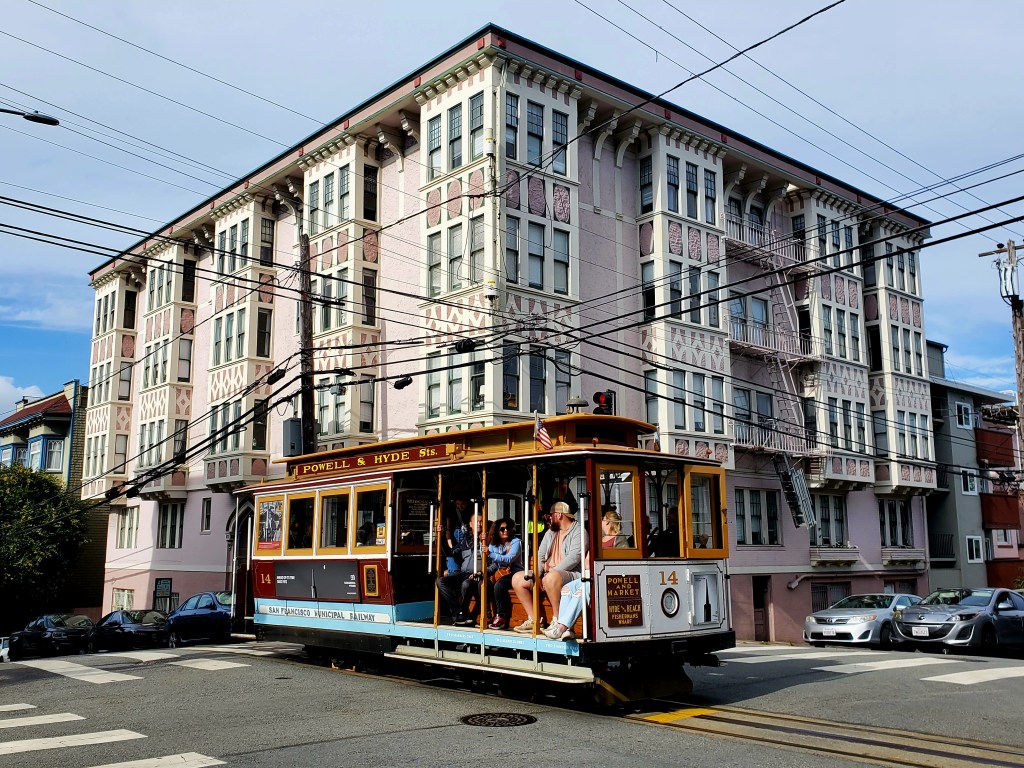
Source: Dark Passport Photography
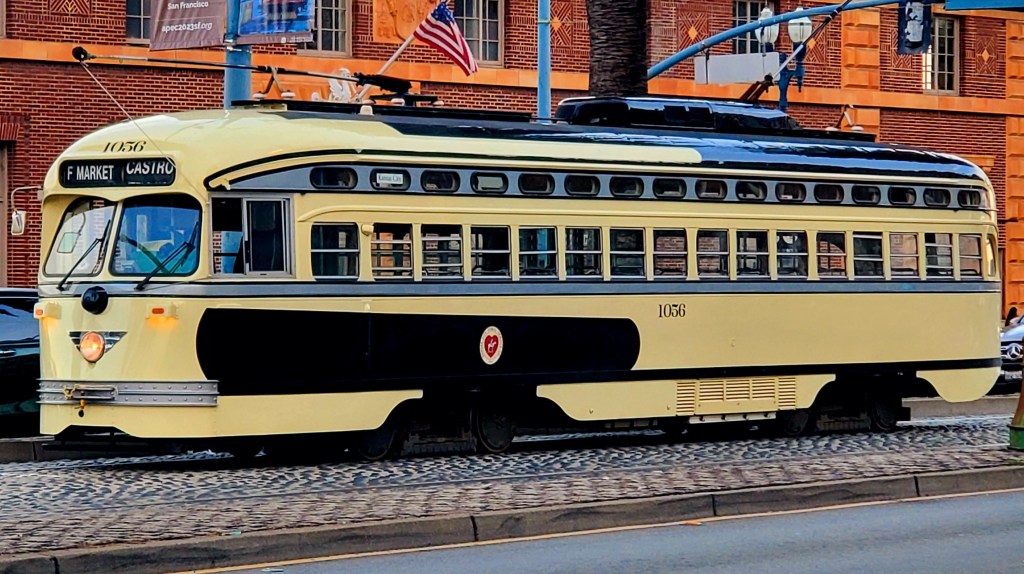
In addition to the cable cars are the historic F Line streetcars. These colorful railcars receive their power from energized cables suspended overhead.



Of course, transportation is utilized to reach a destination. Due to the city’s trifling reputation causing a sharp downfall in tourism, the once-bustling vacation hotspots throughout town were eerily empty. The scenes were reminiscent of the worst days of the pandemic when people were scared to leave the confines of their own home. The lack of queues and vehicle traffic would have been a welcome experience had it not been for the depressing gloom enveloping the area like a dense fog.
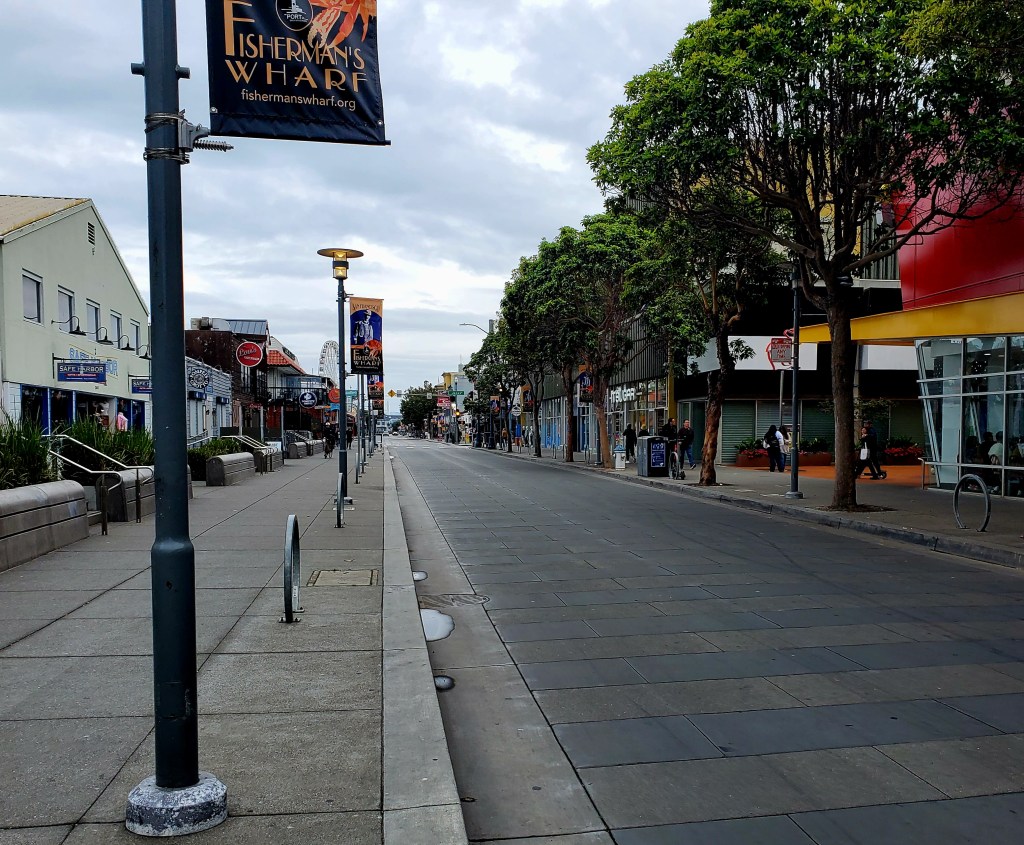
Source: Dark Passport Photography
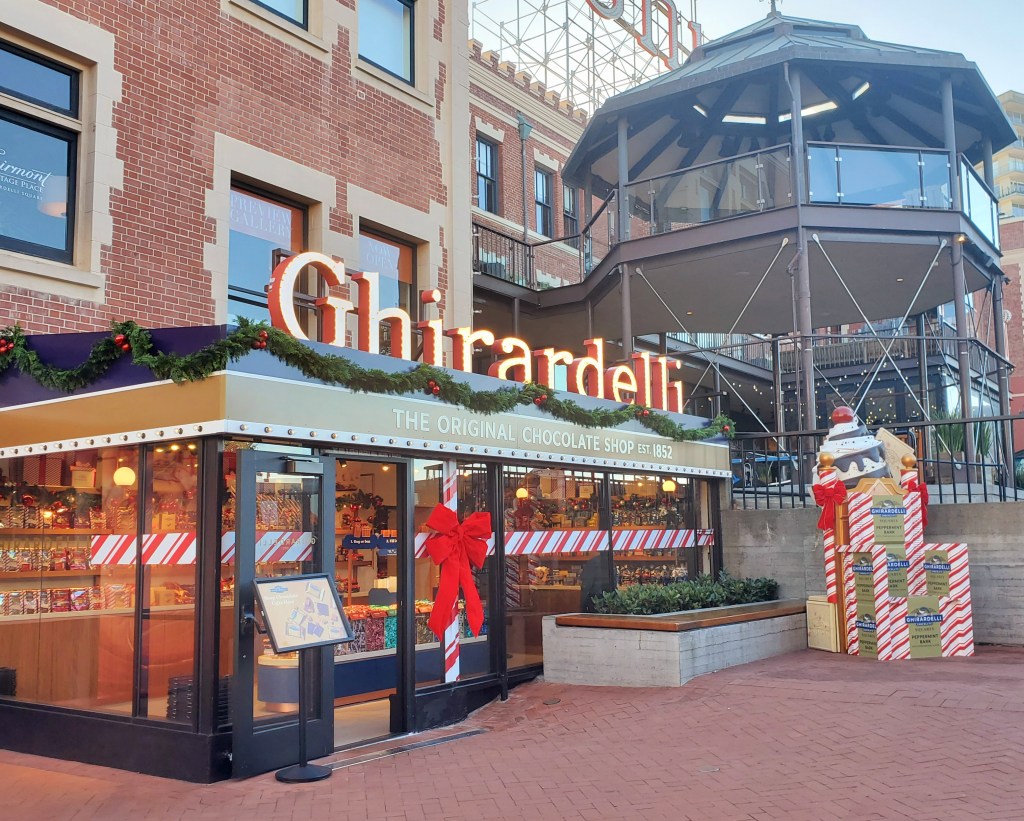
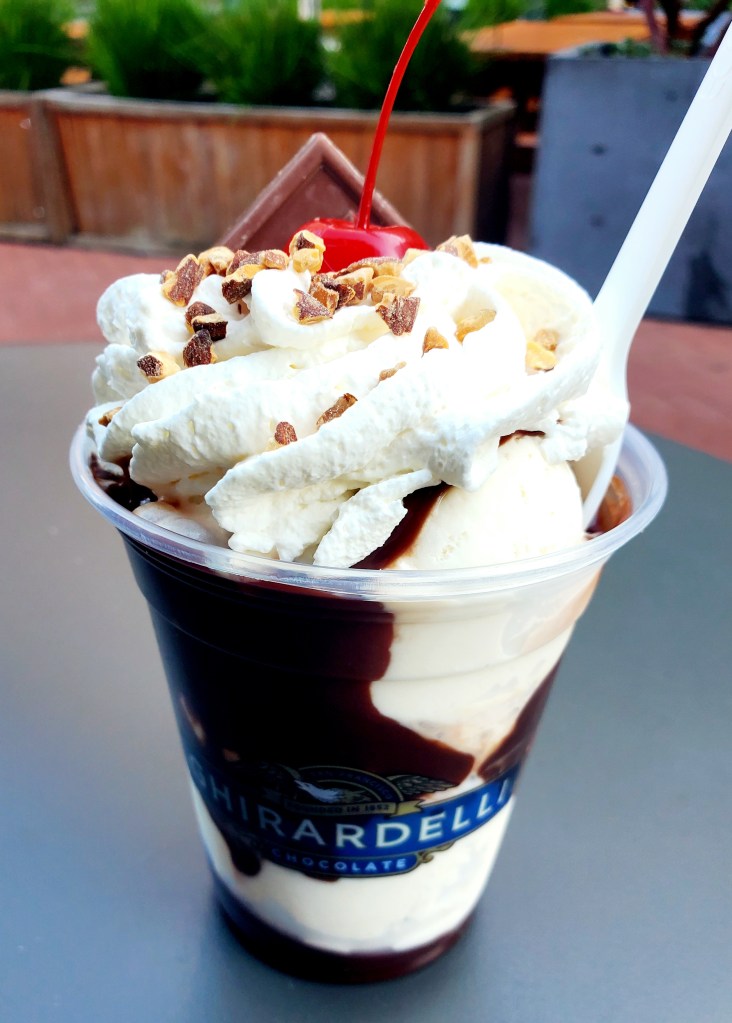
Despite the desolate state of Fisherman’s Wharf and its surrounding shopping areas, some businesses were still hanging on by a thread. Established in San Francisco in 1852, the Ghirardelli Chocolate Factory didn’t relocate to its famed waterfront site, now known as the famous Ghirardelli Square, until 1893. I followed the scent of cocoa and sugar to a storefront devoid of people and was pleasantly surprised to receive a coupon for a free hot fudge sundae from an employee tasked with luring in potential customers. After buying some chocolate squares to bring back to my coworkers, I enjoyed my complimentary sundae out in the courtyard. Normally I would have been self-conscious about shoveling so much sugar into my mouth in public, but once I stepped outside I remembered there was nobody else around. Besides, everyone knows free food has zero calories.
Source: Dark Passport Photography
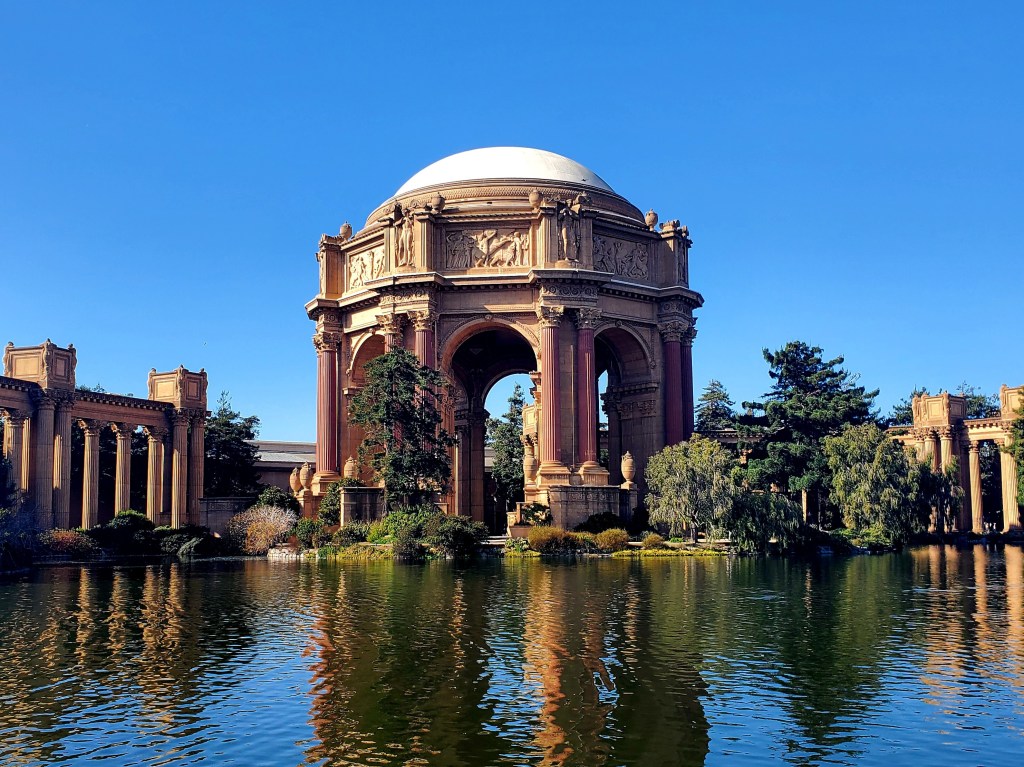
Anxious to burn off the ice cream, the remainder of the day was spent on foot. One of the most popular sites in San Francisco for a picturesque walk is the Palace of Fine Arts. Given our purpose for being in San Francisco, it was an interesting coincidence that the site was built in 1915 for a world’s fair known as the Panama-Pacific International Exposition. The rotunda and its colonnades were designed to resemble ancient Greek and Roman ruins, resulting in open-air magnificence which can essentially be seen twice thanks to an adjacent reflective lagoon.
Source: Dark Passport Photography
Adding to our steps for the day was a stroll through Crissy Field. The empty beach in particular, nestled between the noisy Golden Gate Bridge and the urban city proper, was a relaxing reprieve from the hustle and flow that is the rest of San Francisco. This was a far cry from the thousands people who assembled in this spot 90 years earlier to celebrate the ground-breaking ceremony for what would become a landmark of the city.

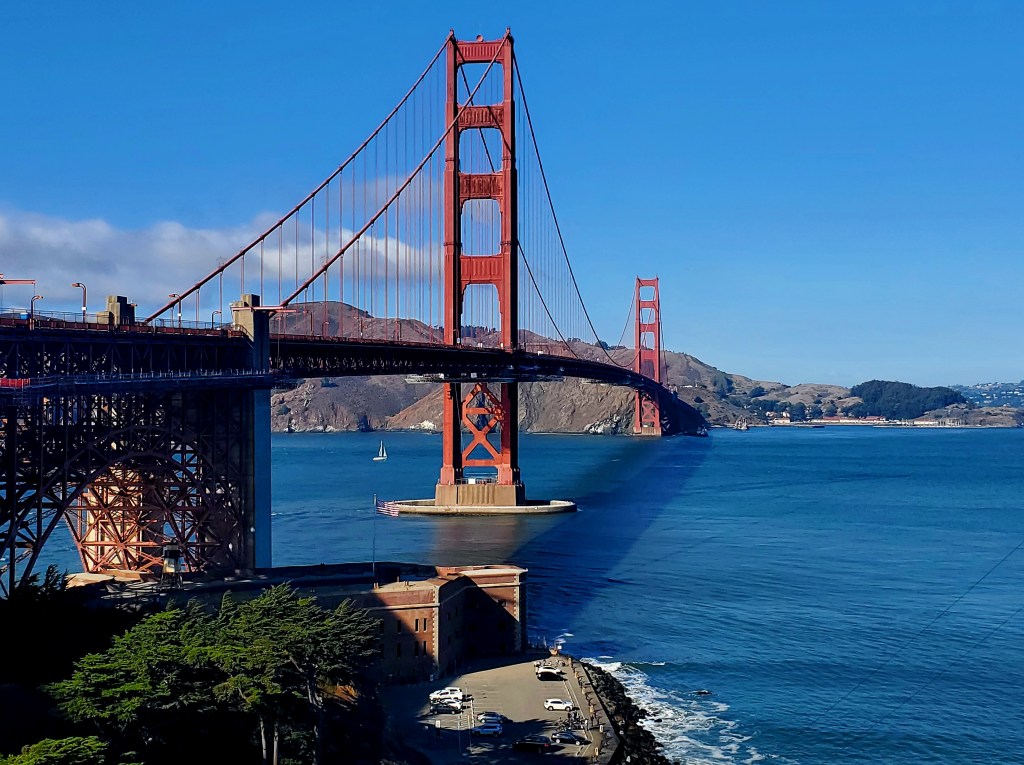
The theoretical best was saved for last: The Golden Gate Bridge. An engineering marvel of the Great Depression, nearly every aspect of the bridge has a fascinating historical backdrop. It was the first major construction project in the country to have a zero-tolerance hard hat policy. It was built entirely of bonds which were later paid off by the collection of tolls, foregoing any state or federal funding. The idea for its iconic “international orange” paint scheme wasn’t devised until steel parts happened to show up at the jobsite with a corrosion resistant red-orange primer. All construction workers were union members, and a resulting pay dispute caused virtually the entire city to shut down at one point. It makes the fact that the bridge was completed seem like a miracle.
Source: Dark Passport Photography
The experience of being a pedestrian on the Golden Gate Bridge was, unfortunately, disappointing. Even with all-time low tourism in San Francisco, the narrow pathway was crowded with uncourteous selfie-takers and impatient cyclists. Vehicles of all sizes zoom past at 50 miles per hour just a few feet away. The blowing wind never ceases. Despite the awe inspired from standing 500 feet directly below the top of the towers, the unnerving sensation of standing in the middle of a highway during rush hour is never lost. And then there are the nets. The recently installed nets are intended to dissuade those who feel the bridge deck’s 220-foot elevation above water is a means to an end. They are also an insistent visual reminder to the children and other happy go lucky tourists of a very dark reality.
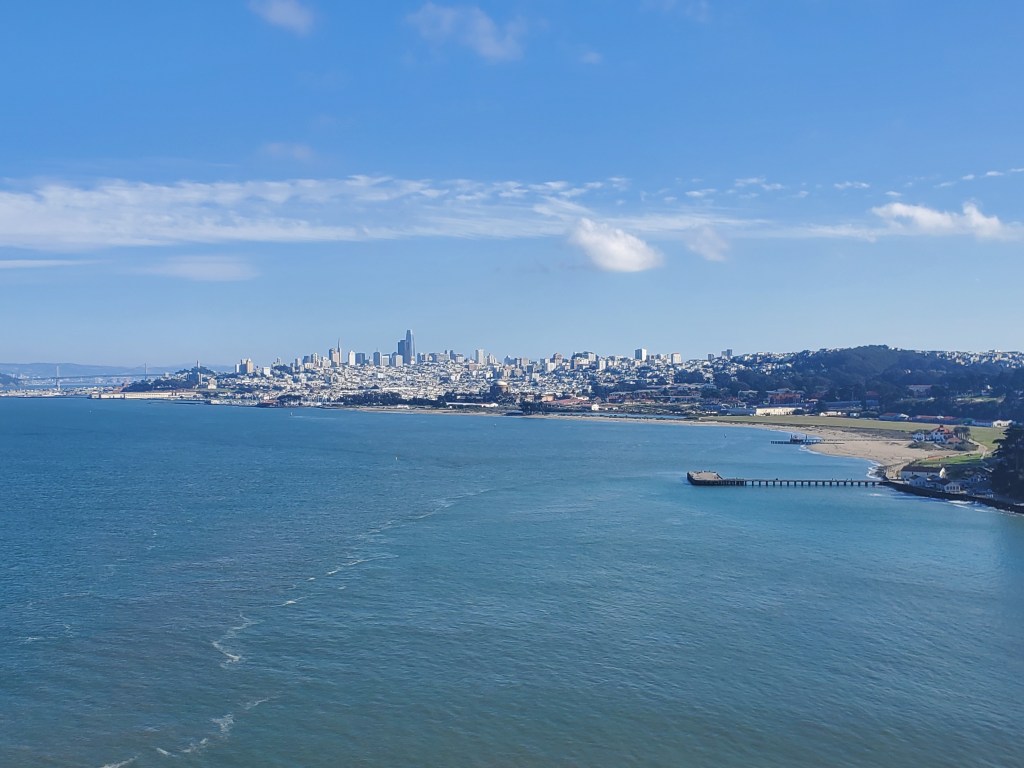
Source: Dark Passport Photography
I suppose the dreary nets were a fitting visualization after all. For as I stood uncomfortably on the Golden Gate Bridge looking over the depressing safety features and back into the once great city that has so rapidly devolved into an empty, decaying mass of concrete and steel, I was reminded of how fragile our desired way of life really is. If we aren’t careful, other American cities will suffer the same fate.
 The Dark Passport