Continued from Blog #17: The Perfect Storm Part I
The quintessential tourist – wide-brimmed hat, floral button-down shirt, camera hanging from a neck lanyard, calf socks with sandals – is everything the seasoned traveler strives to avoid. It’s not that we care what other people think about us. After all, we’ll very likely never see them again. Rather, it’s that we know the experience will be more genuine and immersive if we fit in. Yet even if we dress appropriate and act natural, butchering a name or desecrating a tradition is a surefire way to get noticed. Case in point: it’s pronounced GLAW-stuhr. Pro tip: query “how to pronounce _____” and/or watch local news clips to learn how to properly say key nouns prior to vacationing.
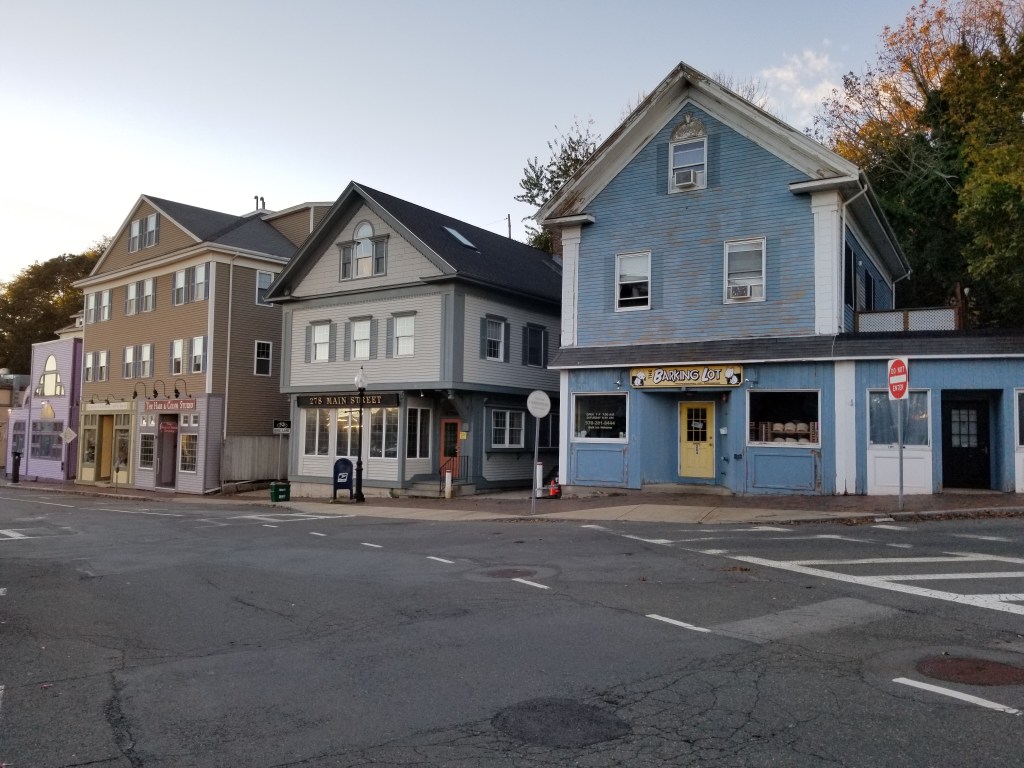
Gloucester, Massachusetts is the oldest seaport in America. Its 400 years of history were not well known outside of New England prior to the arrival of camera crews filming George Clooney and Mark Wahlberg on the set of The Perfect Storm. This 15 minutes of fame primed the quaint fishing town for its next shot at notoriety when National Geographic dropped anchor and began recording the wildly popular reality television series Wicked Tuna more than a decade ago. Although to be fair, the waterfront town didn’t need the big screen to win appeal. It is home to the oldest continuously operating art colony in the United States. The Adventure, a hundred-year-old schooner on the list of National Historic Landmarks, is available for charter. Cape Pond Ice has been keeping stores of fresh caught fish cool since 1848. The way the beauty compliments the history of this fishing village was evident as I approached the boutique hotel I chose for my respite.

November 1st is officially the beginning of the Gloucester offseason. While this fact elucidated the emptiness of the town during my stopover, it quickly proved advantageous. My hotel could be more accurately categorized as a beachfront bed and breakfast. I could hear the waves crashing at my back as the owner greeted me by name at the salt encrusted front door. “You’re my only guest” he said, “So I upgraded you to the best room.” I couldn’t believe my eyes as I climbed the pleasantly creaky wooden stairs to the incredible seaside view. “What would you like for breakfast?” the caretaker asked as I stared, awestruck, out my bedroom window to the beach below. “I’d rather you take the morning off” I replied, “I’m not much of a breakfast person.”
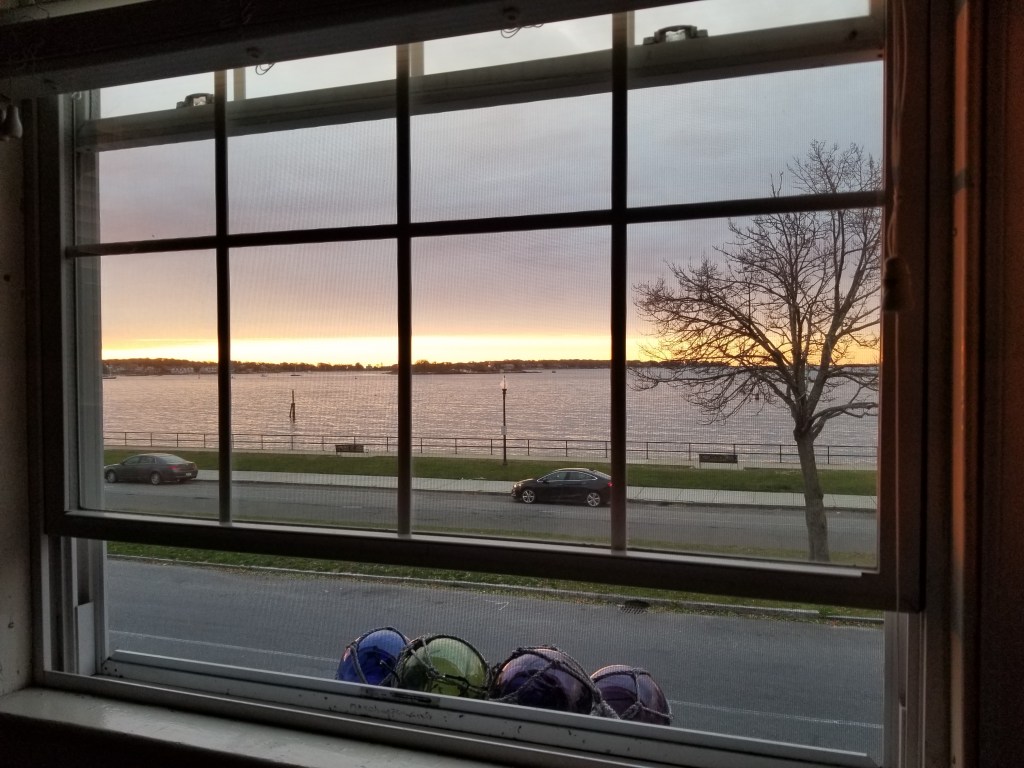
I got up the next morning, still reeking of the fried seafood I devoured for dinner the night before. “When in Rome…” I rationalized. I stumbled down the archaically steep and narrow staircase in my running gear to meet the innkeeper in the maritime study. Books about piracy and ocean trawling were separated by seashells and miniature decorative ship’s helms. He provided me with a bowl of apples, bananas, and oranges as if I needed a sugar rush to enjoy a dash through such an alluring seaside community. I don’t think the water in the antiquated plumbing ever got warm, but I rinsed off in the shower after my jog nonetheless. The day ahead would surely be emotionally taxing.
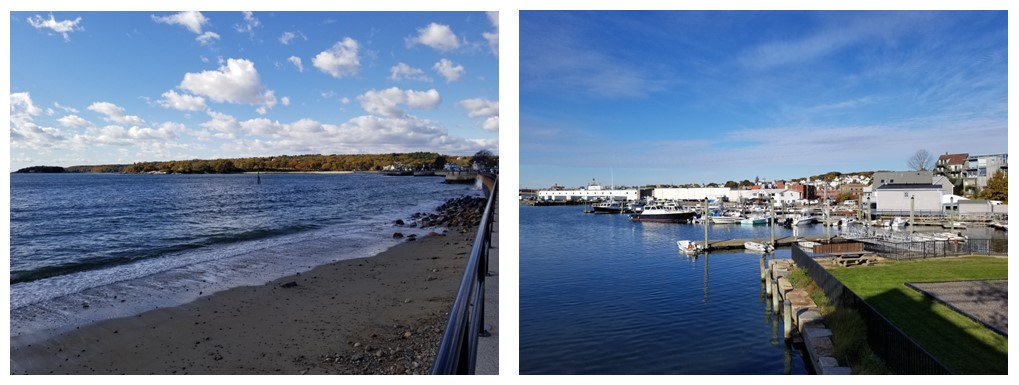
The ink is usually still wet on the signature line of the paychecks the Gloucester fishermen receive from their captains as they rush to the Crow’s Nest, less than 500 feet from the inner harbor. The exterior of the bar is just as unobtrusive as its simplistic interior. In fact, most outsiders walk right past the front door even when they are looking for the Hollywood icon. I was justifiably nervous as I bellied up to the wooden bar, the aroma of saltwater in the air. It was a weekday afternoon, and the locals knew I didn’t belong.
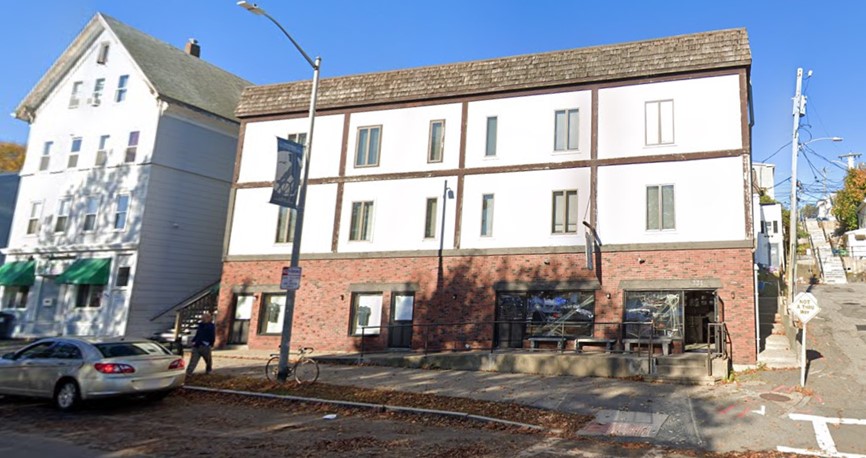
It was a difficult task to hide my astonishment at the fact that the real-life Crow’s Nest was nearly every square inch replicated in the famous movie. Piled next to every half-full pint glass was a handful of wooden chips. “Everyone buys each other drinks here” the bartender explained to me, “To keep the beer from getting warm, we give you a token until you’re ready.” My corner seat was just out of earshot from the regulars. “Give everyone another token” I told the barkeep while nonchalantly sliding my credit card across the sticky, grainy wood, “And don’t make a big deal about it.”
As I took my Visa card back, I recalled from my research that the man tending bar was actually one of the proprietors and was married to the sister of a fisherman who died on the Andrea Gail in 1991. I had been biding my time and silently bought another round or two at the tavern over the next hour or so, long enough to earn the locals’ trust and take notice of an elderly couple sitting across from me. “Excuse me” I said gently as I approached the woman, “I couldn’t help but overhear that you knew the men who perished on the Andrea Gail.” I looked over my shoulder at the framed pictures of the lost men on the wall behind me. “If it’s not too much to ask, I was hoping you could tell me about them.”

Grey hair and a furrowed brow have a way of concealing a person’s true expression. I could not tell if I offended the woman or gave her heightened esteem. Her husband clearly heard me, but he took another swig of his beer and stared straight ahead. She slowly stood from the bar and grasped my upper arm with her soft and delicately wrinkled hands. “These boys,” she painfully said as she walked me towards the pictures, “Sat in the same seats you just did the last night we saw them.” She paused, as if to correct herself, “We call them ‘boys’ only because they were so young when they were taken from us. But stepping from the dock onto a fishing boat makes you a man.”
The gentlewoman proceeded to tell me the unadulterated life stories of Andrea Gail crewmembers William “Billy” Tyne, Michael “Bugsy” Moran, Dale “Murph” Murphy, Alfred Pierre, Robert “Bobby” Shatford, and David “Sully” Sullivan. The experience was as sacred and elegant as a hardened war veteran telling his grandchildren about the bloody yesteryear. No museum, textbook, or tour guide could ever supplant this moment. It would be sacrilege to attempt to repeat it in any public forum.
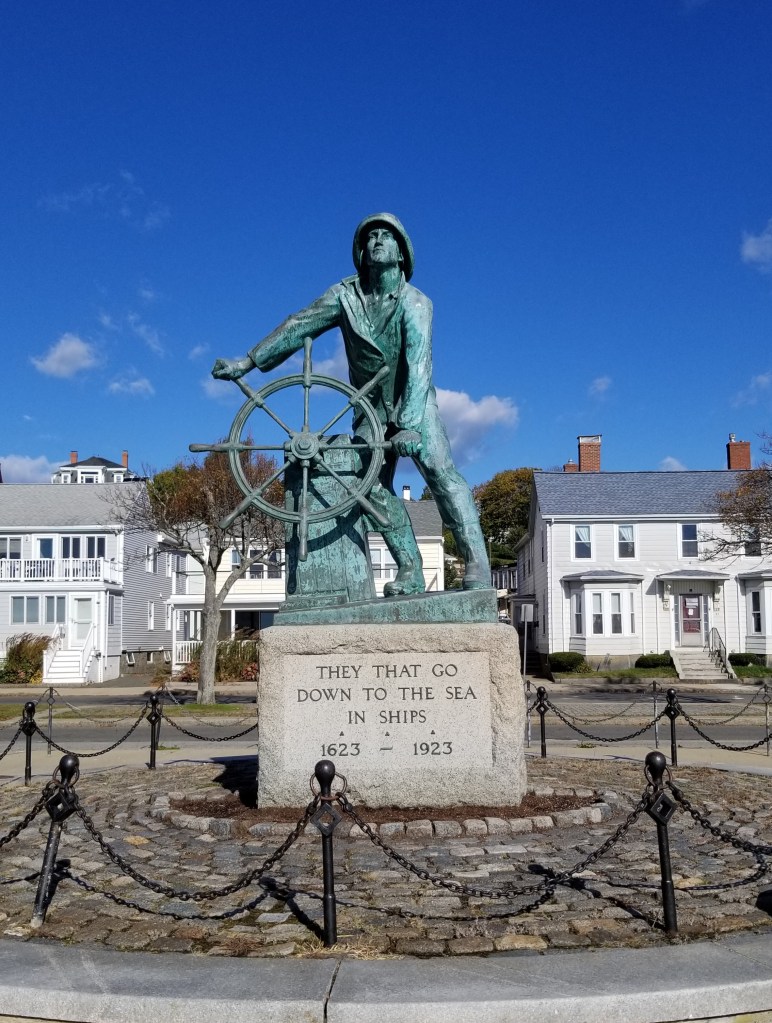
I could go on and on about the brilliance of Gloucester. The gleaming lights shining from the charming and picturesque storefront windows after dusk. The way the stone steeple of the St. Ann’s Church has towered above the city since 1876. Its history hits you like the same swift seawater breeze that propels so many crooning herring gulls. Yet in the end this furthered explanation would be futile, for there is no paralleling the once-in-a-lifetime experience I amassed in the Crow’s Nest. No concierge can book it, nor can any travel agent reserve it. It was perfectly unplanned.
 The Dark Passport