In the fall of 1991, six men boarded the 72-foot commercial fishing vessel Andrea Gail in Gloucester, Massachusetts and steamed towards the notoriously rich waters of the Grand Banks. It was late in the season, but Billy, Bobby, Murph, Sully, Bugsy, and Alfred Pierre needed the money from one last catch of swordfish. With a malfunctioning ice machine threatening the freshness of their perishable cargo, the fishermen set course for home after more than a month at sea. Unknowingly heading directly into what meteorologists would later call “The Perfect Storm”, it would be the final voyage of the ship and its crew. Most know this story by the blockbuster Hollywood adaptation of a creative nonfiction retelling of the events written by journalist Sebastian Junger. Decades later, I would stumble upon the story in my own unique way as a solo vacationer in New England.
But first, let’s get something straight: Halloween is a holiday. If you side with the dentists and Jehovah’s Witnesses who refuse to acknowledge this fact, then you’re also liable to reject the premise of my trip to Salem, Massachusetts on All Hallows Eve in 2021. Be it a fascination with the horrifying 17th century Salem witch trials or a love for Bette Midler’s timeless portrayal of Winifred Sanderson in the 1993 film Hocus Pocus, I was on a mission to experience for myself the spookiness of the quaint coastal town. So I carved a bucktoothed jack-o-lantern and left it on my front porch before hopping on a Southwest Airlines broom and flying to Boston Logan Airport. Drop the consonant R’s and queue the wicked accent, it’s time to get some “chowdah”.

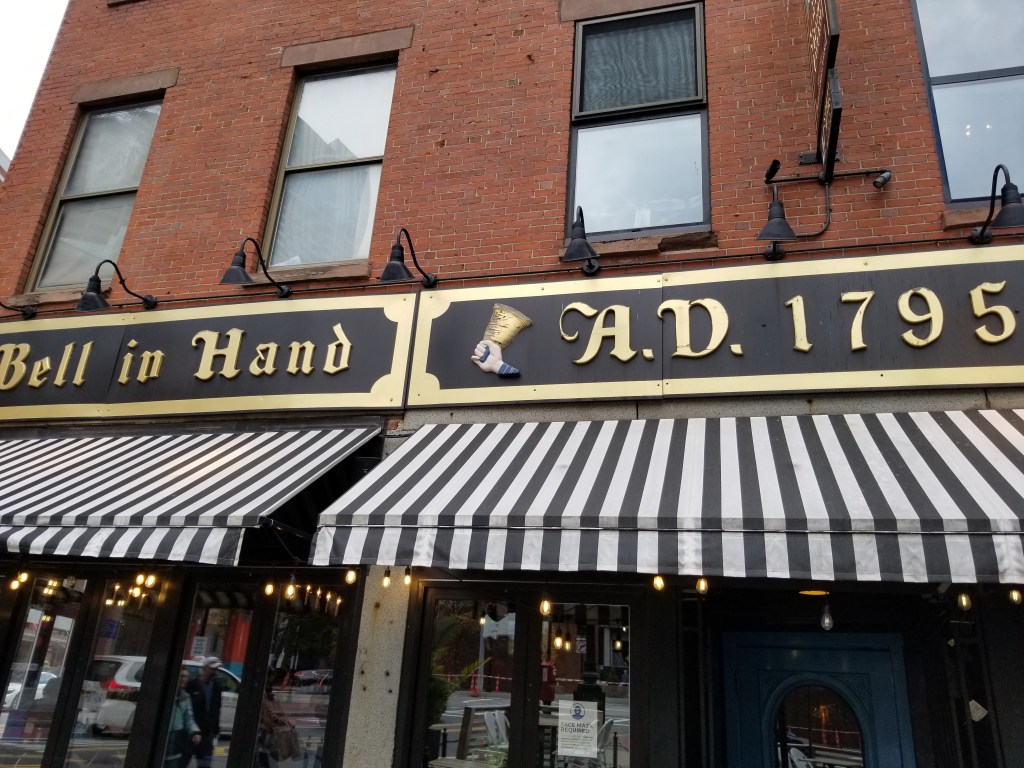
The fact that I arrived in New England exactly 30 years after the storm of the century was not lost on me. Just three days prior, a nor’easter tore through the coast with enough voracity that school was canceled and several hundred thousand people were left without electricity. Residual rain from this “bomb cyclone” was still coming down as I crossed the Boston Harbor near the site of the infamous tea party on my way to Union Oyster House, the oldest restaurant in continuous service in the country. Not to be confused with America’s oldest tavern, The Bell in Hand, located right across the street, Union Oyster treated me like a local while serving up some fantastic seafood that I would not enjoy as much the second time.
I will swallow my pride and admit that taking the ferry to Salem the next morning wasn’t the brightest travel decision I had ever made. As soon as the Nathanial Bowditch catamaran left the calm waters of the harbor in its wake, it occurred to me that the 50-minute sail through the choppy sea was going to be a rough one. I have no idea how high the waves were, but I knew a red flag when I saw one: A steward had hurriedly thrown a large basket of what I will call “nausea bags” at a deckhand who then proceeded to frantically toss them at every passenger on the boat. Acquiescing to the will of Neptune’s revenge, I unsteadily rose from my seat to find the nearest lavatory, only to have my vision blocked by a long line of people turning various shades of green. The realization that I would be unable to endure the 20-minute queue for the head was exacerbated by an even more dreadful sight: People were shoulder to shoulder on the port and starboard decks, heaving over the railing. I caught the eye of a crewmember who took a glance at my pale, sweat-soaked figure before asking, “Are you okay?” I looked down at the disposable paper bag clutched in my hand and said in a defeated tone, “I think I’m going to need a trash can.”

The Salem Ferry Nathanial Bowditch is named for the 18th century resident of Salem who is considered the father of modern maritime navigation. He used his skills as a mathematician and astronomer to write works that were influential enough to have their copyrights purchased by the U.S. Navy and National Geospatial-Intelligence Agency.
One hundred and fifty seasick passengers eventually disembarked on wobbly legs at the Salem docks. Worse for the wear, I found my mood further depleted once I beheld the sight of tens of thousands of tourists clogging the streets on a drizzly day. It turns out I wasn’t the only one who traveled from afar to experience the U.S. mecca of Samhain. Admitting defeat and unable to find a rideshare, I trudged an hour and a half to the closest hotel with a vacancy after making a quick stop at America’s oldest candy company (it was Halloween, after all).
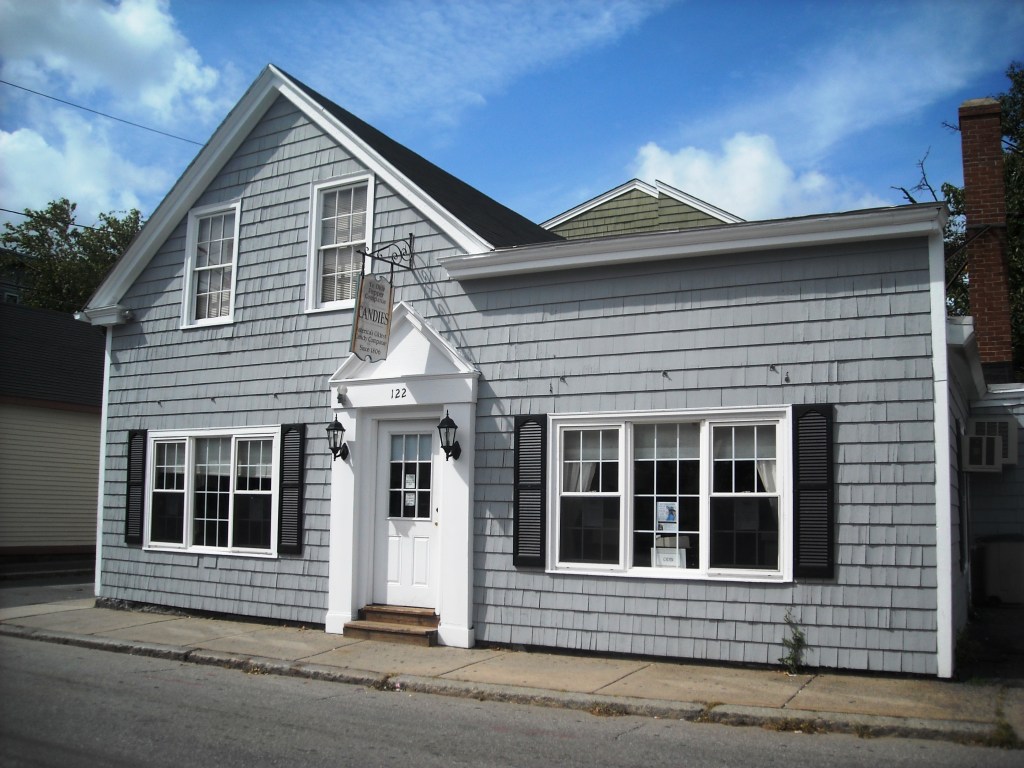
Do not let the name fool you. The Ye Olde Pepper Companie, which has been selling its famous gibralters and black jacks since 1806, does not use pepper as an ingredient. As the oldest candy shop in the country, it is named after the second family who owned it.
Passing through historic neighborhoods flocked with trick-or-treaters ringing the doorbells of 150-year-old Victorian-era homes invoked a surprising tranquility that quickly transitioned into spookiness with the setting sun. I became aware of my sudden isolation like one becomes aware of the feeling of being watched. It had been 20 minutes and two right turns since I saw a house, human, or automobile. The autumn leaves rustled on the cobblestones as if they’d been there for a century. An owl hooted from its perch atop one of the many imposing hemlock trees that surrounded me. I was convinced beyond all reasoning and logic that I was lost and forlorn. No wonder they used to accuse people of witchcraft and burn them alive here. Then I saw it: a sudden clearing in the middle of the forest.
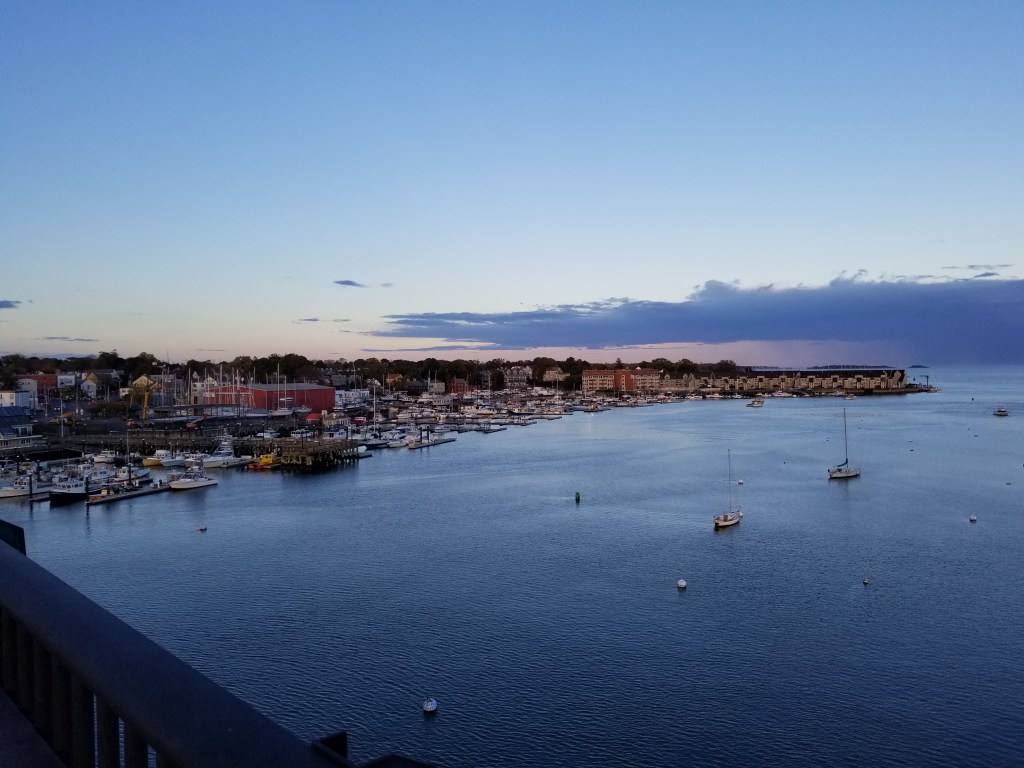
I stood among the chirping crickets, staring at my hotel that seemingly appeared out of the misty air for I did not see it 5 seconds ago, without a doubt in my mind that I would have to defend myself from a masked, knife-wielding serial killer if I lodged there that evening. I glanced down at my phone only to see the phrase “No Network Connection” ticking across the status bar. “Of course,” I thought, “Just like a slasher movie.”
Wanting to get inside before the Headless Horseman rode by, I entered the hotel lobby to find it deserted and dimly lit with the flickering yellow-orange glow of old-fashioned Edison light bulbs. The nostalgic jazz notes of Glenn Miller could be heard from an antique Zenith radio perched between two wingback tufted leather chairs. I was stuck in a Twilight Zone trance, half expecting the night manager to emerge in a waistcoat with a dame in a flapper dress hanging off his arm. The rest of the evening remains, to this day, a blur. I slept with one eye open, waking with the sun and departing for Gloucester thinking the denouement of the trip was complete. I would soon discover that the most memorable moments would be waiting for me at the terminus of a Massachusetts Bay Transportation Authority commuter rail line.
 The Dark Passport