“Wherever the American citizen may be a stranger, he is at home here.” -Frederick Douglass, speaking of Washington, D.C. in 1877
Nearly two decades ago this very week, I stood atop the marble steps of the Thomas Jefferson Memorial on a gloomy winter day in Washington, D.C. My thick jacket, gloves, and beanie felt foreign and restrictive compared to the shorts and t-shirt ensemble I would have normally been wearing back home in the desert. The 19-foot-tall bronze statue of our founding father, as well as the towering stone architecture enveloping him, had a way of adding to the bitter cold. Though hidden from sight by the dark clouds, I could hear the thunderous roar of airliners taking off from Reagan Airport barely a mile across the Potomac River. It was the same airport my classmates and I had just landed at for our weeklong visit to the Capital through the Close Up Foundation, a nonprofit and nonpartisan organization “designed to provide participants with a stronger understanding of government institutions, history and current issues, and their roles as citizens.”
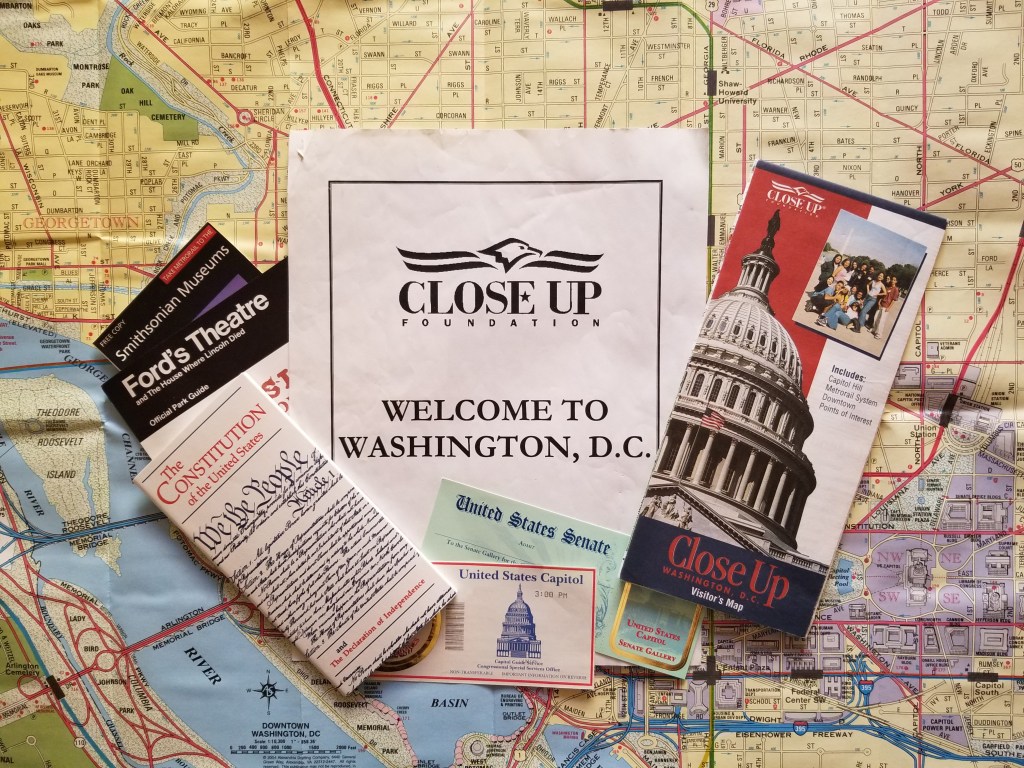
To be sure, this was not a raucous group of teenagers on a senior trip taking advantage of the lax drinking laws of some European country. This was an official educational opportunity sanctioned by our school, complete with a strict schedule and plenty of chaperones. Even if we wanted to partake in debauchery, we had neither the ability nor the time. We were there to learn. What’s more, they made it interesting enough that we wanted to learn.
Highlights of the trip included a tour of the Capitol Building, witnessing the Changing of the Guard at the Tomb of the Unknown Soldier, observing America’s Founding Documents at the National Archives, and unexpectedly bumping into Senator John McCain in the Capitol Hill pedestrian tunnels. We engaged in moderated debate with actual policymakers; the topic of the Patriot Act being widely discussed as certain provisions of the controversial legislation were approaching expiration at the time. Even more somber of an experience than Arlington National Cemetery was the Holocaust Memorial Museum. Yet no matter where we went, a less tangible but nevertheless perceptible air of civic engagement existed.
Almost two and a half centuries of blood, sweat, and tears have soaked the ground under the District of Columbia. The energy accompanying all that work and sacrifice is felt by many who visit our seat of government. As I stand in this venerable locale once more, now employed by that very same government and having landed at the same airport just days ago, I cannot help but wonder if a flame was ignited within me all those years prior.
 The Dark Passport